Alluding or Eluding: What’s the Difference?
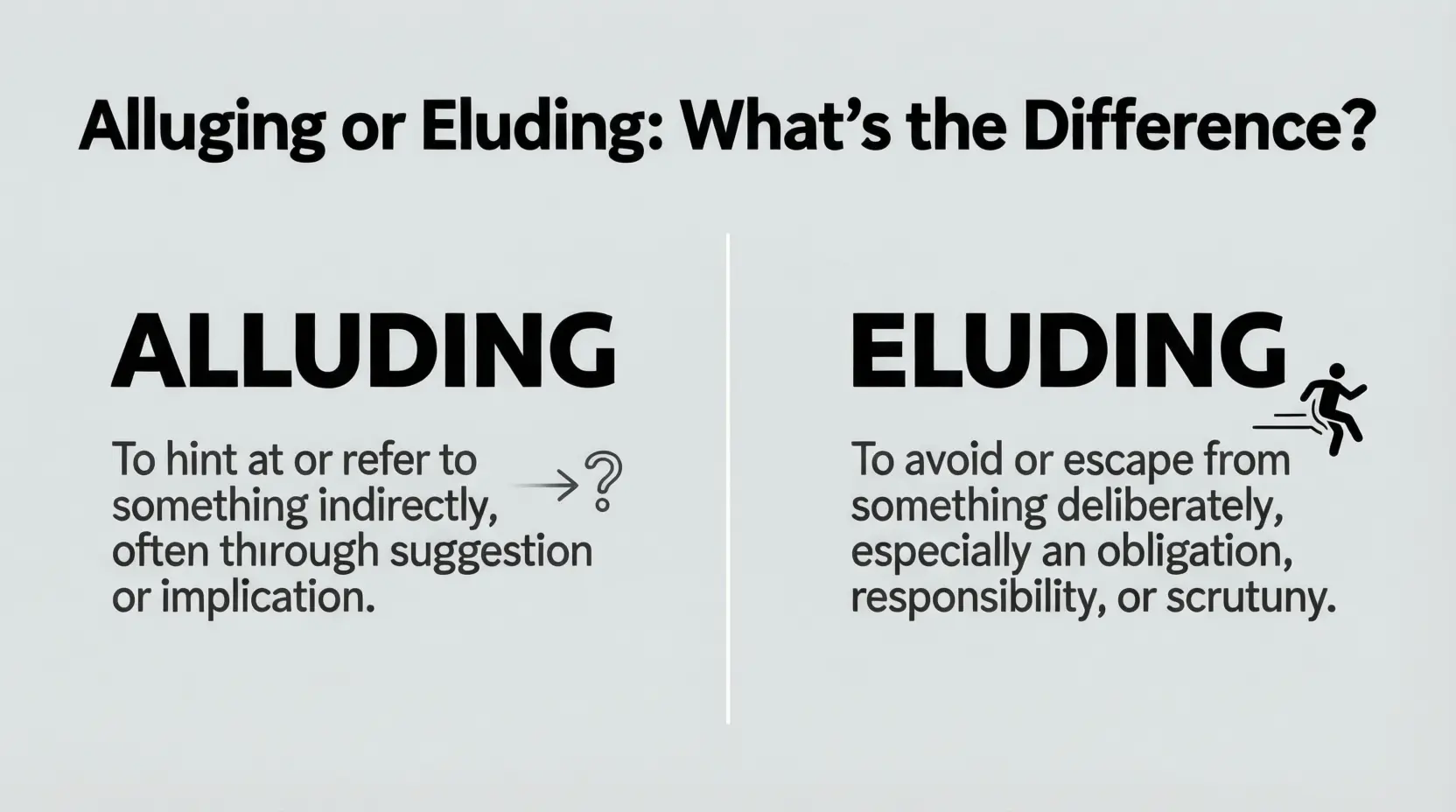
Many writers, students, and professionals often get confused between “alluding” and “eluding.” Though they sound similar, their meanings and usage are very different.
Choosing the wrong word can change the meaning of a sentence completely, which is why people frequently search for “alluding or eluding” online.
Alluding refers to making an indirect reference to something, often subtly hinting without stating it outright. Eluding, on the other hand, means escaping, avoiding, or evading something or someone.
This subtle difference is critical in writing, formal communication, and everyday conversation. Understanding the distinction can improve clarity, avoid misunderstandings, and make your language more precise.
This guide will give a quick answer, trace the origins of the words, compare British and American English usage, show examples in everyday writing, and highlight common mistakes.
By the end, you’ll confidently know which word to use in any context.
Alluding or Eluding – Quick Answer
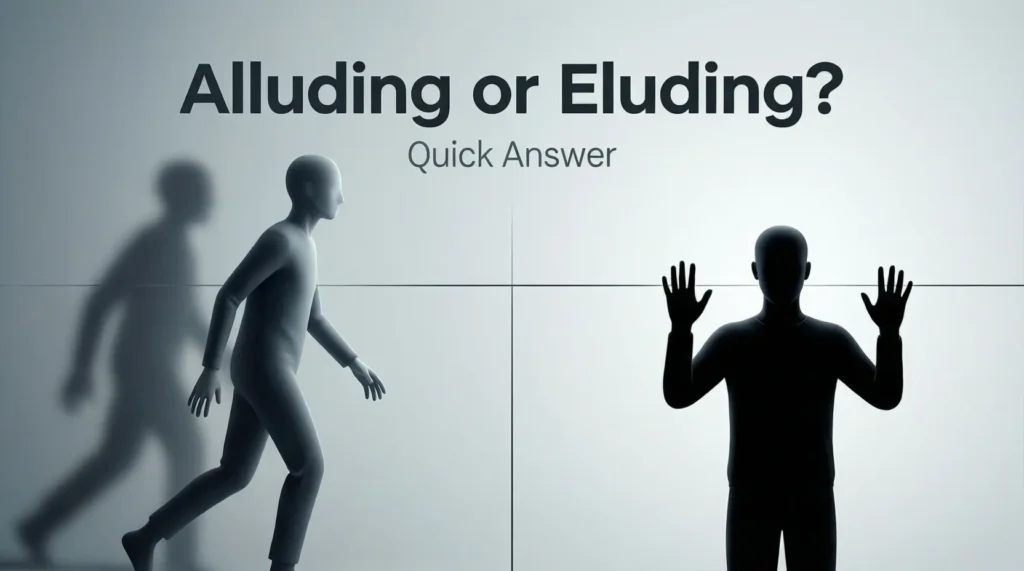
| Word | Meaning | Example Sentence |
| Alluding | Indirectly referring to something | She was alluding to her past achievements. |
| Eluding | Escaping or avoiding something | The thief was eluding the police. |
Quick Tip: If someone is hinting, use alluding. If someone or something is escaping, use eluding.
The Origin of Alluding and Eluding

Both words come from Latin roots:
- Alluding → from Latin alludere, meaning “to play with” or “to refer to.” Over time, it came to mean “to make an indirect reference.”
- Eluding → from Latin eludere, meaning “to evade” or “to escape.” This sense of avoiding or dodging became standard in English.
The similarity in sound is why many confuse them, but their Latin roots reveal very different meanings.
British English vs American English Spelling
Both alluding and eluding are spelled the same in British and American English. There is no regional spelling difference.
| Word | British English | American English | Notes |
| Alluding | alluding | alluding | Same spelling; usage identical |
| Eluding | eluding | eluding | Same spelling; usage identical |
The confusion is purely about meaning, not spelling.
Which Spelling Should You Use?
Since spelling is consistent, focus on meaning and context:
- Alluding → Use when referencing or hinting at something indirectly.
- Eluding → Use when talking about escaping, avoiding, or slipping away.
Audience advice:
- US, UK, Commonwealth, global readers → No difference in spelling; focus on correct usage.
Common Mistakes with Alluding or Eluding
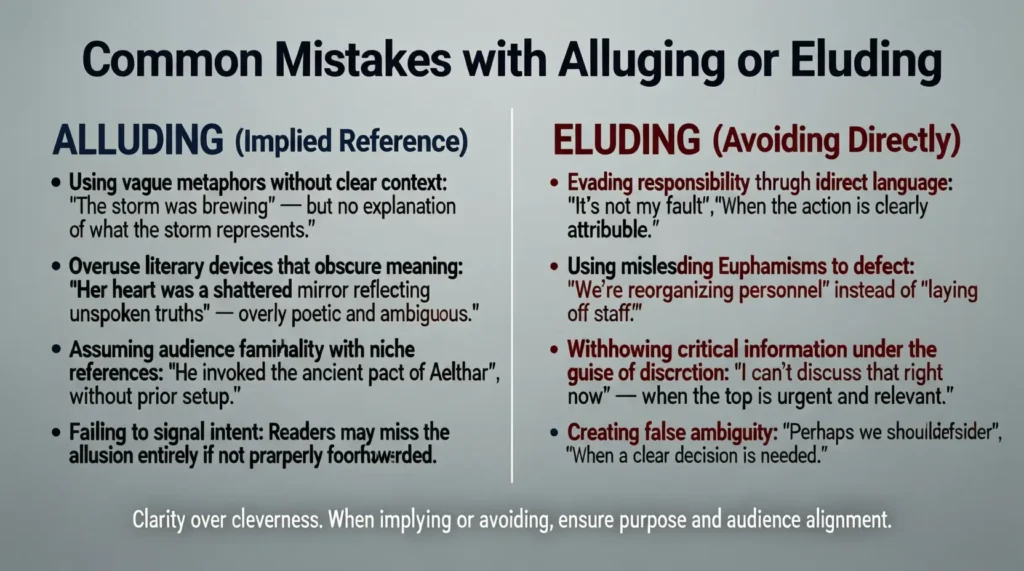
| Mistake | Correction |
| He was alluding from the meeting. | He was eluding the meeting. |
| She kept eluding to her favorite book. | She kept alluding to her favorite book. |
| The solution is eluding obvious clues. | The solution is eluding obvious clues. |
| Alluding the police, the criminal escaped. | Eluding the police, the criminal escaped. |
Remember: alluding → hinting; eluding → escaping.
Alluding or Eluding in Everyday Examples
Emails:
- Alluding: “I’m alluding to our previous discussion about deadlines.”
- Eluding: “He has been eluding my emails all week.”
News:
- Alluding: “The president was alluding to economic reforms.”
- Eluding: “The suspect is still eluding capture.”
Social Media:
- Alluding: “She’s alluding to her new project without revealing details.”
- Eluding: “The dog keeps eluding its owner in the park.”
Formal Writing:
- Alluding: “The author is alluding to Shakespearean themes.”
- Eluding: “Success often eludes those who procrastinate.”
Alluding or Eluding /Google Trends & Usage Data
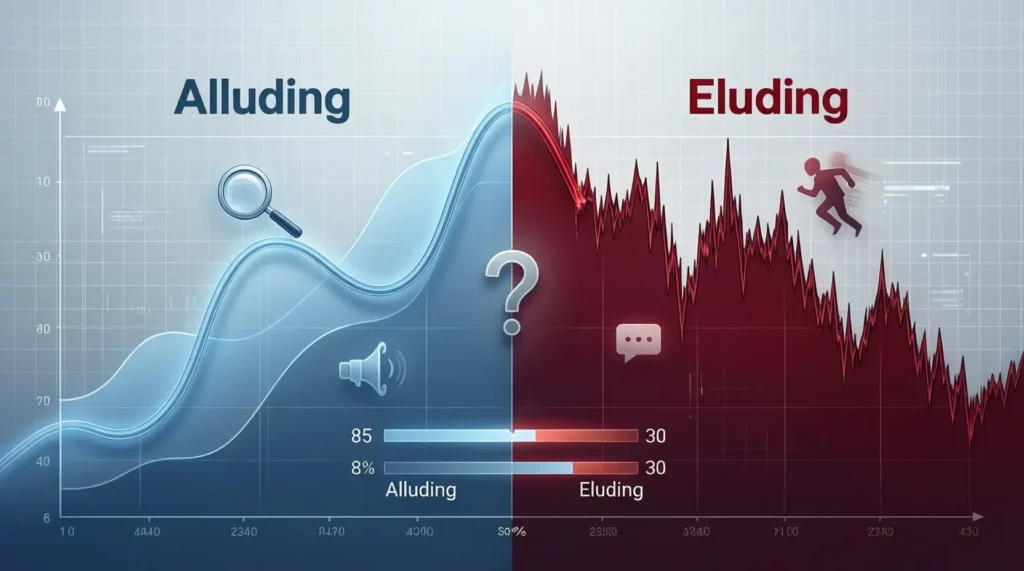
According to Google Trends:
- Alluding is searched more in literary, academic, and writing contexts.
- Eluding is popular in crime, sports, and news contexts.
- Countries with high English proficiency (US, UK, India, Canada) show frequent searches for both, often from students and writers.
Comparison Table: Alluding vs Eluding
| Feature | Alluding | Eluding |
| Part of speech | Verb (present participle) | Verb (present participle) |
| Meaning | Indirect reference/hint | Escaping/avoiding |
| Common contexts | Literature, discussion, emails | Crime, sports, puzzles |
| Confusion source | Similar sound | Similar sound |
| Quick memory tip | Hint → Allude | Escape → Elude |
FAQs
1. Can “allude” and “elude” be used interchangeably?
No. “Allude” is hinting, “elude” is escaping. Using them interchangeably changes the meaning.
2. Is there a spelling difference in US vs UK English?
No, both words are spelled the same worldwide.
3. Can “eluding” be used figuratively?
Yes, e.g., “Happiness eludes him” means he cannot find happiness.
4. Can “alluding” be used in casual writing?
Yes, it works in emails, social media posts, and casual references.
5. How do I remember the difference quickly?
Think: Allude = hint; Elude = escape.
6. Which word is more formal?
Both are acceptable, but “alluding” is more common in literature, “eluding” in news or action contexts.
7. Is “allude to” correct grammar?
Yes, always pair allude with “to” for clarity: “She alluded to the issue.”
Conclusion
Understanding the difference between alluding and eluding is essential for clear and precise writing. Remember: alluding = hinting and eluding = escaping. Spelling is consistent across English dialects, so the focus should be on meaning and context.
Using these words correctly improves your writing, helps avoid misunderstandings, and makes your sentences more professional. Check your context before choosing are you hinting or are you describing someone or something slipping away? Once you master this distinction, you’ll rarely confuse them again.
Whether in emails, news, social media, or formal writing, knowing the difference boosts credibility and clarity. Keep the quick memory tips handy: Allude → hint, Elude → escape.

I am a professional English language writer and editor with a strong focus on word comparisons, spelling differences, and usage clarity. I specialize in explaining confusing English words in a simple, reader-friendly way. With a background in linguistics and digital content writing, I help learners understand British vs American English, commonly confused terms, and everyday grammar mistakes.




Post Comment