Ally or Alley: What’s the Difference
I remember the first time I got confused between aally and alley. I was writing a short story late at night, and everything was going smoothly until I stopped at one sentence and stared at the screen.
Should I write ally or alley? In my head, both words sounded almost the same, but something felt off. I didn’t want to sound careless, especially when I knew readers might notice the mistake. I paused, thought about the situation, and realized I had faced this problem before.
Instead of guessing, I decided to break it down and understand what each word actually meant. Once I did that, the confusion disappeared completely.
Since then, whenever I see ally or alley, I know exactly which one to use and in this guide, I’ll explain it the same simple way I learned, so you don’t make the same mistake I almost did.
Have you ever typed “ally or alley” into Google and paused, wondering which word is correct? You’re not alone. These two words look almost the same, sound similar when spoken quickly, and often appear in very different contexts—politics, relationships, city streets, or storytelling. That’s exactly why so many people search for this keyword.
The confusion usually starts because English has many homophones—words that sound alike but have different meanings and spellings.
Ally and alley are a perfect example. One refers to support and partnership, while the other describes a physical place. Mixing them up can change the meaning of a sentence completely and sometimes make your writing look unprofessional.
This guide clears up that confusion once and for all. You’ll get a quick answer, learn where both words come from, see how they’re used in British and American English, and discover which spelling fits your audience.
By the end, you’ll confidently know when to write ally and when to write alley—without second-guessing yourself.
Ally or Alley – Quick Answer
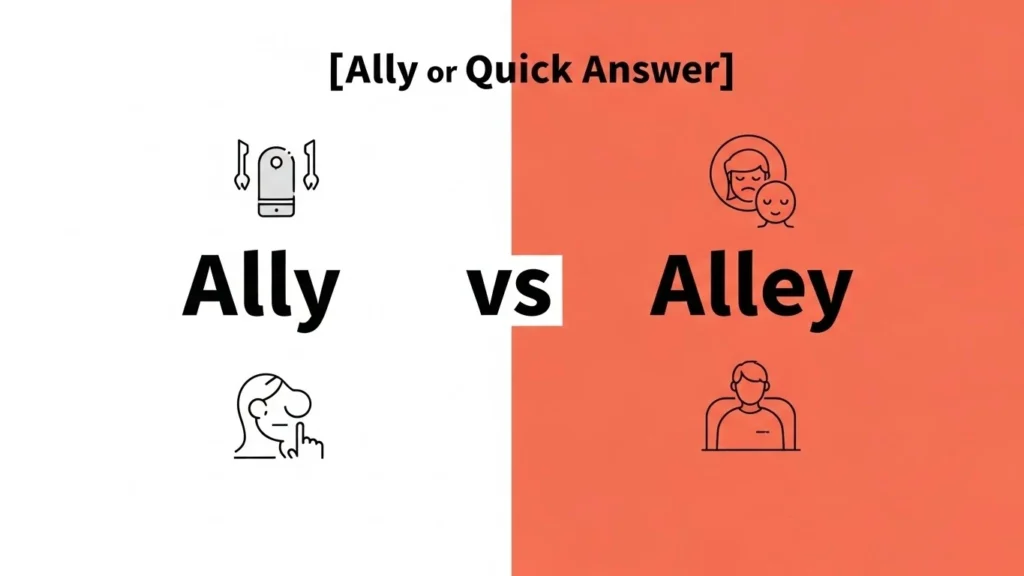
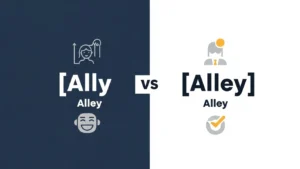
Ally is a person or group that supports you.
Alley is a narrow street or pathway between buildings.
Examples:
- She is a strong ally in the fight for equal rights.
- The café is hidden down a quiet alley behind the market.
👉 Rule to remember:
If it’s about support, use ally.
If it’s about a place, use alley.
The Origin of Ally or Alley
The word ally comes from the Old French alier, meaning to combine or join. It entered English in the 14th century and has always been linked to friendship, cooperation, and support, especially in politics and war.
Alley, on the other hand, comes from the Old French alee, meaning a walkway or passage. It was originally used to describe garden paths and later became a term for narrow streets in cities.
Although they look similar today, their meanings were always different. The confusion exists mainly because English spelling evolved over time, while pronunciation stayed close.
British English vs American English Spelling
Good news: there is no spelling difference between British and American English for these words.
| Word | British English | American English | Meaning |
| Ally | Ally | Ally | Supporter or partner |
| Alley | Alley | Alley | Narrow street or path |
Unlike color/colour or center/centre, ally and alley are spelled the same worldwide.
Which Spelling Should You Use?
The choice depends on meaning, not location.
- US audience: Use ally for support, alley for a street.
- UK & Commonwealth: Same rule applies.
- Global or ESL audience: Be extra clear with context.
💡 Tip: If your sentence could confuse readers, add a descriptive word, like trusted ally or dark alley.
Common Mistakes with Ally or Alley
Here are the most frequent errors:
❌ He is my biggest alley at work.
✅ He is my biggest ally at work.
❌ you walked through a dangerous ally.
✅ you walked through a dangerous alley.
Ally or Alley in Everyday Examples
Emails
- “Thank you for being a reliable ally on this project.”
News
- “The nation gained a powerful ally during the negotiations.”
Social Media
- “Be an ally, not a bystander.”
Formal Writing
- “The building is accessible through a service alley at the rear.”
Ally or Alley – Google Trends & Usage Data
Search data shows:
- Ally is popular in the US, UK, Canada, and Australia, often linked to politics, LGBTQ+ topics, and workplace culture.
- Alley is commonly searched with words like crime, street, back alley, and urban.
Overall, ally is searched more often due to social and political discussions, while alley appears mainly in location-based contexts.
Comparison Table: Ally vs Alley
| Feature | Ally | Alley |
| Part of Speech | Noun / Verb | Noun |
| Meaning | Supporter or partner | Narrow street or path |
| Used for People? | Yes | No |
| Used for Places? | No | Yes |
| Common Contexts | Politics, activism, work | Cities, buildings, maps |
FAQs: Ally or Alley
1. Are ally and alley homophones?
Yes. They sound similar but have different meanings.
2. Can ally be used as a verb?
Yes. Example: They allied with a stronger nation.
3. Is alley ever used metaphorically?
Rarely, but phrases like back alley deals exist.
4. Is there a UK vs US difference?
No. Both spellings are the same worldwide.
5. Which word is more common?
Ally is more common in modern writing.
6. Can using the wrong word hurt SEO or clarity?
Yes. It can confuse readers and reduce credibility.
7. How can I remember the difference?
Think: Ally = Allyship, Alley = Address.
Conclusion
The difference between ally or alley is simple once you focus on meaning. Ally is about support, partnership, and standing with someone, while alley refers to a physical space, usually a narrow street or passage. Although they sound alike, they are never interchangeable.
There’s no British or American spelling debate here both countries use the same forms. What matters is context. Choosing the wrong word can confuse your reader or change your message entirely, especially in professional or academic writing.
If you remember one thing, let it be this: people are allies, places are alleys. With that rule in mind, you’ll avoid common mistakes and write with confidence every time.

I am an English language specialist and educational writer focused on grammar rules, word differences, and clear communication. I have years of experience creating easy-to-understand guides that simplify complex English topics. Mine content is trusted by learners looking for accurate and well-structured language explanations.



Post Comment