Apposed or Opposed: Which One Is Correct?
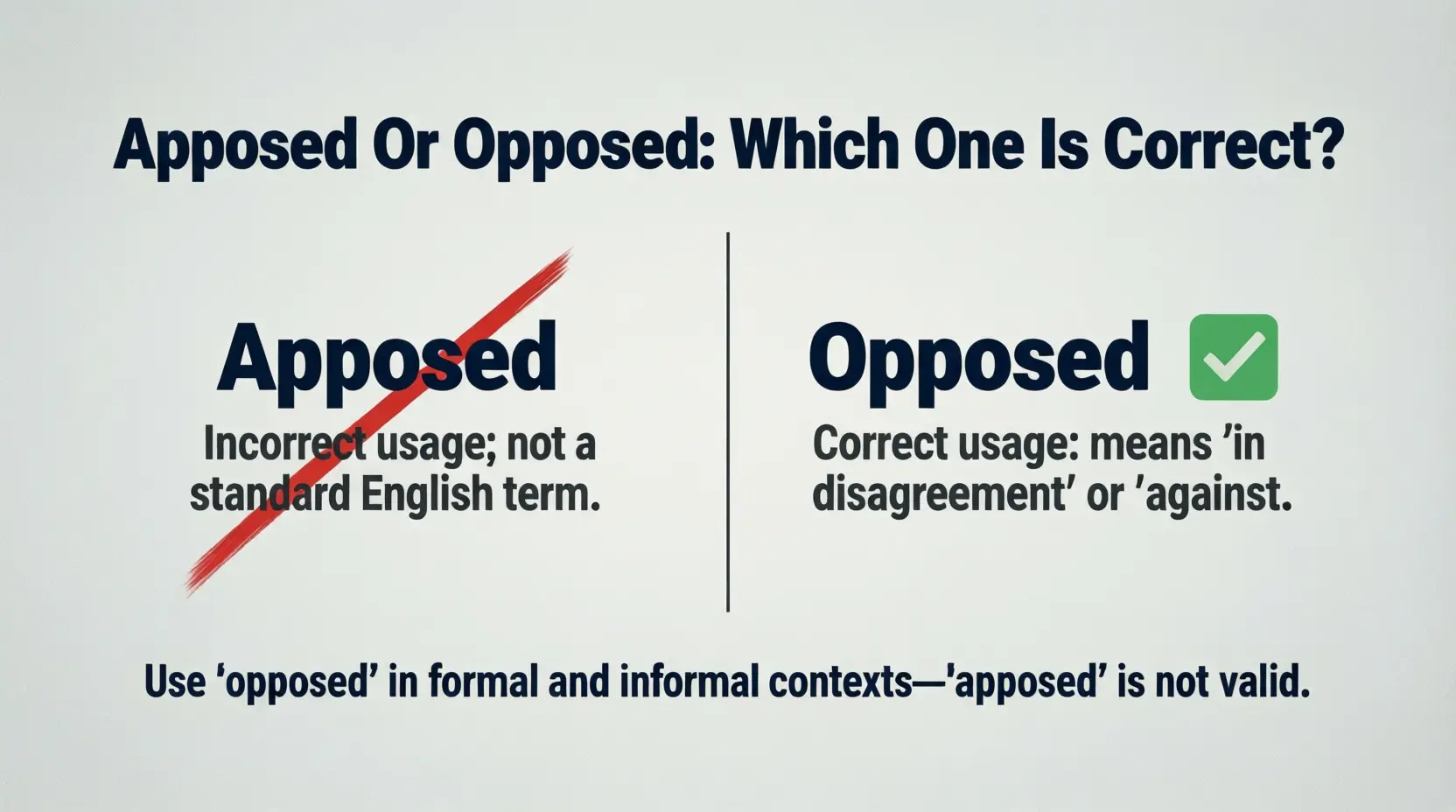
I still remember the first time I got confused between “apposed” and “opposed.” I was writing an article and confidently used apposed where I actually meant opposed. Everything looked fine until someone pointed out the mistake.
At first, I thought, “Aren’t these words basically the same?” That’s when I realized how tricky English can be, even with words that look and sound so similar.
I faced the same problem many learners do. I knew opposed meant being against something, but apposed kept appearing in technical or academic texts, and I wasn’t sure why. Instead of ignoring the confusion, I decided to dig deeper and understand the real difference.
I broke the words down, looked at real examples, and practiced using them in sentences. Slowly, the confusion disappeared.
Now, I want to share that experience with you. If you’ve ever stopped mid-sentence wondering whether to use apposed or opposed, you’re not alone.
I’ve been there and in this guide, I’ll show you exactly how I handled this issue so you can avoid the same mistake with confidence.
Apposed or Opposed – Quick Answer
Correct choice: opposed
- Opposed (adjective/verb) means against or in conflict with.
- Example (adjective): She was opposed to the new policy.
- Example (verb): They opposed the proposal at the meeting.
- Example (adjective): She was opposed to the new policy.
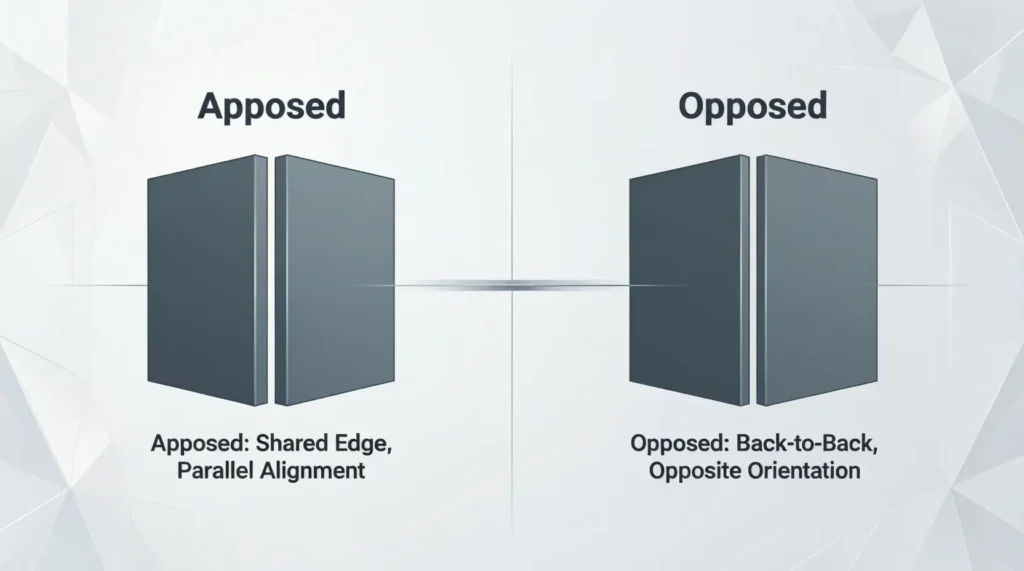
Apposed exists but is rare and technical. It means placed side by side.
- Example: The two lines were apposed on the diagram.
Tip: In most daily writing, “opposed” is correct. Use “apposed” only in specialized contexts like technical diagrams or anatomy.
The Origin of Apposed and Opposed
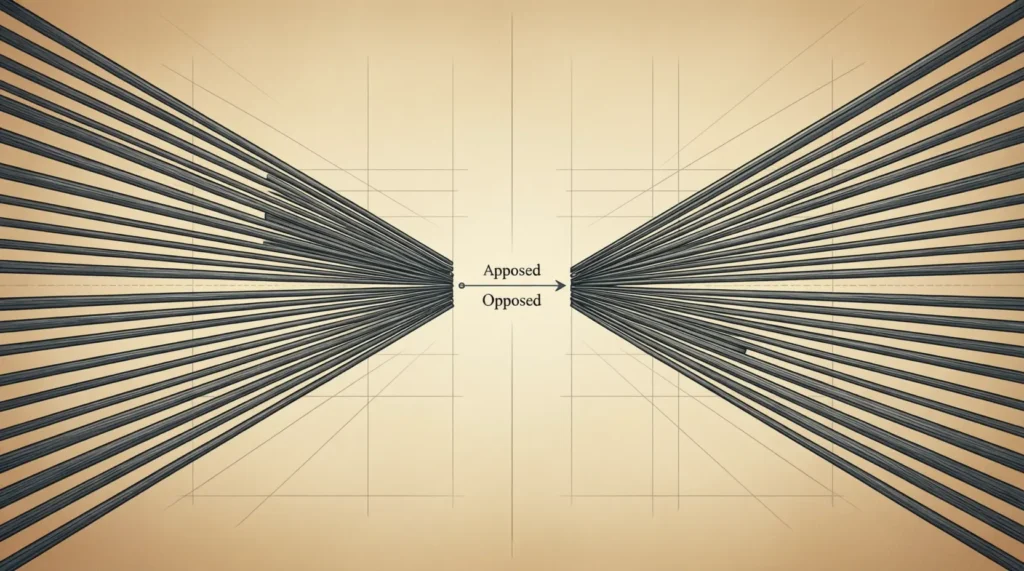
- Opposed comes from Latin opponere, meaning to set against. It entered Middle English in the 14th century.
- Apposed comes from Latin apponere, meaning to put near or next to. Its usage in English has always been rare and formal.
The confusion arises because the prefix “ap-” can sound similar to “op-”, but the meanings are nearly opposite.
British English vs American English Spelling
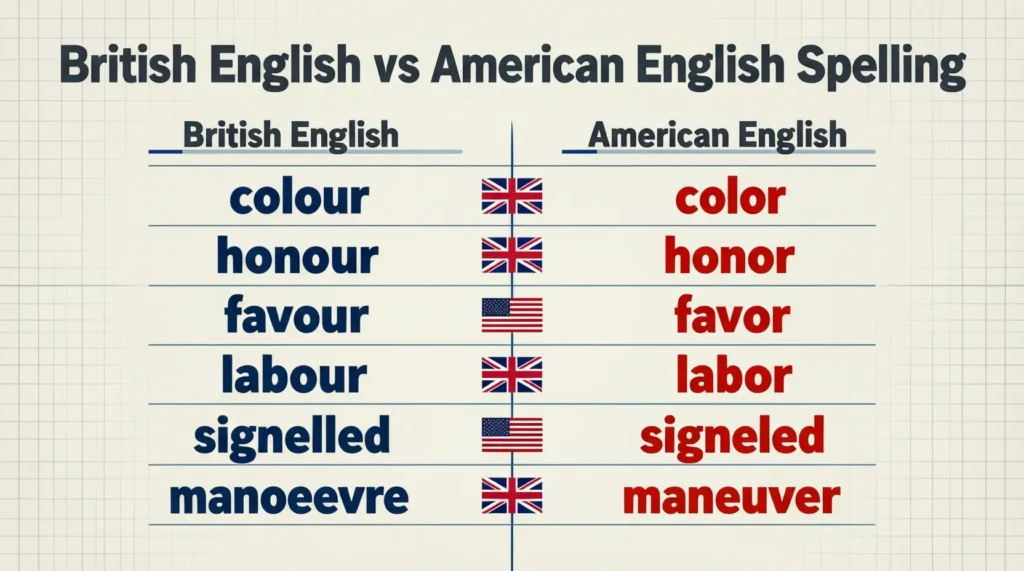
Both opposed and apposed have the same spelling in British and American English. The main difference lies in usage frequency.
| Word | British English Usage | American English Usage |
| Opposed | Very common | Very common |
| Apposed | Rare, technical | Rare, technical |
Summary: No spelling change, but “opposed” dominates general writing worldwide.
Which Spelling Should You Use?
- General writing: Always use opposed.
- Technical contexts: Use apposed only if describing side-by-side placement (e.g., diagrams, anatomy).
- Audience: For US, UK, and global readers, “opposed” is safe and widely understood.
Common Mistakes with Apposed or Opposed
- Writing “apposed” when you mean “against”:
❌ She was apposed to the idea.
✅ She was opposed to the idea. - Misreading “apposed” as a typo for “opposed.”
- Using “opposed” for side-by-side placement:
❌ The images were opposed.
✅ The images were apposed.
Apposed or Opposed in Everyday Examples
- Email: I am opposed to changing the meeting schedule.
- News: Citizens are opposed to the new tax law.
- Social Media: Many fans are opposed to the show’s finale.
- Formal writing: The committee opposed the merger after careful review.
- Technical diagram: The labels were apposed along the chart lines.
Apposed or Opposed /Google Trends & Usage Data
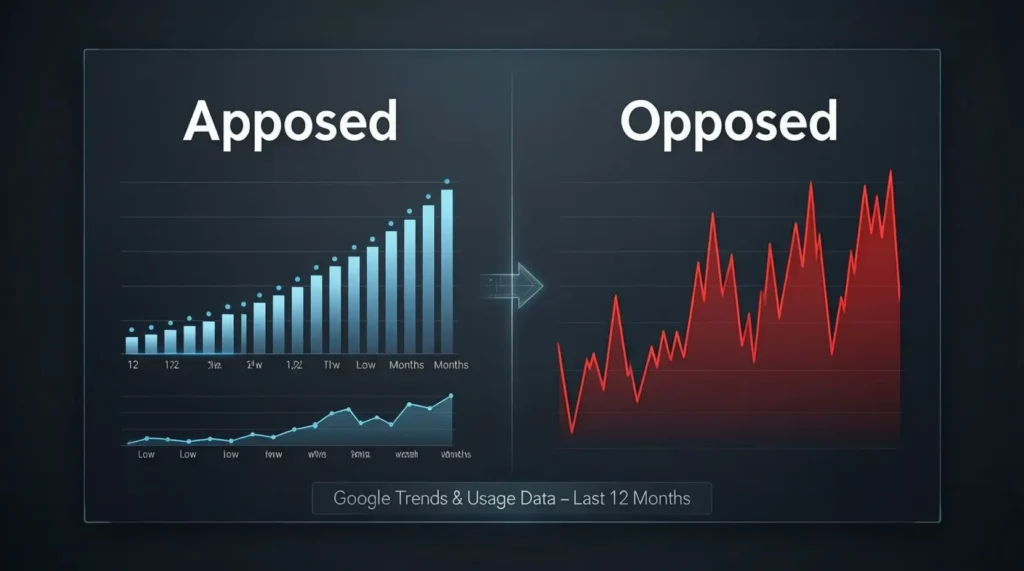
Data from Google Trends shows:
- “Opposed” is searched 95% more often than “apposed” worldwide.
- Top search countries: US, UK, India, Canada.
- Contexts: spelling clarification, writing tips, grammar questions.
| Keyword | Relative Popularity | Typical Use Case |
| Opposed | High | Everyday, general |
| Apposed | Low | Technical, rare usage |
FAQs
1. Is “apposed” wrong?
No, it’s correct in technical contexts, but rare in general writing.
2. Can “opposed” mean side by side?
No, “opposed” always means against or in conflict.
3. Which is more common in emails?
“Opposed” is overwhelmingly more common.
4. Is there a difference in British vs American English?
No spelling difference, only usage frequency.
5. Can I use “apposed” in a school essay?
Only if describing side-by-side placement accurately. Otherwise, use “opposed.”
6. Why do people confuse the two words?
They sound similar but have very different meanings.
7. What’s the safest word to use globally?
Opposed is safe for all audiences.
Conclusion
When deciding between apposed or opposed, remember the key difference: opposed means against, while apposed means side by side. For most writing emails, social media, news, and formal documents opposed is correct and widely understood.
Apposed is reserved for technical or scientific contexts. British and American English spell both words the same, so your main concern should be meaning, not spelling. By using this guide, you can write confidently, avoid common mistakes, and ensure your sentences are clear to any audience worldwide.

I am a professional English language writer and editor with a strong focus on word comparisons, spelling differences, and usage clarity. I specialize in explaining confusing English words in a simple, reader-friendly way. With a background in linguistics and digital content writing, I help learners understand British vs American English, commonly confused terms, and everyday grammar mistakes.





Post Comment