Bourbon Or Whiskey: What’s the Difference?
If you enjoy alcoholic drinks or are just starting to learn about them, you’ve probably heard people argue about bourbon vs whiskey. Some say bourbon is whiskey, while others treat them as completely different drinks. This often leads to confusion, especially for beginners.
If you’ve ever stood in a liquor store staring at the shelves, you might have asked yourself: “Is bourbon the same as whiskey?” Many people search for bourbon or whiskey to understand the difference between these two popular spirits.
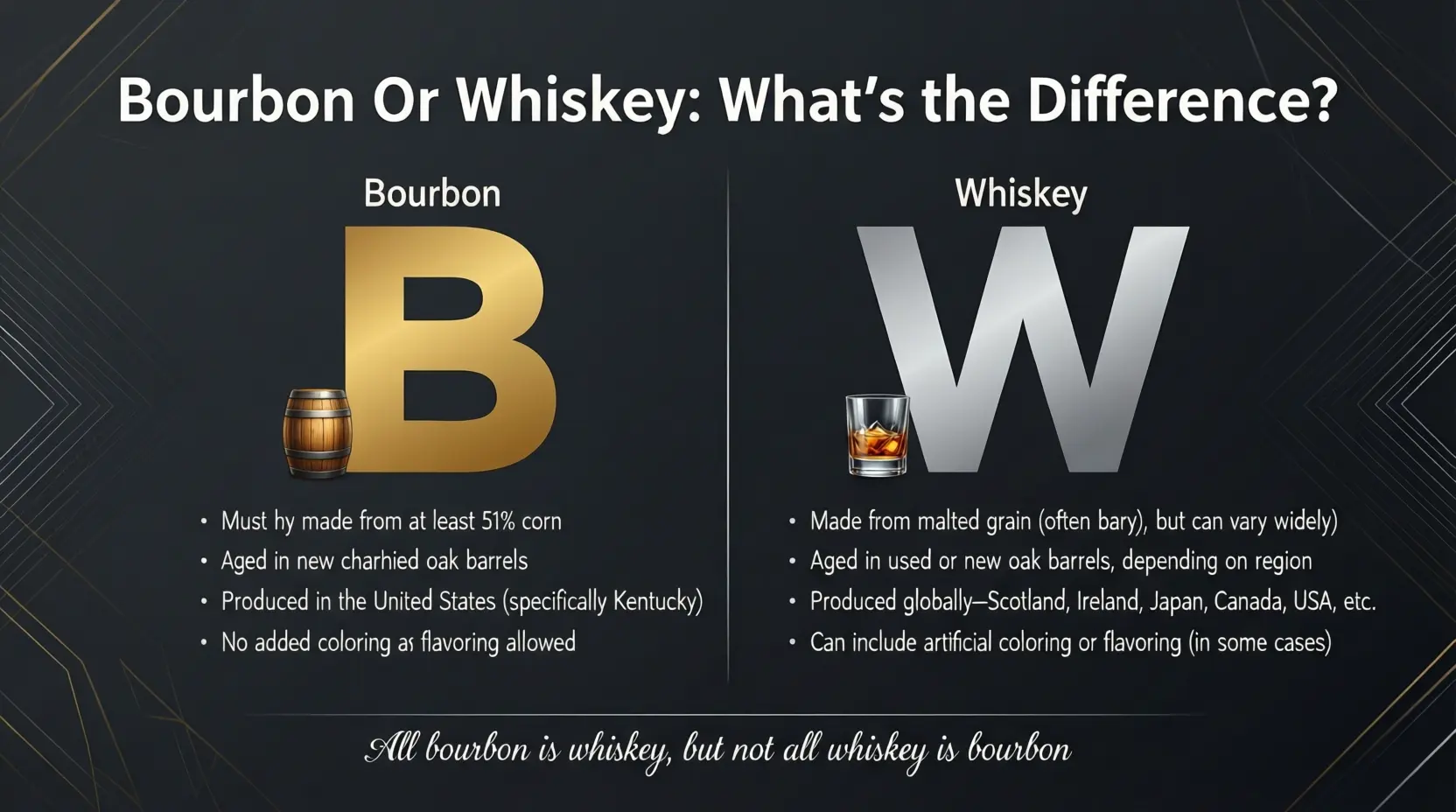
Confusion often arises because all bourbon is whiskey, but not all whiskey is bourbon. Knowing the distinction can help you make smarter choices, impress friends, and even choose the right drink for cocktails.
In this article, we break down the key differences, explore their origins, show proper usage, and guide you on when to say “bourbon” or “whiskey” with confidence. If you’re a beginner or just curious, this guide answers all your questions in simple terms.
Bourbon or Whiskey – Quick Answer
Bourbon is a type of whiskey. Whiskey is a general category of distilled spirits made from grains, aged in wooden barrels. Bourbon specifically:
- Must be made in the USA
- Contain at least 51% corn
- Aged in new charred oak barrels
- Have no additives besides water
Example:
- Jack Daniel’s – technically whiskey
- Maker’s Mark – bourbon
The Origin of Bourbon or Whiskey
The word “whiskey” comes from the Irish word uisce beatha, meaning “water of life.” It spread to Scotland and the US over centuries.
Bourbon is named after Bourbon County, Kentucky, where it was first popularized in the late 18th century. While whiskey can be made anywhere, bourbon must follow strict US regulations to earn its name.
Why Do People Confuse Bourbon and Whiskey?
People get confused because:
- Bourbon is often called simply “whiskey”
- Labels may say “bourbon whiskey”
- Both look similar in color
- Both are aged in barrels
But the rules and taste profiles are different.
Bourbon vs Whiskey in Different Countries
Bourbon
- United States (especially Kentucky)
Whiskey
- Scotland (Scotch)
- Ireland
- Canada
- Japan
- USA
British English vs American English Spelling
In American English, the spirit is spelled “whiskey”. In British English, it is often spelled “whisky” (no “e”). Bourbon, being American, always uses the “e”.
| Type | US Spelling | UK/Commonwealth Spelling | Notes |
| Whiskey | Whiskey | Whisky | General term for the spirit |
| Bourbon | Bourbon | Bourbon | Always same, as it’s American |
Which Spelling Should You Use?
- US audience: Always use whiskey.
- UK/Commonwealth: Use whisky for general references.
- Global content: Consider your audience; for bourbon-specific posts, the spelling stays the same.
Common Mistakes with Bourbon or Whiskey
- Writing “bourbon whiskey” – technically correct, but redundant.
- Spelling whiskey as whisky in US content – avoid for American brands.
- Confusing bourbon with Scotch – all bourbon is whiskey, but not all whiskey is Scotch.
Is Bourbon Better Than Whiskey?
There is no universal winner.
- Bourbon is not better than whiskey
- Whiskey is not better than bourbon
👉 Taste preference matters most
Bourbon or Whiskey in Formal Writing
- Whiskey → General discussions
- Bourbon → Specific American whiskey references
Example:
- Whiskey has been produced for centuries.
- Bourbon must follow strict U.S. laws.
Bourbon or Whiskey in Everyday Examples
- Emails: “We’ll serve bourbon and whiskey at the event.”
- News: “Bourbon exports grew 20% last year.”
- Social media: “Tasting tonight: bourbon vs whiskey showdown!”
- Formal writing: “Bourbon, a subset of American whiskey, has specific production rules.”
Bourbon or Whiskey / Google Trends & Usage Data
Search data shows Americans mainly search “bourbon vs whiskey”, while UK users type “whisky or bourbon.” Bourbon’s popularity is rising globally due to cocktails and whiskey tourism in Kentucky.
Comparison Table: Bourbon vs Whiskey
| Feature | Bourbon | Whiskey |
| Grain | At least 51% corn | Any grain (barley, rye, corn) |
| Origin | USA | Global (US, Ireland, Scotland, Japan) |
| Barrel | New charred oak | Any oak |
| Aging | Minimum 2 years (straight bourbon) | Varies |
| Flavor | Sweet, vanilla, caramel | Varies by type |
| Spelling | Bourbon | Whiskey (US) / Whisky (UK) |
FAQs:
1. Is all bourbon whiskey?
Yes, bourbon is a type of American whiskey.
2. Can whiskey be made outside the US?
Absolutely, many countries produce whiskey (or whisky).
3. Does bourbon have to be from Kentucky?
No, but most bourbon comes from Kentucky.
4. Is bourbon sweeter than whiskey?
Usually, yes, due to higher corn content.
5. Can you mix bourbon and whiskey in cocktails?
Yes, but know the flavor differences for best results.
6. What’s the difference between Scotch and bourbon?
Scotch is from Scotland and primarily made from malted barley, aged in used barrels.
7. Why does UK spell it “whisky” without an E?
Traditional spelling difference dating back centuries in Scotland and Ireland.
Conclusion:
Understanding bourbon or whiskey is easier than it seems. Remember: all bourbon is whiskey, but not all whiskey is bourbon. Use the correct spelling depending on your audience, know the key differences in ingredients and aging, and you’ll confidently choose the right spirit for any occasion.

I am a professional English language writer and editor with a strong focus on word comparisons, spelling differences, and usage clarity. I specialize in explaining confusing English words in a simple, reader-friendly way. With a background in linguistics and digital content writing, I help learners understand British vs American English, commonly confused terms, and everyday grammar mistakes.


Post Comment