Colors or Colours – Which One Is Correct?
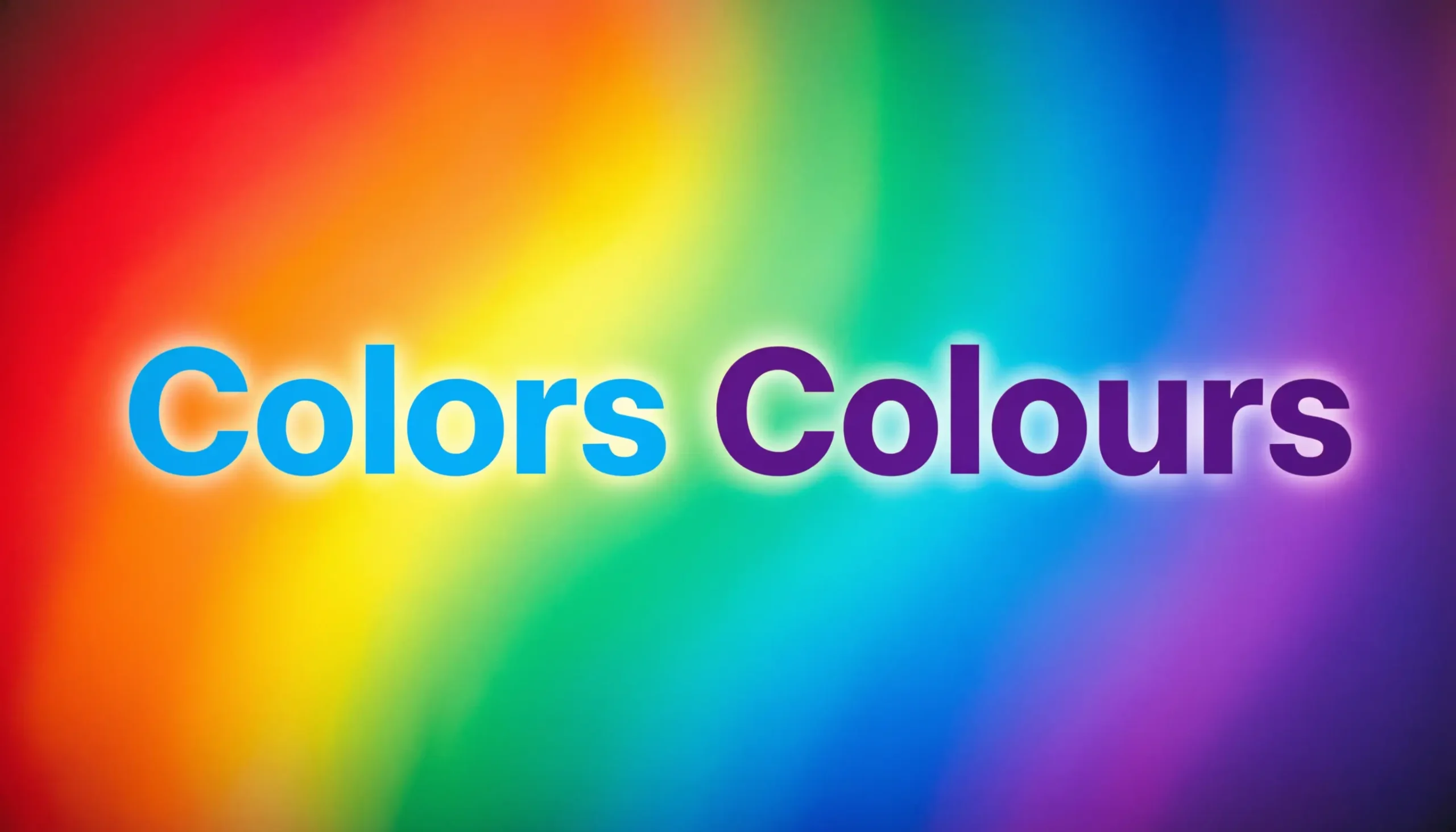
When writing in English, you may have noticed the two spellings: “colors” and “colours.” Many people wonder which one to use, especially if they write for work, school, or online content. This confusion is very common because English is spoken in many countries, each with its own rules.
People search for “colors or colours” to understand which spelling fits American English, British English, or other variations. They want to avoid mistakes in emails, essays, and social media posts. Misusing these spellings can make your writing look unprofessional or confusing, particularly for international readers.
This article gives a simple yet detailed guide. You’ll learn the quick answer, the origin of the word, how spelling differs between American and British English, common mistakes, examples in everyday writing, trends in usage, and expert advice on which version to choose.
By the end, you’ll confidently know when to use colors or colours.
Colors or Colours – Quick Answer
The short answer is:
- Colors → Used in American English (USA).
- Colours → Used in British English (UK, Canada, Australia, India, and other Commonwealth countries).
Examples:
- American English: The flag has red, white, and blue colors.
- British English: The flag has red, white, and blue colours.
So, the correct spelling depends on your audience. If you are writing for an American website, use colors. If you are writing for a British audience or global readers familiar with UK English, use colours.
The Origin of Colors/Colours
The word comes from the Latin “color”, meaning “hue, tint, or appearance.”
In Middle English (around 14th century), it was spelled “colur” or “colour.” Over time, English spelling standardized differently in various regions.
- In British English, the spelling “colour” was retained.
- In American English, Noah Webster’s dictionary (1828) simplified many words. He removed unnecessary letters, including the “u”, creating “color.”
This simplification aimed to make English spelling more logical and easier to learn. That is why the American version is shorter and more streamlined.
British English vs American English Spelling
British and American English often differ in spelling patterns. One major difference is words ending in -our vs -or.
Comparison Table:
| British English | American English | Example Sentence (UK) | Example Sentence (US) |
| colour | color | I love the colour of your dress. | I love the color of your dress. |
| honour | honor | She received an honour from the queen. | She received an honor from the president. |
| favour | favor | Can you do me a favour? | Can you do me a favor? |
| neighbour | neighbor | My neighbour is kind. | My neighbor is kind. |
| labour | labor | Labour laws are strict here. | Labor laws are strict here. |
Notice the simple pattern: -our (UK) → -or (US). This rule also applies to other words like humour/humor and rumour/rumor.
Which Spelling Should You Use?
Choosing the right spelling depends on your audience:
- American audience (USA): Use colors.
- British/Canadian/Australian/Indian audience: Use colours.
- Global audience (mixed English readers): Either can work, but colours is often safer for international websites.
Pro Tip: Check your website or document settings. Some word processors allow you to set the language to US English or UK English to automatically adjust spelling.
Common Mistakes with Colors/Colours
Even native speakers sometimes make errors. Here are common mistakes:
- Mixing spellings in the same document: “I love the color and colours of your dress.” ✅ Should stick to one style.
- Using UK spelling for an American brand: “The Starbucks store has amazing colours.” ✅ Use colors in US context.
- Adding an extra u in American English: “I like the coluor of this car.” ✅ Correct: color.
- Forgetting the u in UK English: “She loves the color of the painting.” ✅ Correct: colour.
- Assuming one spelling is “wrong” universally. ✅ Both are correct depending on region.
Colors/Colours in Everyday Examples
Emails
- US: “Please review the color options for the new logo.”
- UK: “Please review the colour options for the new logo.”
News Articles
- US: “The artist’s new colors are vibrant and bold.”
- UK: “The artist’s new colours are vibrant and bold.”
Social Media
- Instagram caption (US): “Love these color combos! 🌈”
- Instagram caption (UK): “Love these colour combos! 🌈”
Formal Writing
- US academic paper: “The study analyzed color variations in plant species.”
- UK academic paper: “The study analysed colour variations in plant species.”
Colors/Colours – Google Trends & Usage Data
Google Trends shows clear patterns:
- Colors dominates in the USA.
- Colours dominates in the UK, Canada, Australia, and India.
- Global searches show colours slightly more popular because English learners often follow UK English standards.
Insight: If your website targets US readers, stick with colors. For international audiences, colours is generally safer.
Colors vs Colours – Side-by-Side Comparison Table
| Feature | Colors (US) | Colours (UK/Commonwealth) |
| Spelling | Shorter, no “u” | Includes “u” |
| Audience | USA | UK, Canada, Australia, India |
| Example | The colors are bright. | The colours are bright. |
| Dictionary Reference | Merriam-Webster | Oxford, Cambridge |
| Google Trends Popularity | USA-focused | UK & Commonwealth-focused |
FAQs:
Q1: Is “color” wrong in the UK?
A: Not wrong, but uncommon. British English prefers colours.
Q2: Can I mix both spellings in one document?
A: No. Choose one style and be consistent.
Q3: Why does American English drop the “u”?
A: Noah Webster simplified English spelling in the 1800s to make it easier to learn and standardize.
Q4: Which spelling is better for global websites?
A: Colours is often safer because it is widely recognized in international English.
Q5: Is there a pronunciation difference?
A: No, both are pronounced the same: /ˈkʌlər/.
Q6: How about in branding or logos?
A: Use the spelling that matches your target audience. For example, US brands: colors, UK brands: colours.
Q7: Do search engines prefer one spelling?
A: Both are recognized. However, using the regional spelling can improve local SEO.
Q8: What about educational materials?
A: Follow the curriculum’s standard: US schools use colors, UK/Commonwealth schools use colours.
Q9: Is “colourful” vs “colorful” affected the same way?
A: Yes, the rule applies: UK → colourful, US → colorful.
Conclusion:
Understanding the difference between colors and colours is simple once you know the rules. Use colors for American English and colours for British and Commonwealth English. This choice matters in professional writing, academic papers, social media, branding, and content.
Consistency is key. Mixing spellings can confuse readers or reduce credibility. Checking your audience before writing ensures your content looks polished and accurate. Using tools like word processors’ language settings or style guides can help maintain uniform spelling.
Finally, both spellings are correct in their regions. The choice reflects not just tradition, but also your attention to detail and your respect for readers’ expectations. By following these guidelines, you can confidently use colors or colours in any context, from casual posts to formal reports.

I am an English language specialist and educational writer focused on grammar rules, word differences, and clear communication. I have years of experience creating easy-to-understand guides that simplify complex English topics. Mine content is trusted by learners looking for accurate and well-structured language explanations.




Post Comment