Congradulations Or Congratulations- Which Spelling Is Correct for 2026?
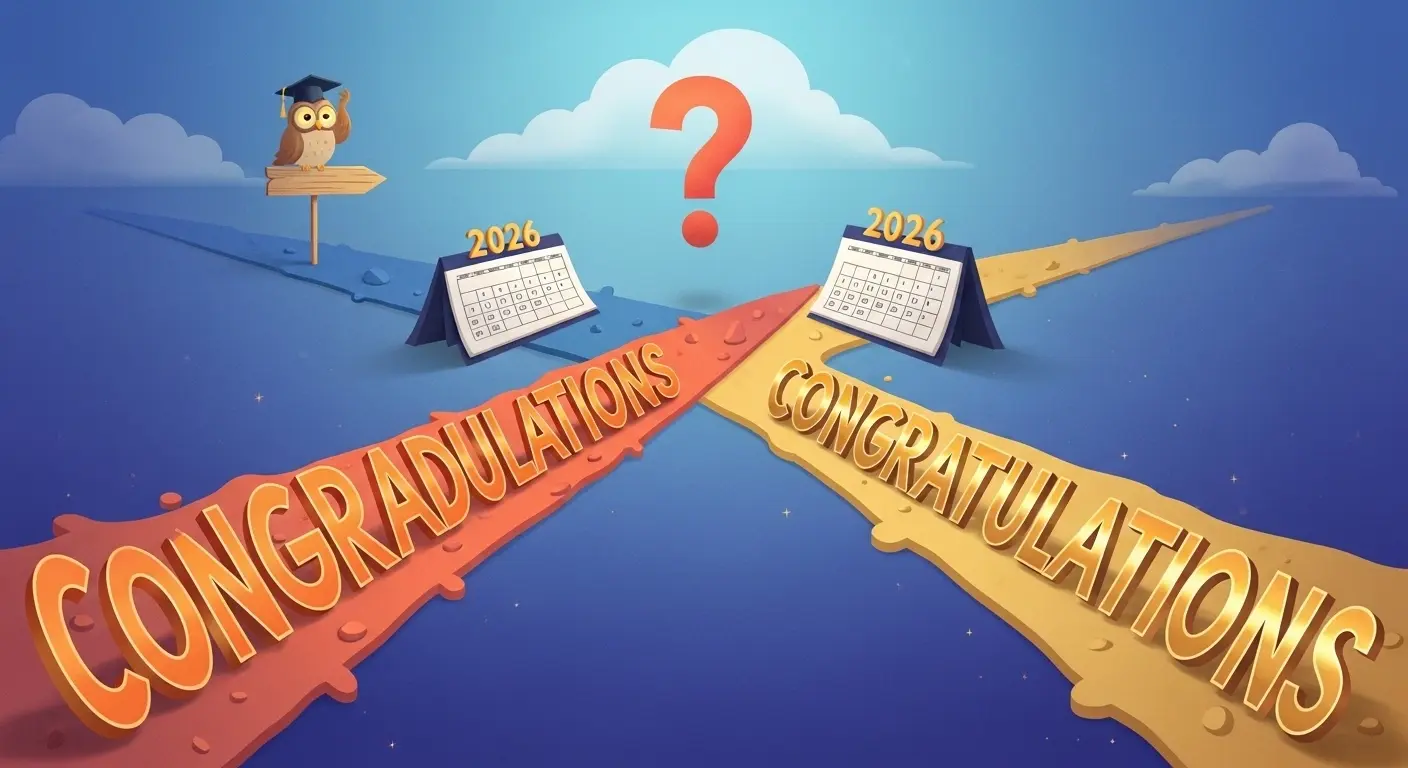
Have you ever typed “congradulations” in a message and wondered if it was correct? Many people pause before sending a text, email, or social media comment because they are unsure whether the correct spelling is “congradulations” or “congratulations.”
This confusion is very common. The word is often spoken quickly, and the “t” sound can blend with the surrounding letters, making it sound like “congradulations.” Because of this pronunciation, many people accidentally spell it the wrong way when writing.
Search engines show thousands of queries every month for “congradulations or congratulations.” People want a quick answer and a clear explanation so they can avoid mistakes in messages, job emails, school work, or professional writing.
The good news is that the rule is simple. Only one spelling is correct in standard English, while the other is a common spelling mistake.
In this guide, you will learn the correct spelling, the origin of the word, spelling rules in British and American English, common mistakes, real-life examples, and helpful usage tips.
Congradulations or Congratulations – Quick Answer
The correct spelling is “congratulations.”
The spelling “congradulations” is incorrect.
Congratulations is used when you want to praise someone for success or good news.
Examples
✔ Correct
- Congratulations on your new job.
- Congratulations! You passed the exam.
- We send our congratulations to the winners.
❌ Incorrect
- Congradulations on your promotion.
- Congradulations! You did it.
Simple Rule
If you are praising someone, always write:
Congratulations
Never write congradulations in formal or correct English.
The Origin of Congratulations
The word “congratulations” comes from the Latin word “congratulatio.”
The Latin roots are:
| Part | Meaning |
| con | together |
| gratulari | to express joy |
So the original meaning was “to express joy together.”
Over time, the word moved through several languages:
- Latin: congratulatio
- French: congratulation
- English: congratulations
The modern English form became common in the 16th century. It was used to express praise for success, achievements, or happy events.
Why the Misspelling Happens
The mistake “congradulations” happens for two reasons:
- Pronunciation confusion
Many speakers pronounce the “t” softly. - Sound blending
“grat” can sound like “grad” in fast speech.
But spelling rules still require the “t” in the correct word.
British English vs American English Spelling
Unlike many English words, “congratulations” has the same spelling in both British and American English.
Words like colour/color or favour/favor change between dialects, but congratulations does not change.
Comparison Table
| Type | Correct Spelling | Example |
| American English | congratulations | Congratulations on your success. |
| British English | congratulations | Congratulations on your award. |
| Common Misspelling | congradulations | ❌ Incorrect |
Key Point
Both the US and UK use the same spelling.
There is no regional variation for this word.
Which Spelling Should You Use?
The answer is simple.
Always use “congratulations.”
Here is advice depending on your audience.
United States
Use congratulations in emails, business writing, school work, and social media.
Example:
Congratulations on your promotion.
United Kingdom & Commonwealth Countries
The same spelling is used.
Example:
Congratulations on winning the competition.
Global or International Writing
When writing online, in business, or in international communication, always use:
Congratulations
Using the wrong spelling can make writing look unprofessional or careless.
Common Mistakes with Congradulations or Congratulations
Many spelling mistakes appear when people write quickly.
Here are the most common ones.
| Incorrect | Correct |
| congradulations | congratulations |
| congratualtions | congratulations |
| congradulation | congratulation |
| congratulationz | congratulations |
Mistake 1: Replacing T with D
❌ Congradulations
✔ Congratulations
Mistake 2: Letter Order Errors
❌ Congratualtions
✔ Congratulations
Mistake 3: Internet Slang
❌ Congratulationz
✔ Congratulations
Simple Tip
Remember this part of the word:
conGRATulations
The “grat” section helps you spell it correctly.
Congradulations or Congratulations in Everyday Examples
The word congratulations appears in many situations.
1. Emails
Example:
Congratulations on joining our team. We are happy to work with you.
2. Workplace Messages
Example:
Congratulations on your promotion to manager.
3. Social Media
Example:
Congratulations! Your hard work paid off.
4. News Headlines
Example:
Congratulations to the national team for winning the championship.
5. Formal Writing
Example:
The committee offers its congratulations to the award winners.
These examples show that congratulations works in both formal and informal writing.
Congradulations or Congratulations – Google Trends & Usage Data
Search data shows that “congratulations” is overwhelmingly the correct and popular spelling worldwide.
Usage Insights
- Congratulations is used in books, newspapers, and official communication.
- Congradulations appears mainly in spelling mistakes or search queries.
Popular Regions Searching the Term
People often search this keyword in:
- United States
- United Kingdom
- India
- Pakistan
- Philippines
Many searches happen because users want to confirm the correct spelling before sending a message.
Context of Use
Common situations include:
- graduation messages
- job promotions
- wedding wishes
- exam success
- sports victories
In every case, the correct spelling remains congratulations.
Comparison Table: Congradulations vs Congratulations
| Feature | Congradulations | Congratulations |
| Spelling status | Incorrect | Correct |
| Dictionary accepted | No | Yes |
| Used in formal writing | No | Yes |
| Used in professional emails | No | Yes |
| Common mistake reason | Pronunciation confusion | Standard English spelling |
Conclusion:
Always use congratulations.
FAQs:
1. Is “congradulations” a real word?
No. Congradulations is a misspelling.
The correct word is congratulations.
2. Why do people spell congratulations wrong?
Because the word is long and pronunciation can make “grat” sound like “grad.”
3. Is congratulations spelled differently in British English?
No. Both British and American English use the same spelling: congratulations.
4. Can I say “a congratulations”?
Usually the word is plural.
Example:
✔ Congratulations on your success.
But singular forms may appear in formal writing.
5. Is “congrats” correct?
Yes. Congrats is an informal short form of congratulations.
Example:
Congrats on your new job!
6. Why does congratulations end with “s”?
It is used as a plural expression of praise, similar to phrases like best wishes.
7. Is congratulations formal or informal?
It works in both contexts.
Formal:
Congratulations on your appointment.
Informal:
Congrats! You did it!
8. Can congratulations be used in business emails?
Yes. It is very common in professional communication.
Example:
Congratulations on completing the project successfully.
Conclusion:
The confusion between “congradulations” and “congratulations” is very common, especially in quick typing, text messages, and social media posts. The reason is simple: pronunciation can make the word sound like it contains a “d” instead of a “t.” However, English spelling rules clearly show that only one version is correct.
The correct spelling is congratulations, and it is used worldwide in both British and American English. There are no regional spelling differences, so the rule is easy to remember.
Understanding the origin of the word helps too. It comes from Latin roots meaning “to express joy together.” This meaning explains why we use the word when celebrating someone’s success, achievement, or happy event. To avoid mistakes, remember the key spelling pattern “conGRATulations.” The “grat” part is essential and should never be replaced with “grad.”
If you are writing an email, posting on social media, congratulating a colleague, or sending a message to a friend, always use congratulations. Using the correct spelling shows clear communication, attention to detail, and professionalism in your writing.

I am an English language specialist and educational writer focused on grammar rules, word differences, and clear communication. I have years of experience creating easy-to-understand guides that simplify complex English topics. Mine content is trusted by learners looking for accurate and well-structured language explanations.


Post Comment