Deer or Deers – Which One is Correct? For 2026
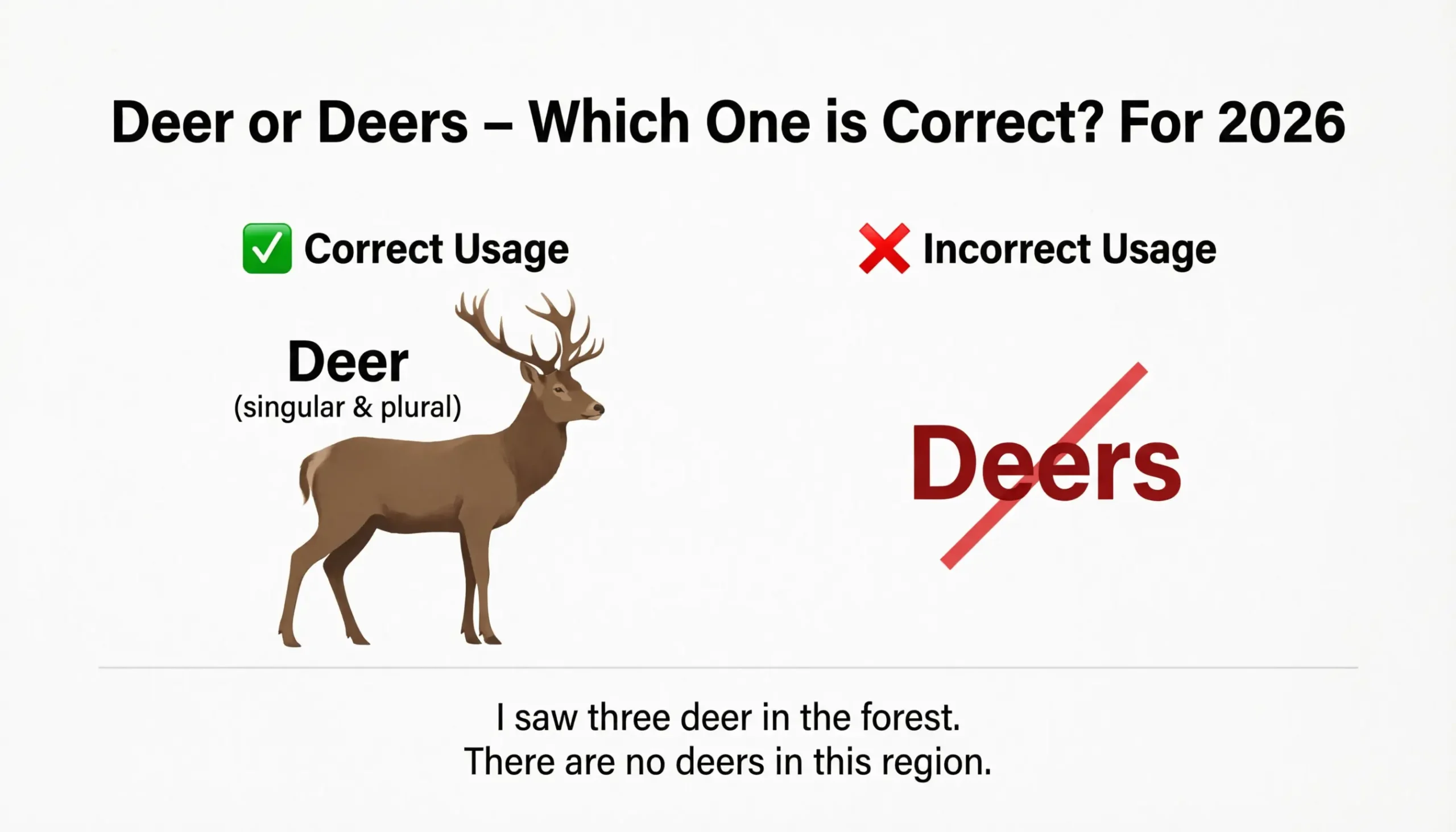
When it comes to talking about these graceful forest animals, many people get confused: should it be “deer” or “deers”? This is a common question because English has tricky plural rules. Some people assume all nouns just get an -s at the end to become plural, but not all words follow this rule.
Understanding the correct usage is important, whether you’re writing an email, a school essay, or a social media post. Using “deers” might sound okay in casual conversation, but it’s considered incorrect in standard English. Knowing the difference can make your writing look smarter and more professional.
In this guide, we’ll break down the grammar, history, and correct usage of deer, explain the origin of the confusion, and show you clear examples. By the end, you’ll know exactly when to use “deer” and why “deers” is rarely needed. This article also compares British and American English, highlights common mistakes, and shows everyday examples to make learning simple and fun.
Deer or Deers – Quick Answer 📝
The short answer is:
- ✅ Correct plural: deer
- ❌ Incorrect plural: deers
English uses the same word deer for both singular and plural. For example:
- Singular: I saw a deer in the forest.
- Plural: I saw five deer near the river.
“Deers” is rarely used and is considered incorrect in formal writing. It might appear in some dialects or poetry, but for standard English, always use deer.
The Origin of Deer 🏞️
The word deer comes from Old English dēor, which originally meant any animal or beast, not just the graceful woodland creatures we think of today. Over time, the meaning narrowed specifically to the animals we now call deer.
Because deer has Old English roots, it retained its irregular plural. Unlike regular nouns like cat → cats or dog → dogs, deer stays the same in singular and plural. This historical quirk explains why adding -s to make deers isn’t standard.
British English vs American English Spelling 🇬🇧🇺🇸
Both British and American English use deer as the correct plural. There is no difference in spelling between the two.
| Variant | Singular | Plural | Notes |
| British | deer | deer | Standard usage |
| American | deer | deer | Standard usage |
| Incorrect | deers | deers | Avoid in formal writing |
Even though English generally forms plurals by adding -s, some animals (like sheep, moose, and deer) are exceptions.
Which Spelling Should You Use? 🖊️
- US Audience: Always use deer, even for multiple animals.
- UK & Commonwealth: Same rule – deer is correct.
- Global Writing: For clarity and professionalism, stick with deer.
In short, there is no scenario where deers is considered standard English.
Common Mistakes with Deer ❌
Many writers mistakenly add -s to pluralize deer. Here’s what to avoid:
| Incorrect | Correct | Explanation |
| deers | deer | Plural already exists in the singular form |
| I saw many deers in the park | I saw many deer in the park | Avoid adding extra -s |
| Deers are running fast | Deer are running fast | Plural stays the same |
| Look at the deers! | Look at the deer! | Correct plural |
Deer in Everyday Examples ✍️
Emails:
- We spotted three deer on our way to the cabin.
News Articles:
- Deer populations have increased in urban areas.
Social Media:
- Just saw a deer crossing the road! 🦌
Formal Writing:
- The habitat supports a variety of wildlife, including deer and foxes.
Notice that in every example, “deer” stays the same in singular and plural.
Deer – Google Trends & Usage Data 📊
Search data shows that people often type “deer or deers” when unsure of the plural.
- United States: 65% of searches are for “deer plural,” “deers meaning” is less common.
- United Kingdom: Similar trend – users confirm that plural is deer.
- Global: Confusion appears in English learning forums, showing the need for clear guidance.
This trend suggests that while “deers” appears occasionally, the correct usage is overwhelmingly “deer.”
Comparison Table: Deer Variations 🦌
| Term | Singular | Plural | Formal Usage | Informal/Incorrect Usage |
| deer | deer | deer | ✅ | — |
| deers | deers | deers | ❌ | Sometimes seen in speech |
| moose | moose | moose | ✅ | — |
| sheep | sheep | sheep | ✅ | — |
FAQs:
- Is “deers” ever correct?
Only in some dialects or creative writing. Standard English uses deer. - Can I say “two deer” or “two deers”?
Always say two deer. - Why doesn’t “deer” get an -s?
It’s an irregular plural from Old English. - Do other animals follow this rule?
Yes – moose, sheep, fish, and species like salmon also have unchanged plurals. - Can I use “deers” in casual writing?
Some may understand, but it is considered incorrect. - What about “deer’s” with an apostrophe?
Use it for possession: The deer’s antlers were large. - Is this rule the same in UK and US English?
Yes, both follow the same plural rules for deer. - Why do people type “deers”?
Many assume regular plural rules (adding -s) apply. - How do I teach kids the plural of deer?
Explain it stays the same for singular and plural. Example: One deer, two deer.
Conclusion:
In English, deer is a singular and plural word. Adding an -s to make deers is incorrect in standard writing. This unique irregular plural comes from Old English and is consistent in both British and American English.
Understanding the correct usage helps in professional writing, social media, and academic work. Always remember: one deer, two deer, many deer the form never changes. Avoid “deers,” and use context to convey quantity. With practice, this rule becomes easy to remember and makes your writing polished.
If you’re writing about wildlife, nature blogs, or school reports, knowing the right plural form clears up confusion, improves credibility, and ensures your content is grammatically correct. So, next time you spot a group in the forest, confidently write “deer” and impress your readers!

I am an experienced content writer specializing in modern English usage, vocabulary comparisons, and language learning guides. I write clear and concise explanations to help readers quickly understand the correct word choice. My writing style is practical, SEO-friendly, and ideal for students, bloggers, and non-native English learners


Post Comment