Extravert Or Extrovert: Which Spelling Is Correct for 2026?
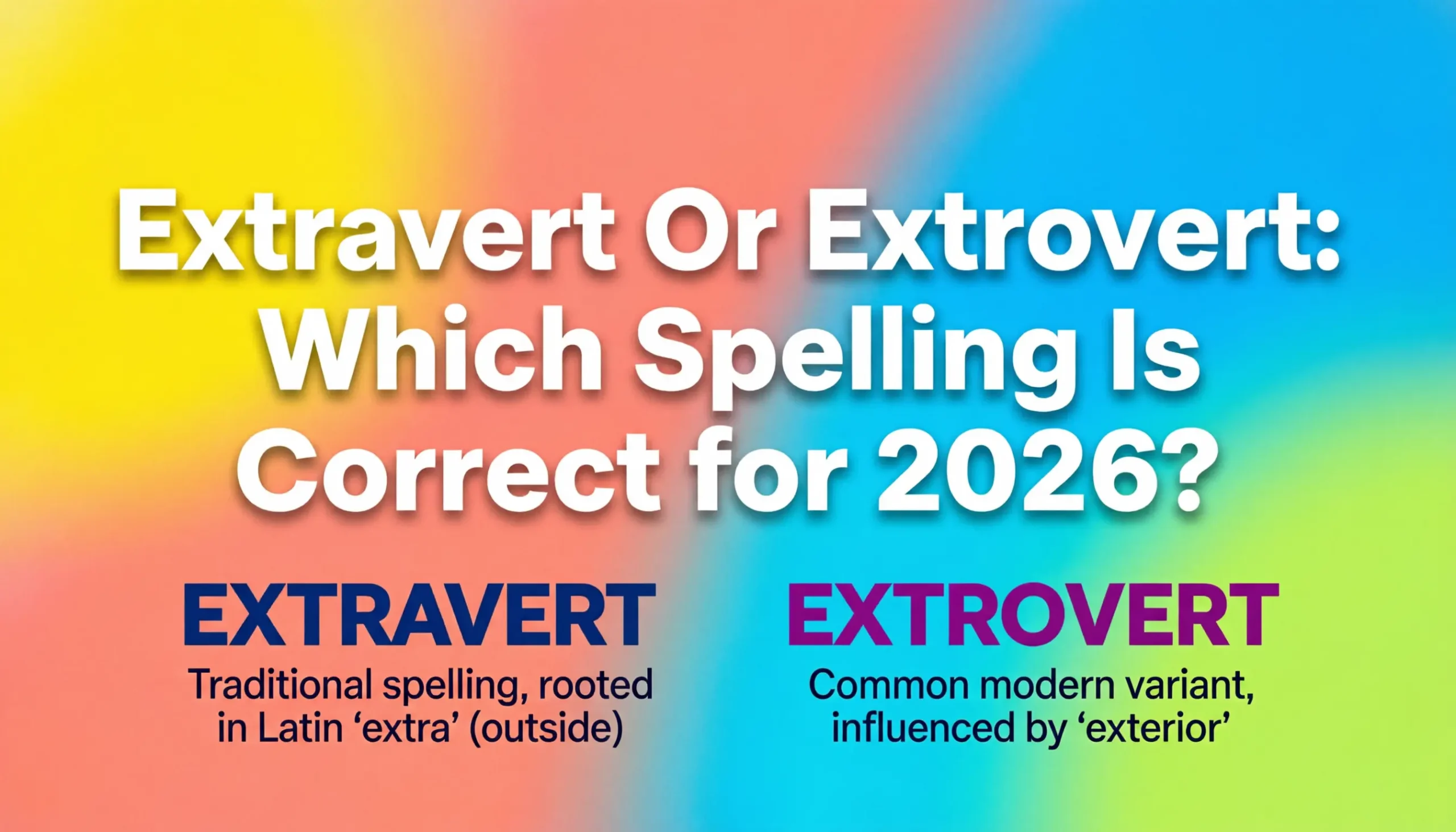
Are you confused about whether to write “extravert” or “extrovert”? You’re not alone. Many people struggle with this because both spellings are widely seen in English writing. This question pops up often in social media posts, professional emails, academic papers, and personality quizzes. Understanding the correct usage matters, especially in formal writing or global communication.
The confusion arises because both spellings refer to the same personality trait: someone outgoing, energetic, and socially confident. Yet, depending on where you are in Britain, the US, or elsewhere one spelling might be more common than the other. People search for this term to ensure their writing is accurate, professional, and contextually correct.
This article will give you a quick answer, explain the origin of the word, compare British and American English spellings, highlight common mistakes, and provide real-life examples.
By the end, you’ll know exactly which spelling to use in different contexts and why, making your writing more precise and confident.
Extravert or Extrovert – Quick Answer
Both “extravert” and “extrovert” describe a person who is outgoing, sociable, and energized by social interaction.
- Extravert – Traditionally preferred in British English and in psychological contexts. Example: She is an extravert who enjoys meeting new people.
- Extrovert – More common in American English and general usage. Example: John is an extrovert and loves attending parties.
Key point: They are interchangeable in meaning, but the spelling depends on regional preference or formality.
The Origin of Extravert/Extrovert
The term extravert was coined by Swiss psychiatrist Carl Jung in the early 20th century. He combined the Latin prefix extra- (meaning “outside”) with vertere (meaning “to turn”).
- Jung originally preferred extravert in his psychological writings.
- Over time, the spelling extrovert emerged in popular English, influenced by easier pronunciation and American usage.
In short, “extravert” is the older, technically correct form, while “extrovert” became the mainstream spelling.
British English vs American English Spelling
| Spelling | Region | Common Context | Example Sentence |
| Extravert | UK, Commonwealth | Psychology, formal writing | She is an extravert who excels at teamwork. |
| Extrovert | US | General, everyday English | Mark is an extrovert and enjoys socializing. |
Observation: British English often preserves original Latin-based spellings. American English favors phonetic simplicity, making extrovert more popular.
Which Spelling Should You Use?
- In the US: Use extrovert for both professional and casual writing.
- In the UK & Commonwealth: Use extravert, especially in academic or psychological contexts.
- Global audience: Extrovert is widely recognized and easily understood.
Tip: Check your audience. If writing for psychologists, academics, or British readers, stick with extravert. For general blogs, news, or US readers, extrovert is safer.
Common Mistakes with Extravert/Extrovert
- Using “extra-vert” – Incorrect; no hyphen is needed.
- Mixing spellings in the same text – Maintain consistency: choose either extravert or extrovert.
- Confusing with introvert – Remember: introvert = inward-focused, extravert/extrovert = outward-focused.
- Spelling based on pronunciation alone – Always check regional preference or style guide.
Extravert/Extrovert in Everyday Examples
- Emails:
- As an extrovert, I thrive during team meetings.
- Extravert personalities often take the lead in discussions.
- As an extrovert, I thrive during team meetings.
- News Articles:
- “The extrovert in him made him a natural public speaker.”
- “The extrovert in him made him a natural public speaker.”
- Social Media:
- “Totally an extravert, I can’t spend a whole day alone!”
- “Totally an extravert, I can’t spend a whole day alone!”
- Formal Writing:
- Extraverts tend to perform better in collaborative work environments.
- Extraverts tend to perform better in collaborative work environments.
Extravert/Extrovert – Google Trends & Usage Data
Data from Google Trends shows:
- Extrovert is significantly more searched in the US, Canada, and Australia.
- Extravert sees higher searches in the UK, India, and other Commonwealth countries.
- Usage peaks during psychology topics, personality quizzes, and career advice content.
| Keyword | Popularity (US) | Popularity (UK) | Popularity (Global) |
| Extrovert | High | Medium | High |
| Extravert | Low | Medium | Low-Medium |
Comparison Table: Keyword Variations
| Feature | Extravert | Extrovert |
| Origin | Jung, Latin | Popular usage |
| Region preference | UK, academic | US, general |
| Usage | Formal, technical | Casual, popular |
| Pronunciation | ek-STRAH-vert | EK-stro-vert |
| Acceptance worldwide | Medium | High |
FAQs:
- Is “extravert” wrong?
No, it’s correct and preferred in British English and psychology. - Which is more common, extravert or extrovert?
Extrovert is more common globally, especially in the US. - Can I use both spellings in the same text?
No, it’s best to choose one and stay consistent. - Are extraverts and extroverts the same?
Yes, they refer to the same personality trait. - Should I use extrovert in professional writing?
Depends on audience: US/general = extrovert; UK/academic = extravert. - Where did the word come from?
From Carl Jung’s Latin-based coinage combining extra (“outside”) + vertere (“to turn”). - Is it pronounced differently?
Slightly: extravert (ek-STRAH-vert), extrovert (EK-stro-vert). - Does the spelling affect meaning?
No, both mean outgoing, social personality. - Are there other variants?
Some rare older texts use “extrauert” but it’s obsolete.
Conclusion:
Choosing between extravert and extrovert comes down to context, region, and audience. Both words describe outgoing, socially confident personalities, but extravert is rooted in Jung’s original terminology and British English, while extrovert dominates American English and global casual writing.
Consistency is key: don’t mix spellings within a text. Consider your readers academics and psychologists will recognize extravert, while most general readers are familiar with extrovert. In modern usage, both are correct, interchangeable, and widely understood. Knowing the subtle differences boosts your credibility, ensures clarity, and makes your writing look polished, whether it’s for a blog, article, email, or social media post.
Ultimately, understanding extravert vs extrovert helps you write confidently and communicate accurately in both professional and casual contexts.

I am a professional English language writer and editor with a strong focus on word comparisons, spelling differences, and usage clarity. I specialize in explaining confusing English words in a simple, reader-friendly way. With a background in linguistics and digital content writing, I help learners understand British vs American English, commonly confused terms, and everyday grammar mistakes.






Post Comment