Follow or Fallow: Which One is Correct?
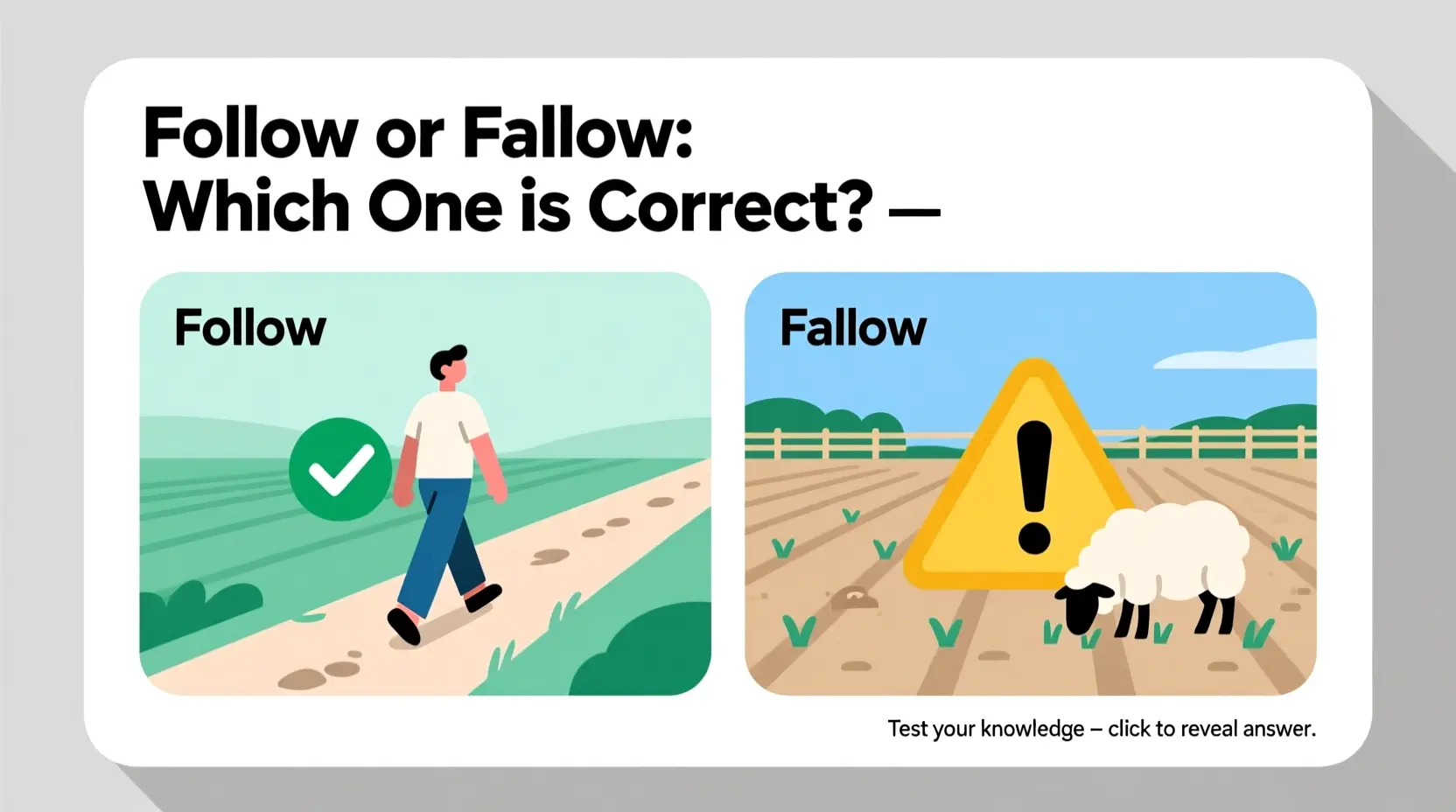
I still remember the day when I got confused between “follow” and “fallow.” I was writing a simple sentence and thought, “This should be easy,” but suddenly I stopped.
Both words looked almost the same, and for a moment, I honestly didn’t know which one to use. I felt embarrassed because I had seen these words many times before, yet I had never really understood the difference.
I decided not to ignore the problem. Instead, I told myself, “If this confuses me, it must be confusing for others too.” So I started digging deeper. I checked examples, read meanings, and even made my own sentences. Slowly, everything became clear.
I realized that “follow” is something we use in daily life when we follow a person, a rule, or even someone on social media. On the other hand, “fallow” is a completely different word, mostly used for land that is left unused so it can regain its strength.
Once I understood this difference, the confusion disappeared forever. Now, whenever I see these words, I smile because I remember how one small issue helped me learn something important.
And that’s exactly why I’m sharing this with you so you don’t repeat the same mistake I did, and you can master follow vs. fallow with confidence.
This article clears up the confusion with simple explanations, real-world examples, and practical advice. By the end, you’ll know exactly when to use each word correctly.
Follow or Fallow – Quick Answer

- Follow: Verb meaning to go after, track, or obey.
Example: “I follow my favorite writer on social media.” - Fallow: Adjective or noun meaning unused, dormant, or left unplanted.
Example: “The farmer left the field fallow this year to restore soil fertility.”
✅ Quick Tip: If it’s about people, rules, or trends, use follow. If it’s about land or inactivity, use fallow.
The Origin of Follow and Fallow

- Follow: Comes from Old English fylgan, meaning to pursue or accompany. It has always been used in contexts of tracking, obedience, or guidance.
- Fallow: Comes from Old English fealwe, meaning pale or light yellow, originally describing the color of uncultivated land. Over time, it became associated with land left unplanted.
Despite sounding alike, their roots are entirely different one is about movement and the other about stillness.
British English vs American English Spelling
Both follow and fallow are spelled the same in British and American English. There is no spelling difference, but context matters.
| Word | Meaning | British English | American English |
| Follow | Track, obey, pursue | follow | follow |
| Fallow | Unplanted land, dormant, inactive | fallow | fallow |
✅ Tip: Focus on meaning, not spelling, since both variants are identical across English dialects.
Which Spelling Should You Use?
Since both words are spelled the same globally, the key is audience and context:
- Use “follow” when writing for social media, emails, or instructions.
- Use “fallow” when talking about agriculture, gardening, or metaphorical inactivity.
Global audiences will understand you if you choose based on context rather than regional spelling.
Common Mistakes with Follow or Fallow
- ❌ “I left my fields follow this year.” → Incorrect
- ✅ “I left my fields fallow this year.” → Correct
- ❌ “Make sure to fallow the instructions carefully.” → Incorrect
- ✅ “Make sure to follow the instructions carefully.” → Correct
- Mistake happens when sound-alike words are typed without considering meaning.
Follow or Fallow in Everyday Examples
Emails: “Please follow the steps in the attachment.”
News Articles: “Farmers left several plots fallow to improve soil quality.”
Social Media: “Follow our page for daily updates!”
Formal Writing: “It is advised to leave some sections fallow for research purposes.”
Follow or Fallow / Google Trends & Usage Data
- Follow is searched more frequently than fallow globally.
- Follow is popular in social media and technology contexts.
- Fallow appears more in agriculture, environmental studies, and land management topics.
| Keyword | Global Popularity | Common Contexts |
| Follow | High | Social media, instructions |
| Fallow | Low | Agriculture, land management |
FAQs:
- Can “fallow” be used for humans?
Rarely, only metaphorically, e.g., “a fallow period in her career.” - Is “follow” only a verb?
Mostly yes, but can be a noun in phrases like “in the follow of events.” - Are these words interchangeable?
No, they have completely different meanings. - Which is more common?
“Follow” is far more common in everyday usage. - Is “fallow” outdated?
No, still used in agriculture and metaphorical writing. - How do I remember the difference?
Follow = movement or action; Fallow = stillness or inactivity. - Do dictionaries list them together?
No, they are separate entries with unrelated definitions.
Conclusion
Understanding follow vs fallow is simple once you focus on meaning. Follow is about tracking, obeying, or pursuing, while fallow describes land left unplanted or periods of inactivity. Both words are spelled the same in British and American English, so your choice depends on context, not location.
Remember: if it’s about people, trends, or instructions → follow. If it’s about agriculture, rest, or metaphorical dormancy → fallow. Avoid mixing them in writing to maintain clarity and professionalism. By mastering these distinctions, you’ll write accurately and confidently in emails, reports, social media posts, and academic work.

I am an experienced content writer specializing in modern English usage, vocabulary comparisons, and language learning guides. I write clear and concise explanations to help readers quickly understand the correct word choice. My writing style is practical, SEO-friendly, and ideal for students, bloggers, and non-native English learners






Post Comment