Gasses Or Gases – Which Spelling is Correct?
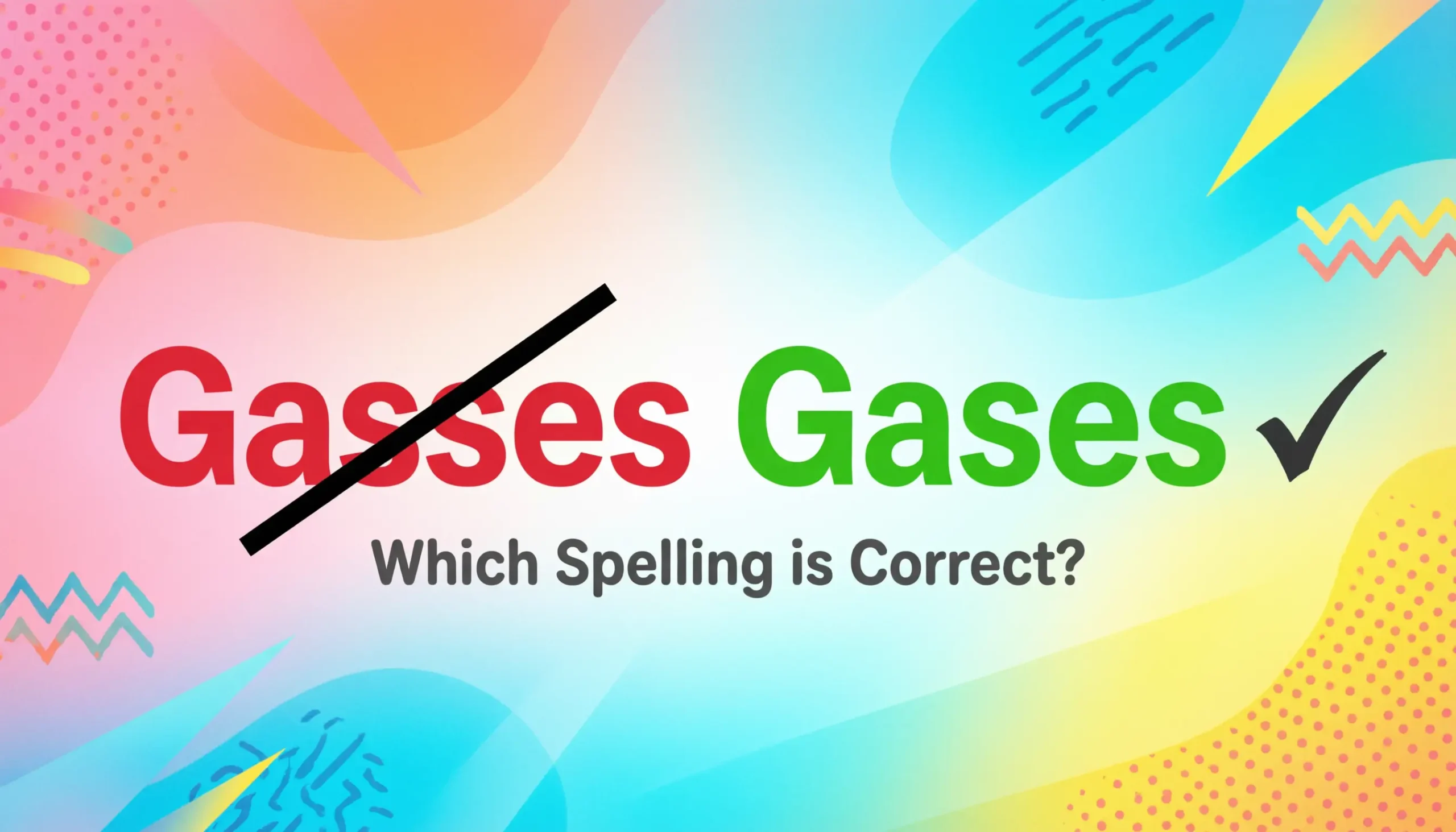
Are you confused about whether to write “gasses” or “gases”? You’re not alone. Many English learners, writers, and even professionals wonder about this spelling. Understanding the difference matters for science writing, journalism, emails, and academic work. Using the wrong spelling can make your work look unprofessional.
The confusion arises because English has multiple variants American and British and historical spelling quirks. Some words double the “s” depending on the context, which makes “gasses” tempting. Yet, knowing the proper usage ensures your writing is accurate and credible.
This guide breaks down the difference, explains the origin, compares UK and US spelling, shows everyday examples, and provides expert advice on which form to use.
By the end, you’ll confidently choose the correct spelling in any situation.
Gasses or Gases – Quick Answer
Quick Answer: The correct spelling in most contexts is “gases”.
- Gases – Plural of gas; refers to matter in gaseous form. Example: “Carbon dioxide and oxygen are essential gases in the atmosphere.”
- Gasses – Rarely correct; mainly used as a verb meaning “to emit gas” or “to spray with gas.” Example: “The factory gasses the grains to prevent pests.”
Tip: When talking about substances like oxygen, nitrogen, or carbon dioxide, always use gases.
The Origin of Gases
The word “gas” was coined in the 17th century by the Flemish chemist Jan Baptist van Helmont. He derived it from the Greek word “chaos”, reflecting its invisible, formless nature.
- Gas (singular) – Matter in a state that expands to fill its container.
- Gases (plural) – More than one type of gas.
- Gasses (verb) – Refers to the action of emitting or applying gas.
The spelling difference between “gases” and “gasses” comes from English’s historical tendency to double consonants when adding verb endings, but this does not apply to the plural of “gas.”
British English vs American English Spelling
The difference between gasses and gases is not regional; it’s mostly context-based. Both British and American English use gases as the standard plural.
| Context | Correct Form | Example |
| Plural noun (matter) | gases | “The lab studied several gases.” |
| Verb (to emit gas) | gasses | “The chemicals gasses the room.” |
| UK English | gases (plural), gasses (verb) | “All gases must be handled safely.” |
| US English | gases (plural), gasses (verb) | “The storage unit gasses grains.” |
Key point: The plural noun “gases” is universal. Only the verb form doubles the “s.”
Which Spelling Should You Use?
- For general writing, science, and journalism: Use gases.
- When describing an action (verb): Use gasses.
- Audience consideration:
- UK & Commonwealth: “gases” for plural, “gasses” for verbs.
- US English: Same rules; consistency matters more than variant.
- Global content: Stick to gases for clarity.
- UK & Commonwealth: “gases” for plural, “gasses” for verbs.
Common Mistakes with Gasses or Gases
- Incorrect: “The gasses in the room were dangerous.”
Correct: “The gases in the room were dangerous.” - Incorrect: “Oxygen is one of the gasses we breathe.”
Correct: “Oxygen is one of the gases we breathe.” - Confusing verb vs noun: Using gasses for the plural noun is wrong.
- Overusing “gasses” in formal writing reduces credibility.
Rule of thumb: Noun = gases; Verb = gasses.
Gasses or Gases in Everyday Examples
- Emails: “Please ensure all gases are stored properly in the lab.”
- News articles: “Carbon monoxide and other gases caused the evacuation.”
- Social media: “We learned about different gases in chemistry class today!”
- Formal writing: “Greenhouse gases contribute significantly to climate change.”
Gasses – Google Trends & Usage Data
According to Google Trends:
- Gases dominates worldwide search queries, especially in the US, UK, Canada, and Australia.
- Gasses is searched less, mainly in contexts related to pest control or historical texts.
- Peak searches occur in scientific education seasons and environmental discussions.
| Keyword | Global Popularity | Common Context |
| gases | High | Science, environment, chemistry |
| gasses | Low | Verb form, historical texts, niche industries |
Insight: Most users search for “gases,” confirming it’s the standard and expected spelling.
Read More Article: Slut Meaning: What It Really Means Historically and Today
Comparison Table – Gasses vs Gases
| Feature | Gases | Gasses |
| Part of speech | Noun | Verb |
| Meaning | Plural of gas | To emit or spray gas |
| Example | “Air contains several gases.” | “The factory gasses the wheat.” |
| UK vs US | Universal | Universal |
| Usage frequency | Very common | Rare |
FAQs:
Q1: Is “gasses” ever correct?
Yes, only as a verb meaning “to emit gas.”
Q2: Can I use “gasses” for plural gases?
No, always use gases for plural nouns.
Q3: Which is more common globally?
Gases is far more common in searches, writing, and publications.
Q4: Does spelling differ between US and UK?
No, both use gases for the plural noun.
Q5: Is “gases” correct in science papers?
Absolutely. “Gases” is standard in academic, journalistic, and professional writing.
Q6: How do I remember the difference?
Noun = gases; Verb = gasses. Think of action vs substance.
Q7: Can “gasses” be used in informal writing?
Yes, but only in the correct verb context. Misuse may appear unprofessional.
Q8: Are there alternative spellings?
No legitimate alternatives exist; “gases” is the standard plural.
Q9: How is it pronounced?
“Speakers pronounce both forms as /ɡæsɪz/ in the plural and /ɡæs/ in the singular.”
Conclusion:
Choosing between gasses and gases is simpler than it seems. The word gases is the standard plural for scientific, professional, and everyday writing worldwide. Only in verb contexts meaning “to emit gas” does gasses apply. Misusing these can confuse readers or reduce credibility, so stick to the rules.
Remember: noun = gases, verb = gasses. For global communication, especially in science, environmental, and educational content, gases is your safe choice. Understanding this distinction helps you write clearly, professionally, and confidently, avoiding common errors. Even social media posts, emails, and formal reports benefit from correct usage.“Maintaining consistency across US and UK English ensures that your work looks polished and is universally understood.”
By following these guidelines, you’ll never second-guess your spelling again, keeping your writing accurate, credible, and professional.

I am a professional English language writer and editor with a strong focus on word comparisons, spelling differences, and usage clarity. I specialize in explaining confusing English words in a simple, reader-friendly way. With a background in linguistics and digital content writing, I help learners understand British vs American English, commonly confused terms, and everyday grammar mistakes.








Post Comment