Karat Or Carat – Simple Guide to Avoid Confusion for 2026.
Many people search for “karat or carat” when buying jewellery, reading about diamonds, or checking gold purity. At first glance, the two words look almost identical. Because of this, people often think they mean the same thing. But they actually describe two different things.
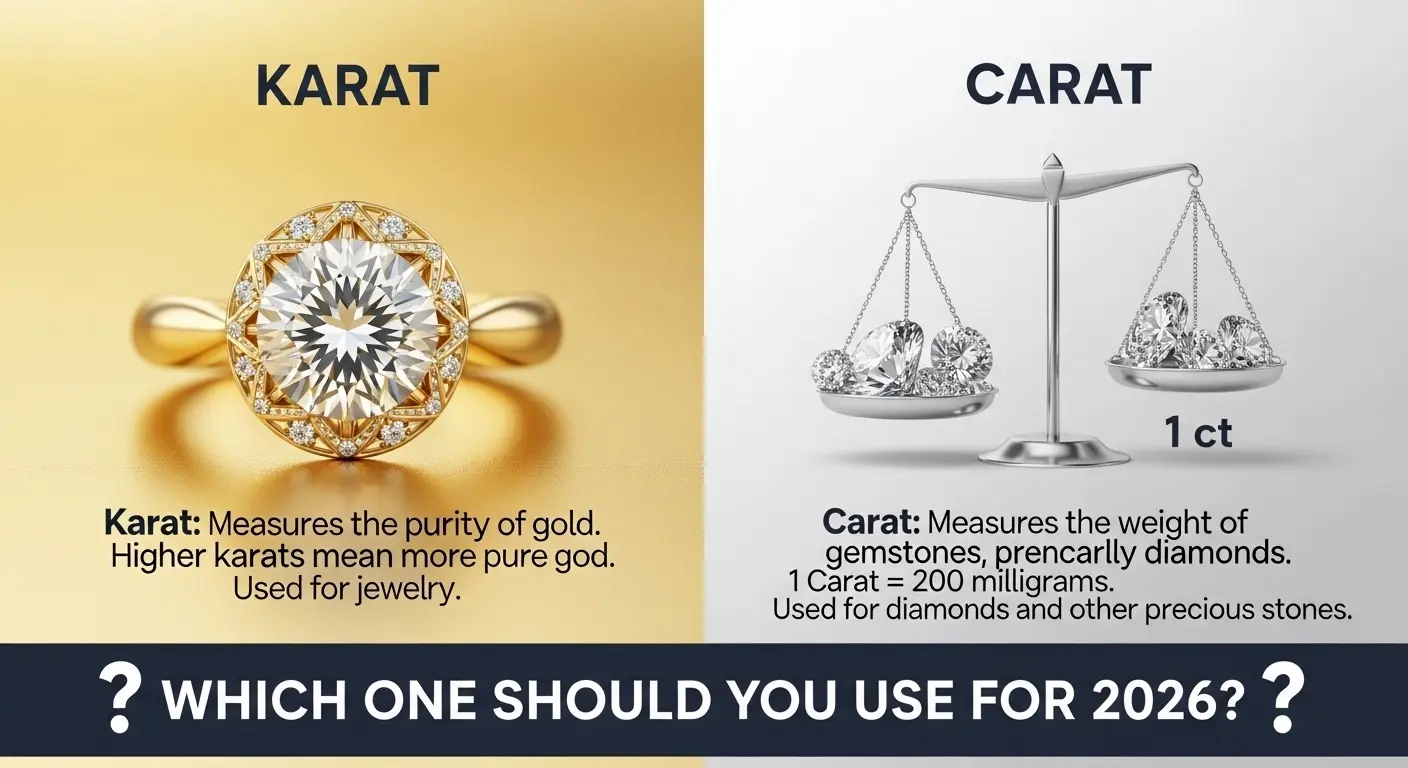
In simple terms, carat measures the weight of gemstones, while karat measures the purity of gold. The confusion happens because both words sound the same and are often used in the jewellery industry. When shopping for a diamond ring or a gold necklace, seeing both terms together can easily cause mistakes.
Understanding the difference between karat and carat helps buyers make smarter choices. It also prevents misunderstandings when reading jewellery descriptions, advertisements, or product labels.
This guide will explain the difference clearly. You will learn the meaning of each word, where the terms came from, how they are used in British and American English, and how to avoid common mistakes. By the end, you will know exactly when to use “karat” and when to use “carat.”
Karat or Carat – Quick Answer
The quick answer is simple:
- Carat (ct) measures the weight of gemstones, especially diamonds.
- Karat (K or kt) measures the purity of gold.
Examples
- A diamond ring may have a 2-carat diamond.
- A gold bracelet may be made from 18-karat gold.
Easy Way to Remember
| Word | Meaning | Example |
| Carat | Weight of gemstones | 1.5-carat diamond |
| Karat | Purity of gold | 24-karat gold |
Tip:
Think of “carat = stone weight” and “karat = gold quality.”
The Origin of Karat or Carat
The words karat and carat come from the same historical source.
Long ago, traders used carob seeds to weigh gemstones. These seeds were small and had a very consistent weight. Because of this, merchants used them as a natural measurement system.
The word comes from the Greek word “keration,” meaning carob seed.
Over time:
- The word evolved into “carat” for gemstone weight.
- The spelling “karat” later developed in the United States to represent gold purity.
Historical Development
| Time Period | Development |
| Ancient trade | Carob seeds used for measuring gemstones |
| Middle Ages | Term “carat” used in European trade |
| Modern jewellery | “Carat” used for diamonds |
| American usage | “Karat” used for gold purity |
Today, both words still share the same historical root but have different meanings in modern English.
British English vs American English Spelling
The spelling difference is partly related to regional language preferences.
- Carat is the standard spelling worldwide for gemstone weight.
- Karat is mainly used in American English for gold purity.
- British English often still uses carat even when referring to gold purity, although karat is widely recognized.
Comparison Table
| Feature | British English | American English |
| Gemstone weight | Carat | Carat |
| Gold purity | Carat (sometimes) | Karat |
| Jewellery labeling | Usually carat | Often karat |
Example Sentences
British English:
- “The ring contains a two-carat diamond.”
American English:
- “The necklace is made of 18-karat gold.”
Although both spellings exist, the meaning depends on the context, not only the region.
Which Spelling Should You Use?
Choosing the correct word depends on what you are describing.
Use Carat When Talking About Gemstones
Use carat if you are referring to:
- Diamond weight
- Ruby or sapphire weight
- Any gemstone measurement
Example:
- “She bought a 3-carat diamond ring.”
Use Karat When Talking About Gold
Use karat when describing:
- Gold purity
- Gold jewellery quality
Example:
- “This chain is made from 22-karat gold.”
Audience-Based Advice
| Audience | Recommended Usage |
| United States | Karat for gold, Carat for gemstones |
| United Kingdom | Carat for gemstones and sometimes gold |
| International audiences | Follow jewellery industry standards |
If you are writing for a global audience, follow the standard rule:
Carat = gemstone weight
Karat = gold purity
Common Mistakes with Karat or Carat
Because the words sound the same, people often mix them up.
Here are some frequent mistakes.
Mistake 1: Using Carat for Gold Purity
Incorrect:
“18-carat gold necklace”
Correct:
“18-karat gold necklace”
Mistake 2: Using Karat for Diamond Weight
Incorrect:
“A 2-karat diamond”
Correct:
“A 2-carat diamond”
Mistake 3: Thinking They Mean the Same Thing
Many people assume they are interchangeable. They are not.
| Incorrect Usage | Correct Usage |
| 24-carat diamond | 24-karat gold |
| 3-karat diamond | 3-carat diamond |
Remember: carat measures weight, karat measures purity.
Karat or Carat in Everyday Examples
Here is how these words appear in daily communication.
Emails
“Hi Sarah,
The engagement ring has a 1.5-carat diamond and an 18-karat gold band.”
News Articles
“Jewellery sales increased after a celebrity wore a five-carat diamond necklace.”
Social Media
“Just got my dream ring! 💍 2-carat diamond with 18-karat gold.”
Formal Writing
“The museum displayed a crown decorated with large carat gemstones and high-karat gold.”
These examples show that both terms are often used together in jewellery descriptions.
Karat or Carat – Google Trends & Usage Data
Online search data shows that “carat” is searched more often than “karat.”
Why?
Because diamonds and gemstones are discussed more frequently online.
Popular Usage by Context
| Term | Common Context |
| Carat | Diamonds, gemstones, engagement rings |
| Karat | Gold jewellery, gold purity |
Popular Countries Searching These Terms
- United States
- United Kingdom
- Canada
- Australia
- India
Search trends also show spikes during:
- Engagement seasons
- Holiday jewellery shopping
- Luxury fashion trends
This indicates that most searches come from people buying jewellery or researching diamonds.
Keyword Comparison Table
| Term | Meaning | Used For | Symbol |
| Carat | Weight measurement | Diamonds and gemstones | ct |
| Karat | Gold purity measurement | Gold jewellery | K or kt |
FAQs:
1. Is karat the same as carat?
No. Carat measures gemstone weight, while karat measures gold purity.
2. What does 24-karat gold mean?
24-karat gold means the gold is almost completely pure.
3. How much is one carat?
One carat equals 200 milligrams (0.2 grams).
4. Why do diamonds use carats?
Carats provide a standard measurement so buyers can compare gemstone sizes accurately.
5. Which is better: higher karat gold?
Higher karat gold means more pure gold, but it is also softer and easier to scratch.
6. Is 18-karat gold real gold?
Yes. 18-karat gold contains 75% pure gold mixed with other metals.
7. Can a diamond have karats?
No. Diamonds are measured in carats, not karats.
8. Do all countries use carats for diamonds?
Yes. The carat weight system is used worldwide in the gemstone industry.
9. Is carat used for gold in the UK?
Sometimes, but most jewellery experts prefer karat for gold purity.
Conclusion
The difference between karat and carat is simple once you understand their roles in jewelry. A carat measures the weight of gemstones, especially diamonds. When someone says a diamond is two carats, they are describing its size based on weight. This measurement is used around the world and helps buyers compare gemstones easily.
A karat, on the other hand, measures the purity of gold. Higher karat numbers mean the gold contains a greater percentage of pure gold. For example, 24-karat gold is almost pure, while 18-karat gold contains 75% gold mixed with other metals.
The confusion happens because the words sound the same and share the same historical root. However, remembering a simple rule can help: carat for stones, karat for gold.
If you are writing for an international audience or buying jewelry, using the correct term improves clarity and professionalism. If you are purchasing a diamond ring or a gold necklace, understanding this difference ensures you make informed decisions and avoid common mistakes.

I am an English language specialist and educational writer focused on grammar rules, word differences, and clear communication. I have years of experience creating easy-to-understand guides that simplify complex English topics. Mine content is trusted by learners looking for accurate and well-structured language explanations.



Post Comment