Layed or Laid: Which One Is Correct? A Simple Guide for 2026

Many English learners and even native speakers search for “layed or laid” because these two spellings look confusing.
You might see layed online, in messages, or even in informal writing. Then your spell-checker underlines it, and suddenly you’re unsure. Is layed correct? Is laid only for American English? Or does British English allow both?
This confusion happens because English verbs often change form in ways that don’t feel logical. The verb lay is irregular, and irregular verbs are one of the biggest pain points in English.
People usually search for this keyword when writing emails, exams, social media posts, or professional documents and want to avoid mistakes.
This article solves that confusion clearly and quickly. You’ll get a straight answer, real examples, UK vs US usage, common mistakes, and practical advice on which spelling to use.
By the end, you’ll know exactly when to use laid, why layed is wrong, and how to remember it forever.
Layed or Laid – Quick Answer
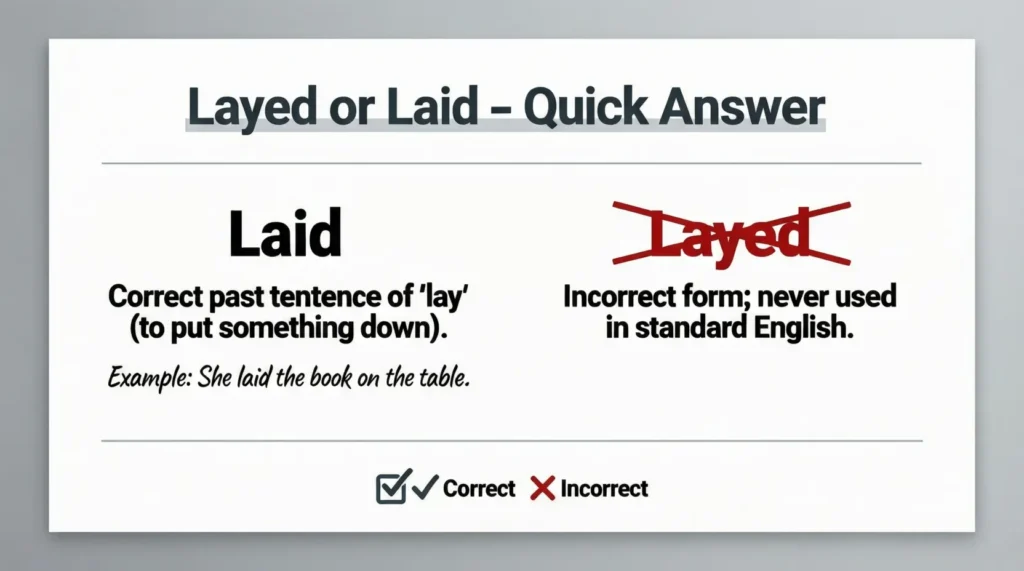
✅ “Laid” is correct.
❌ “Layed” is incorrect in standard English.
The past tense and past participle of lay is laid, not layed.
Examples:
- She laid the book on the table. ✅
- He has laid the foundation already. ✅
- She layed the book on the table. ❌
There is no situation in modern standard English where layed is correct.
The Origin of Layed or Laid
The verb lay comes from Old English “lecgan”, meaning to place or put down. Over time, its forms changed irregularly:
- Present: lay
- Past: laid
- Past participle: laid
English once had more regular spelling patterns, but many common verbs kept older forms. That’s why we don’t add -ed to make layed. Instead, the vowel sound changed, giving us laid.
So the confusion exists because English looks like it should follow rules—but history often wins.
British English vs American English Spelling
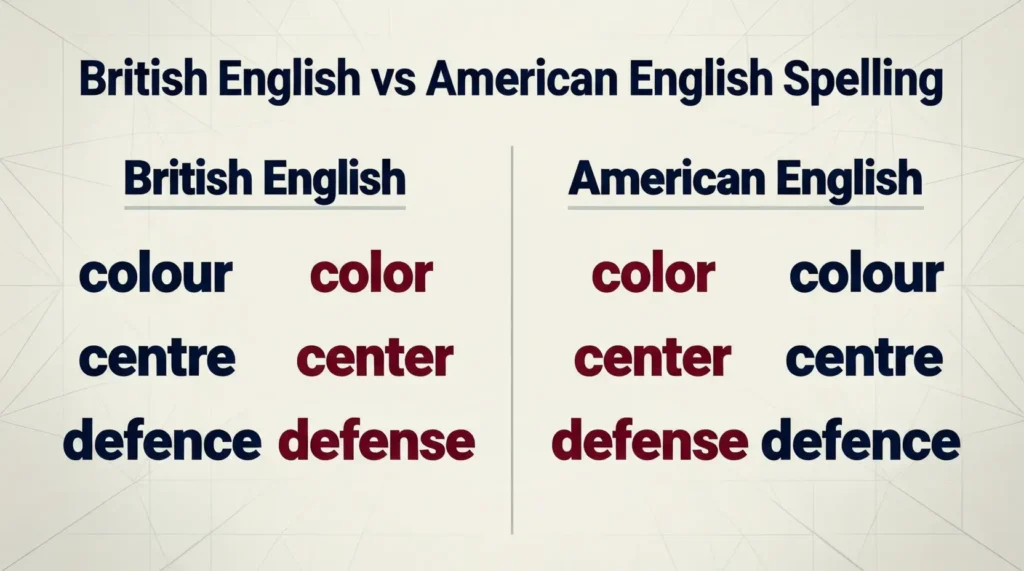
There is no spelling difference between British and American English for this word.
Both use laid as the only correct form.
| English Type | Correct Form | Example |
| British English | laid | She laid the keys on the desk. |
| American English | laid | He laid the carpet yesterday. |
| Australian / Canadian | laid | They have laid new rules. |
❌ Layed is wrong in all varieties of English.
Which Spelling Should You Use?
Always use laid, no matter your audience.
- US audience: Use laid
- UK audience: Use laid
- Commonwealth countries: Use laid
- Global or SEO writing: Use laid
If you want safe, professional English, never use “layed.”
Common Mistakes with Layed or Laid
Here are frequent errors and fixes:
- ❌ She layed the baby down.
✅ She laid the baby down. - ❌ They have layed new pipes.
✅ They have laid new pipes. - ❌ The company layed off workers.
✅ The company laid off workers.
Tip:
If you can replace the word with placed, then laid is correct.
Layed or Laid in Everyday Examples
Emails:
- I have laid the documents on your desk.
News:
- The government has laid new laws before parliament.
Social Media:
- Just laid my phone down and missed the call 😅
Formal Writing:
- The committee laid the groundwork for future reforms.
Layed or Laid /Google Trends & Usage Data
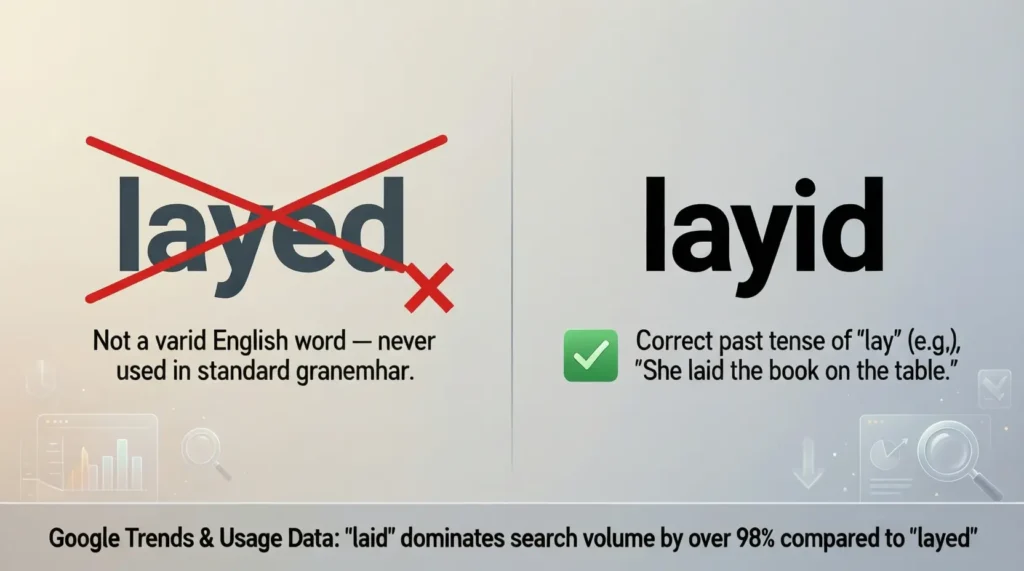
Search data shows that “layed” is often searched by learners, but “laid” is the correct and widely used form.
- High searches: Non-native English countries
- Correct usage: US, UK, global media
- Context: Grammar checks, exams, writing help
Most searches come from people trying to confirm correctness, not from actual correct usage.
Comparison Table: Layed vs Laid
| Form | Correct? | Usage |
| laid | ✅ Yes | Past tense of lay |
| layed | ❌ No | Not standard English |
FAQs:
1. Is “layed” ever correct?
No. It is always incorrect.
2. Why do people write “layed”?
Because they apply regular -ed rules by mistake.
3. Is “laid” past tense or past participle?
Both.
- Past: She laid the book down.
- Participle: She has laid the book down.
4. Is this different in British English?
No. British and American English are the same here.
5. What about “laid off”?
Correct. Laid off means fired from a job.
6. How can I remember it?
Think: lay → laid → placed.
7. Is “lay” the same as “lie”?
No. Lay needs an object. Lie does not.
Conclusion:
The confusion between layed or laid is common, but the rule is simple. Laid is the only correct spelling in standard English. The word layed does not exist as a correct form, no matter the country or context. This applies to British English, American English, and all international usage.
If you remember just one thing, remember this: lay → laid, just like pay → paid. English irregular verbs can feel frustrating, but once you learn their patterns, your writing becomes clearer and more confident. If you are writing an email, preparing for an exam, posting on social media, or creating professional content, using laid correctly will instantly improve your credibility.
When in doubt, replace the word with placed. If the sentence still makes sense, laid is the right choice. Mastering small details like this is what separates basic English from polished, professional English.

I am an English language specialist and educational writer focused on grammar rules, word differences, and clear communication. I have years of experience creating easy-to-understand guides that simplify complex English topics. Mine content is trusted by learners looking for accurate and well-structured language explanations.




Post Comment