Loath Or Loathe – Which One Is Correct for 2026?
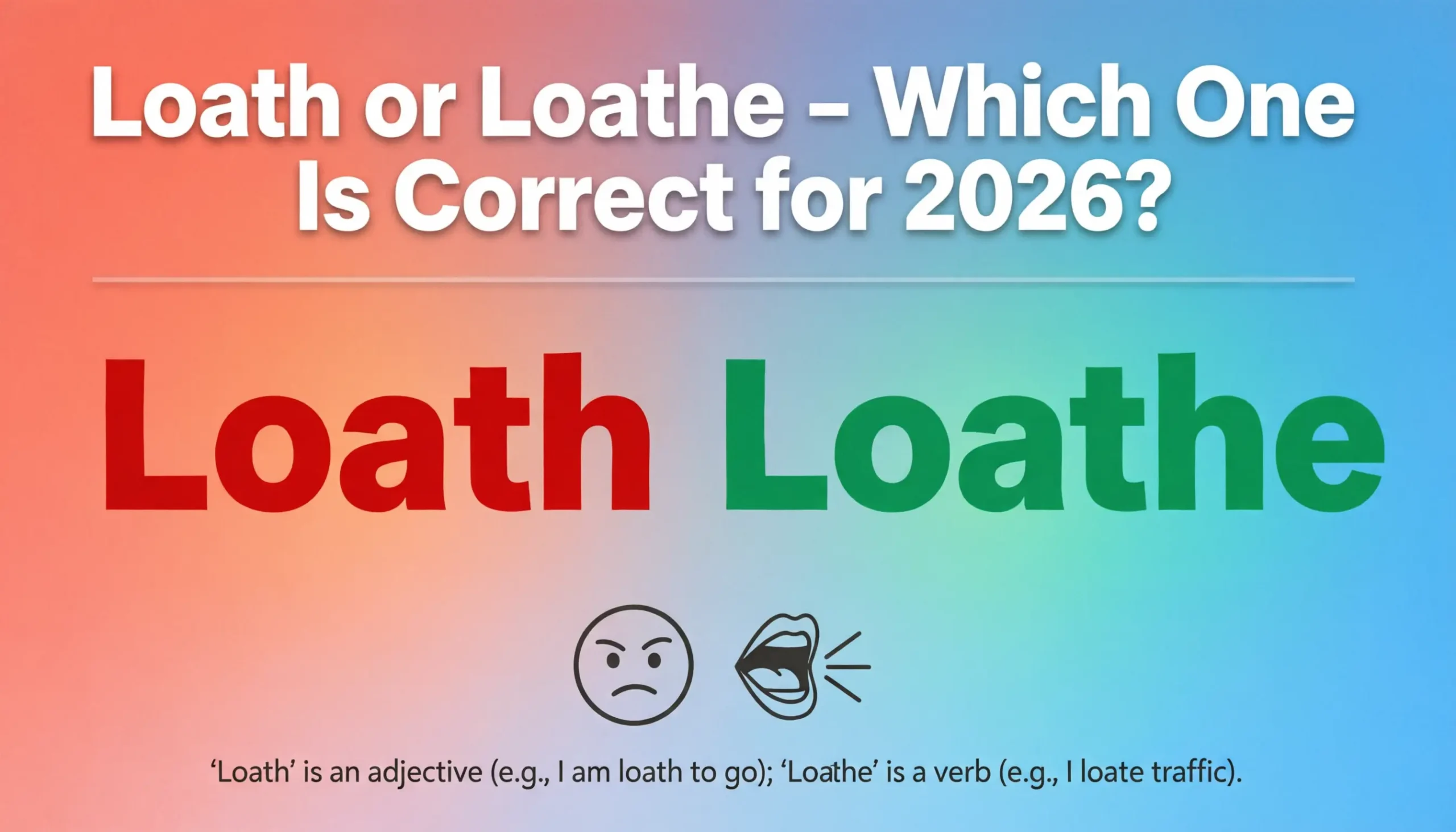
Have you ever paused while writing a sentence, unsure whether to use “loath” or “loathe”? You’re not alone. These two words look and sound similar, yet their meanings and usage are subtly different.
Many English learners and even native speakers search for clarity because using the wrong one can change the tone of your sentence or make it sound awkward.
Understanding the difference is essential for writing emails, social media posts, formal letters, or even casual text messages confidently. While “loath” is an adjective expressing reluctance or unwillingness, “loathe” is a verb expressing strong dislike or hatred. Confusing them can make your writing less professional or confusing for readers.
This guide will give you a quick answer, dive into the history and origin of each word, explain the British vs American English usage, show common mistakes, and provide practical examples. By the end, you’ll know exactly when to use loath or loathe, avoiding embarrassment and boosting your English writing skills.
Loath or Loathe – Quick Answer
- Loath (adjective): Reluctant or unwilling.
- Example: I am loath to interrupt the meeting.
- Example: I am loath to interrupt the meeting.
- Loathe (verb): To hate or detest.
- Example: She loathes waking up early on weekends.
- Example: She loathes waking up early on weekends.
Tip: If you are describing a feeling of dislike, use loathe. If describing reluctance, use loath.
The Origin of Loath / Loathe
Both words come from Old English:
- Loath: From Old English lāth, meaning “unacceptable, hostile, or unwilling.”
- Loathe: Derived from Middle English lothen, meaning “to feel disgust or hatred.”
Over time, loath became a formal adjective, while loathe evolved into a verb. English spelling hasn’t changed much, but the pronunciation can be slightly different depending on the region.
British English vs American English Spelling
Both loath and loathe are spelled the same in UK and US English. Unlike words like “color/colour” or “travelled/traveled,” there’s no regional spelling difference here. The main confusion comes from meaning and grammar rather than spelling.
| Word | Part of Speech | Meaning | Example (UK) | Example (US) |
| Loath | Adjective | Reluctant or unwilling | I am loath to refuse help. | I am loath to refuse help. |
| Loathe | Verb | Hate or strongly dislike | He loathes injustice. | He loathes injustice. |
✅ Both are identical in spelling; differences are purely grammatical and contextual.
Which Spelling Should You Use?
- US Audience: Use the same forms – no regional change is needed.
- UK / Commonwealth Audience: Same spelling works; ensure correct usage of adjective vs verb.
- Global Writing: Focus on context: loath = reluctant, loathe = hate.
Pro Tip: If unsure, check whether the word is acting as a feeling/attitude (loath) or action (loathe).
Common Mistakes with Loath / Loathe
- Incorrect: I loathe going to the dentist.
Correct: I am loath to go to the dentist. - Incorrect: She is loathe helping him.
Correct: She is loath to help him. - Using loath as a verb:
- ❌ I loath Mondays.
- ✅ I loathe Mondays.
- ❌ I loath Mondays.
- Swapping meanings in formal writing:
- ❌ He is loath of fast food.
- ✅ He loathes fast food.
- ❌ He is loath of fast food.
Remember: loath = adjective, loathe = verb.
Loath / Loathe in Everyday Examples
Emails / Formal Writing:
- I am loath to cancel our meeting at short notice.
- Employees loathe unnecessary bureaucracy.
Social Media:
- I loathe traffic on Monday mornings.
- She’s loath to post her opinion online.
News / Articles:
- Citizens were loath to accept the new regulations.
- The public loathe corruption in politics.
Text Messaging / Casual:
- I loathe doing laundry.
- He’s loath to admit he’s wrong.
Loath or Loathe – Google Trends & Usage Data
According to Google Trends:
- “Loathe” is searched more frequently than “loath”, likely because people encounter strong dislike in daily life.
- Top countries searching for “loathe”: US, UK, Canada, Australia.
- Top contexts: Emotional expression, writing essays, grammar checks, social media captions.
- “Loath” searches peak in academic, literature, and formal writing contexts.
Insight: Writers often confuse them, which drives high search interest.
Comparison Table: Loath vs Loathe
| Feature | Loath | Loathe |
| Part of Speech | Adjective | Verb |
| Meaning | Reluctant, unwilling | Hate, strongly dislike |
| Example Sentence | I am loath to leave. | I loathe injustice. |
| Common Mistake | Using as verb | Using as adjective |
| Usage Context | Formal, literary | Everyday, emotional |
FAQs:
- Can I use loath and loathe interchangeably?
❌ No. One is an adjective (loath), the other a verb (loathe). - Is loath used in modern English?
✅ Yes, but mainly in formal or literary writing. - Do Americans use loath differently than the British?
⚠️ No, usage is the same. Confusion arises with meaning, not spelling. - Can loathe be used as an adjective?
❌ No. Only as a verb. - Is it correct to say “I am loath to do it”?
✅ Yes. This is the correct formal usage. - Which is more common in writing: loath or loathe?
Loathe is more common because expressing dislike is frequent. - Can loath express strong dislike like loathe?
❌ No. Loath conveys hesitation, not hatred. - Are there synonyms for loath and loathe?
- Loath: reluctant, unwilling, hesitant
- Loathe: hate, detest, abhor
- Loath: reluctant, unwilling, hesitant
- Is pronunciation different?
Slightly. Loath (single syllable /loʊθ/), loathe (verb /loʊð/).
Conclusion:
Confusing loath and loathe is common, but understanding their function in a sentence solves the problem instantly. Remember: loath = adjective expressing reluctance, and loathe = verb expressing hatred. There’s no spelling difference between British and American English, so focus on context and grammar.
Using the correct word elevates your writing, whether you are drafting emails, posting on social media, or writing formal essays. Pay attention to your audience: for global communication, clarity is more important than regional preference. Avoid common mistakes by checking if the word represents an attitude (loath) or an action (loathe).
By following these guidelines, your use of loath and loathe will be precise, professional, and readable, helping you communicate confidently in any English-speaking setting.
Discover More Article:
Carat or Karat – Which One is Correct? For 2026

I am an experienced content writer specializing in modern English usage, vocabulary comparisons, and language learning guides. I write clear and concise explanations to help readers quickly understand the correct word choice. My writing style is practical, SEO-friendly, and ideal for students, bloggers, and non-native English learners





Post Comment