Mischievous Or Mischievious- Which one is correct for 2026?
English spelling mistakes are very common, even for native speakers. One spelling confusion that appears again and again is “mischievous or mischievious.” Many people see both spellings online and think both might be correct. Others hear the word spoken aloud and spell it the same way they hear it. This creates doubt, especially for students, bloggers, teachers, and content writers.
The problem comes from pronunciation. Many people pronounce the word with an extra “ee” sound in the middle. Because of this sound, they add an extra “i” when writing it. Over time, this mistake spread across social media, blogs, and even school assignments. As a result, thousands of people search every month to find the correct spelling.
This article clears up the confusion completely. You will learn the correct spelling, why the mistake happens, how dictionaries treat both forms, and how to use the word correctly in real life.
If you write emails, posts, essays, or content, this guide gives you quick answers and expert advice in very simple language.
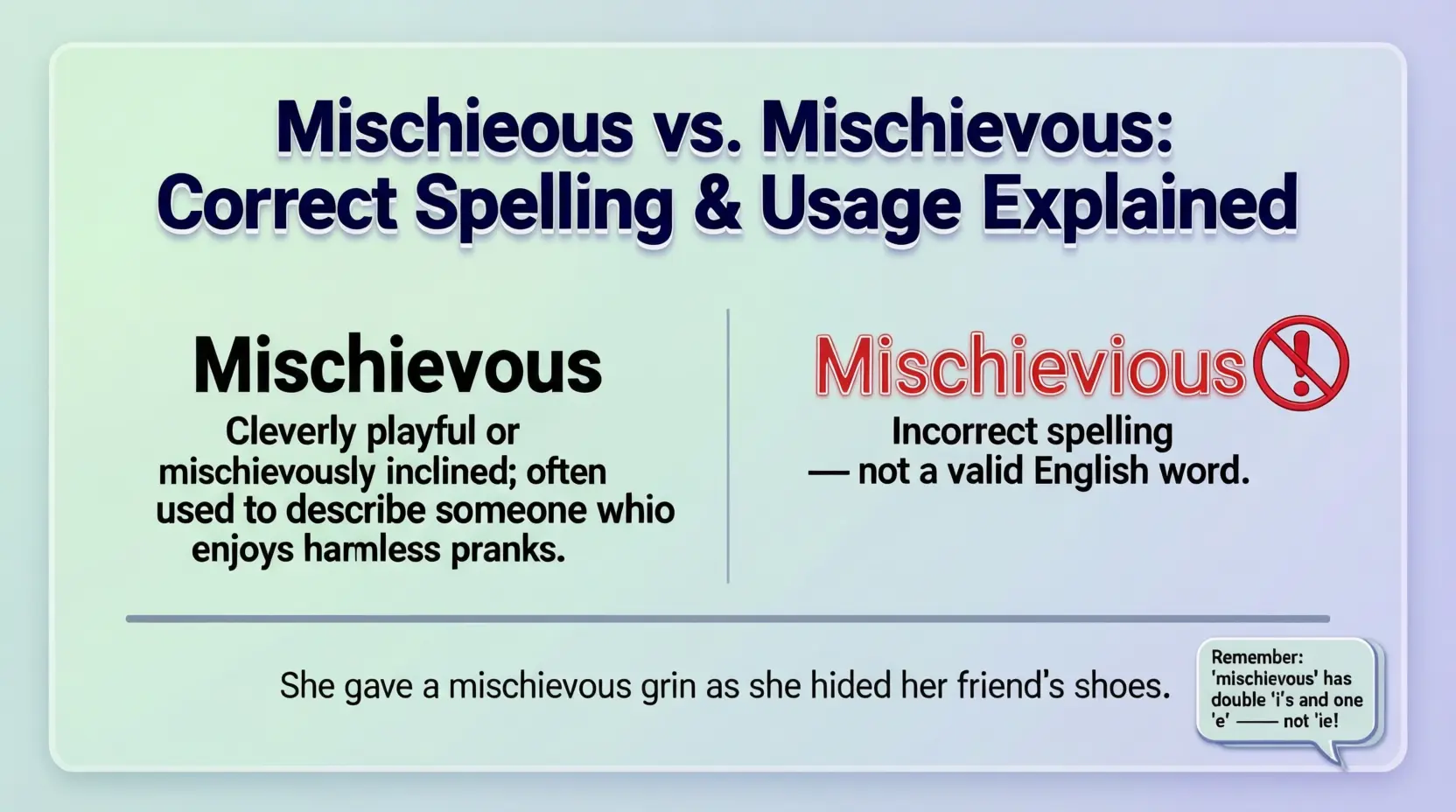
Mischievous or Mischievious – Quick Answer
✅ Correct Spelling
Mischievous
❌ Incorrect Spelling
Mischievious
There is no extra “i” in the correct word.
Simple Meaning
Mischievous means playful trouble, light naughty behavior, or fun teasing.
Quick Examples
- The cat gave a mischievous look.
- He played a mischievous prank on his friend.
👉 Mischievious is always wrong and should never be used.
What Does Mischievous Mean?
Basic Meaning (Grade 3 Level)
Mischievous describes someone who likes fun trouble, not serious harm.
Positive Meaning
- Playful
- Funny
- Clever
- Cheeky
Mild Negative Meaning
- Naughty
- Teasing
- Slightly annoying
Example Sentences
- The child is mischievous, but kind.
- She smiled in a mischievous way.
The Origin of Mischievous or Mischievious
Word History
The word mischievous comes from:
- Old French: meschevous
- Meaning: bad luck or trouble
Over time, the meaning changed. Instead of serious trouble, it began to describe small, playful trouble.
Why the Extra “I” Never Existed
The original spelling never included an extra “i.”
The wrong spelling mischievious appeared because people mispronounced the word.
Spelling stayed correct. Speech changed.
Why Do People Misspell Mischievous?
1. Wrong Pronunciation
Many people say:
- ❌ mis-chee-vee-us
Correct pronunciation:
- ✅ MIS-chuh-vus
2. Influence of Similar Words
Words like:
- Devious
- Gracious
- Curious
These patterns confuse writers.
3. Social Media Errors
Mistakes spread fast online. When people see wrong spelling often, it feels normal.
How Dictionaries Treat Mischievous vs Mischievious
Dictionary Check
| Word | Dictionary Status |
| Mischievous | ✅ Listed |
| Mischievious | ❌ Not listed |
Major dictionaries (Oxford, Merriam-Webster, Cambridge) only accept mischievous.
British English vs American English Spelling
Is There Any Difference?
No. Both use the same spelling.
Spelling Rules Comparison
| Language Style | Correct | Incorrect |
| American English | Mischievous | Mischievious |
| British English | Mischievous | Mischievious |
| Canadian English | Mischievous | Mischievious |
| Australian English | Mischievous | Mischievious |
Pronunciation Guide for Mischievous
Correct Pronunciation
- MIS-chuh-vus
Common Wrong Pronunciation
- mis-chee-vee-us
Tip to Remember
👉 No “ee” sound = no extra “i”
Which Spelling Should You Use?
For Students
Always use mischievous in:
- Exams
- Essays
- Homework
For Writers & Bloggers
Use mischievous to:
- Improve SEO
- Avoid spelling errors
- Build trust
For Global Audience
Only mischievous works worldwide.
Common Mistakes with Mischievous or Mischievious
Mistake 1: Adding Extra “I”
❌ mischievious
✅ mischievous
Mistake 2: Trusting Sound Over Spelling
English spelling does not always match sound.
Mistake 3: Auto-Correct Reliance
Spellcheck may miss this error.
Mischievous vs Similar Words
- Mischievous: playful trouble
- Naughty: rule breaking
Mischievous or Mischievious in Everyday Examples
In Emails
“Your mischievous ideas always make meetings fun.”
In News Articles
“The actor is famous for his mischievous smile.”
On Social Media
“That mischievous cat did it again 😹”
In Stories
“The fairy had a mischievous laugh.”
In Formal Writing
“The character’s mischievous behavior adds humor.”
Is Mischievous a Positive or Negative Word?
Mostly Positive
- Fun
- Light-hearted
- Friendly trouble
Slightly Negative (Context Based)
- Annoying jokes
- Small pranks
It is not a serious insult.
Mischievous or Mischievious – Google Trends & Usage Data
Popular Countries Searching This Keyword
- United States
- United Kingdom
- India
- Pakistan
- Australia
Why People Search This Term
- Exam preparation
- Spelling confusion
- Blogging
- English learning
Search Intent
People want:
- Quick answer
- Correct spelling
- Examples
Comparison Table: Mischievous vs Mischievious
| Feature | Mischievous | Mischievious |
| Correct spelling | ✅ Yes | ❌ No |
| Dictionary word | ✅ Yes | ❌ No |
| Used in exams | ✅ Yes | ❌ No |
| Accepted worldwide | ✅ Yes | ❌ No |
| SEO safe | ✅ Yes | ❌ No |
Memory Trick to Remember the Correct Spelling
Easy Trick
👉 “There is no extra ‘I’ in mischief.”
Since mischief has no extra “i”, mischievous doesn’t either.
FAQs:
1. Is mischievious ever correct?
No. It is always wrong.
2. Why do so many people spell it wrong?
Because of incorrect pronunciation.
3. Is mischievous British English only?
No. It is correct in all English types.
4. Can I use mischievious in casual writing?
No. It is incorrect everywhere.
5. How do teachers view mischievious?
As a spelling mistake.
6. Does Google penalize wrong spelling?
Yes, for SEO content it can reduce quality.
7. Is mischievous hard to spell?
It looks tricky, but it’s simple once you know the rule.
Conclusion:
The spelling confusion between mischievous or mischievious is common, but the answer is very clear. Mischievous is the only correct spelling in English. The wrong version, mischievious, comes from how people pronounce the word, not from grammar or history. No dictionary accepts the extra “i.”
Both American and British English follow the same spelling rule, which makes it easy for students, writers, and professionals. Using the correct form improves clarity, writing quality, and search engine trust. If you are writing an exam answer, a blog post, or a simple message, always choose mischievous.
Remember the simple rule: If there is no extra “i” in mischief, there is no extra “i” in mischievous. Once you remember this, you will never make this mistake again.
Discover More Article:
Reoccuring or Recurring: Which One is Correct?

I am an experienced content writer specializing in modern English usage, vocabulary comparisons, and language learning guides. I write clear and concise explanations to help readers quickly understand the correct word choice. My writing style is practical, SEO-friendly, and ideal for students, bloggers, and non-native English learners


Post Comment