Non or None: Which One Should You Use?
I still remember the moment when “non” and “none” completely confused me. I was writing an article late at night, confident that everything was perfect, when suddenly a small comment popped up:
“Do you mean non or none here?” That one question made me pause. I realized I had been using both words without truly understanding the difference.
At first, I felt embarrassed this was such a small thing, yet it changed the meaning of my sentence. So I decided to fix it. I went back, researched real examples, tested them in sentences, and slowly it all started to make sense.
What surprised me most was how many people struggle with the same issue but never talk about it.
That’s why I’m sharing my experience with you because if I faced this confusion and learned how to handle it correctly, you can too, and by the end of this, you’ll never mix up non and none again.
Non or None – Quick Answer

Non is a prefix used to form adjectives or nouns, meaning “not” or “without.”
- Example: non-toxic, non-smoker, non-profit
None is a pronoun meaning “not any” or “no one.”
- Example: None of the cookies are left.
- Example: I have none of the documents you asked for.
Quick Rule: Use non to modify a word. Use none to indicate zero quantity or absence.
The Origin of Non or None

- Non comes from Latin non, meaning “not.” It has been used in English since the 14th century to form negative terms.
- None evolved from Old English nān (“not one”), combining ne (not) + ān (one). It originally referred to “not one” or “nothing.”
The words are related but serve different grammatical roles: non is a prefix, none is a pronoun.
British English vs American English Spelling
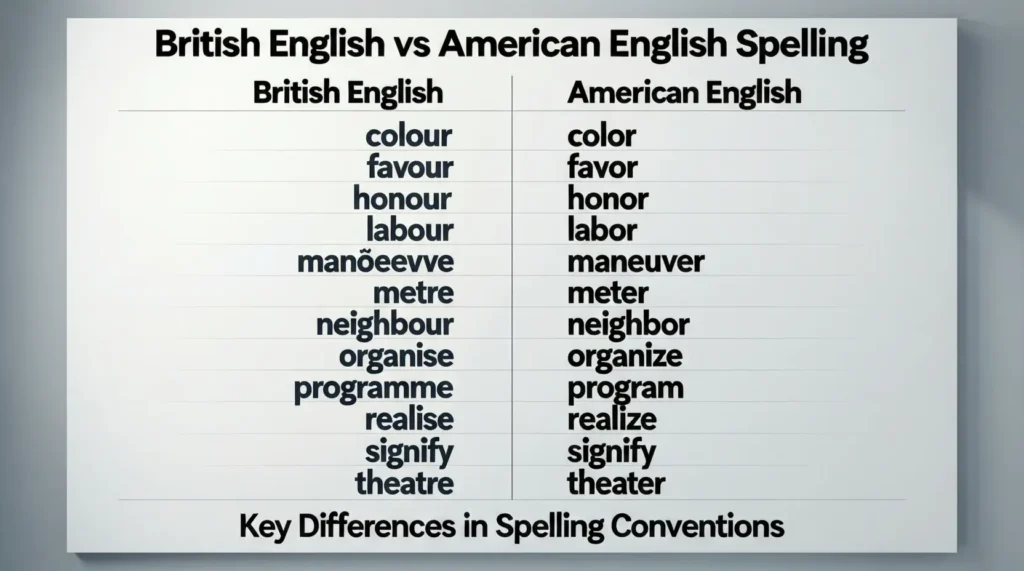
Both non and none are spelled the same in British and American English. However, usage of non as a prefix can vary slightly in hyphenation rules:
| Usage | British English | American English | Example |
| Non + word | Often hyphenated for clarity | Less frequently hyphenated | non-smoking (UK), nonsmoking (US) |
| None | Same spelling | Same spelling | None of them were ready |
While spelling doesn’t differ for none, remember hyphenation for non may vary depending on style guides.
Which Spelling Should You Use?
- Use “non” when forming adjectives or nouns: non-toxic, non-profit.
- Use “none” when talking about zero quantity: None of the answers were correct.
Audience Advice:
- US audience: non-toxic, nonsmoking, none
- UK/Commonwealth: non-toxic, non-smoking, none
- Global English: follow the same pattern; just pay attention to hyphenation for clarity.
Common Mistakes with Non or None
- ❌ I have non of the papers.
✅ I have none of the papers. - ❌ This is none-smoker.
✅ This is a non-smoker. - ❌ She is non at all interested.
✅ She is not at all interested.
Tip: If it replaces a noun or indicates zero quantity, use none. If it modifies a noun, use non.
Non or None in Everyday Examples
Emails:
- None of the files were attached.
- Please confirm the non-refundable items.
News:
- None of the candidates received a majority vote.
- The event was a non-profit initiative.
Social Media:
- None of my friends joined the challenge.
- Check out this non-toxic skincare product!
Formal Writing:
- None of the participants completed the survey on time.
- Non-compliance with regulations may result in penalties.
Non or None / Google Trends & Usage Data
Search trends show:
- “None” is far more commonly searched than “non” because people often seek its correct usage in sentences.
- Regions: Higher search interest in English-speaking countries like the US, UK, Canada, and Australia.
- Context: Mostly educational, grammar, and writing-related queries.
| Keyword | Monthly Searches (approx.) | Top Countries |
| none | 60,000 | US, UK, Canada |
| non | 18,000 | US, UK, Australia |
Keyword Variations Comparison Table
| Word | Type | Meaning | Example |
| non | Prefix | Not, without | non-toxic, non-profit |
| none | Pronoun | Not any, no one | None of the books are available |
FAQs
1. Can I use “non” instead of “none”?
No, “non” cannot replace “none.” Non modifies a noun; none replaces a noun.
2. Is “none” singular or plural?
It can be both, depending on context:
- Singular: None is missing.
- Plural: None of the cookies are left.
3. Should I hyphenate “non” words?
Hyphenation depends on style and clarity: non-smoker (UK), nonsmoking (US).
4. Is “none” informal?
No, it’s standard English and suitable for formal writing.
5. Can “non” stand alone?
No, it must be attached to a word (e.g., non-compliant).
6. Difference between “none” and “nothing”?
“None” refers to zero of something countable; “nothing” refers to zero in general.
7. Can “non” be used with verbs?
No, it modifies nouns or adjectives, not verbs.
Conclusion:
Understanding the difference between non and none is essential for clear writing. Use non to create adjectives and nouns that indicate negation, and use none to show zero quantity or absence. Remember, spelling does not change between British and American English, but hyphenation rules may vary.
Avoid common mistakes, and check your context carefully to ensure the right word is chosen. With these rules, examples, and tips, you can write confidently in emails, news articles, social media, and formal writing, avoiding confusion for your readers.

I am an English language specialist and educational writer focused on grammar rules, word differences, and clear communication. I have years of experience creating easy-to-understand guides that simplify complex English topics. Mine content is trusted by learners looking for accurate and well-structured language explanations.


Post Comment