Peel Or Peal- What’s the Difference and When to Use Each for 2026?
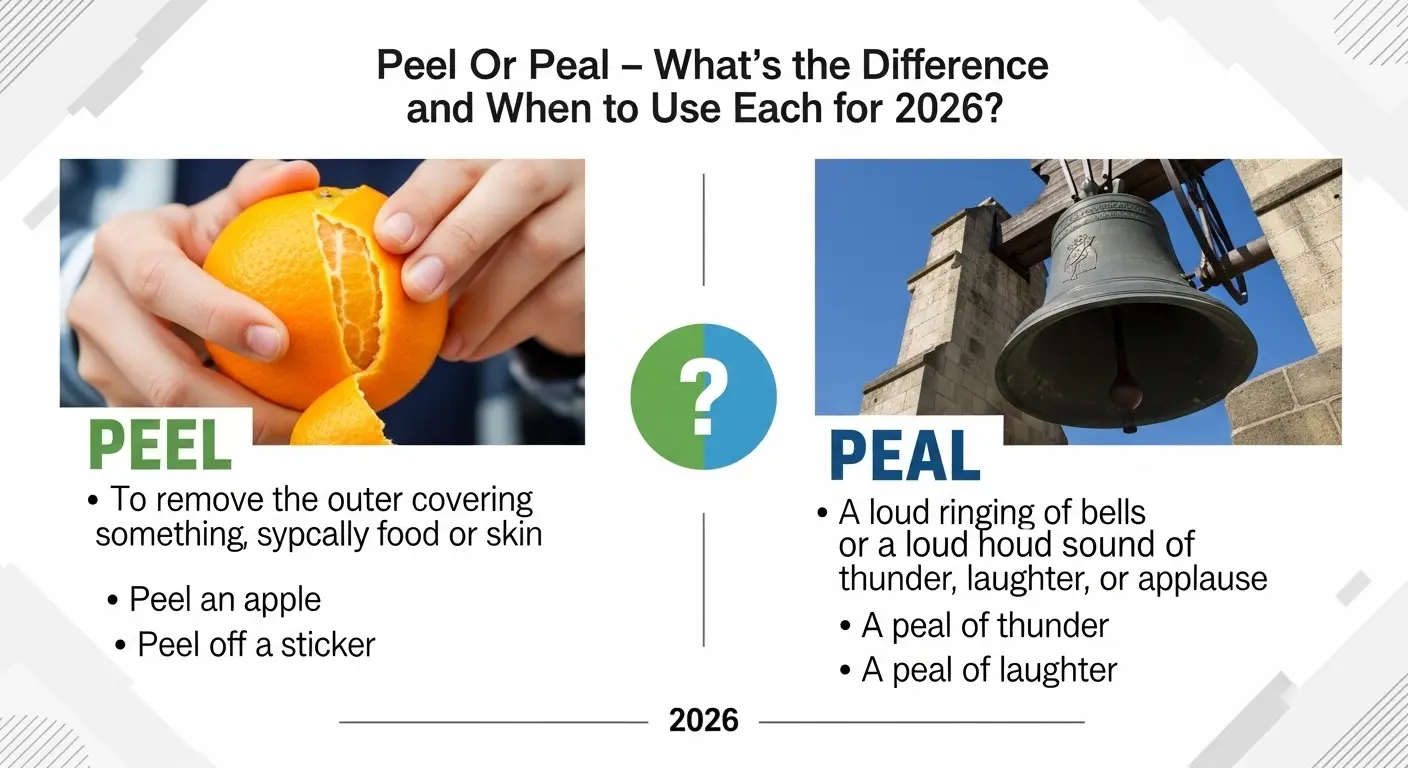
Have you ever typed “peel” but wondered if it should be “peal” instead? You’re not alone. Many English learners and even native speakers mix up peel and peal because they sound exactly the same. This kind of confusion is common with homophones words that share pronunciation but differ in meaning and spelling.
People often search for “peel or peal” when writing emails, school assignments, or social media posts. A small spelling mistake can change the meaning of a sentence completely.
For example, “peel of laughter” looks strange, while “peal of laughter” is correct. On the other hand, you would “peel an orange,” not “peal” it.
This article will clear up the confusion in a simple way. You’ll learn the meaning of each word, their origins, and how to use them correctly in real life. By the end, you’ll feel confident choosing the right spelling every time.
Peel or Peal – Quick Answer
Peel and peal are homophones but have different meanings:
- Peel → means to remove skin or outer layer
- Example: She will peel the potato.
- Peal → means a loud ringing sound or burst (often of bells or laughter)
- Example: A peal of thunder echoed.
👉 Simple tip:
- Use peel for skin or layers
- Use peal for sound
The Origin of Peel or Peal
Peel
The word peel comes from Middle English pelen, meaning “to strip off skin.” It has roots in Old French peler and Latin pilare, meaning “to remove hair or skin.” Over time, it became the common word for removing outer layers of fruits, vegetables, or even paint.
Peal
The word peal comes from Old French pele, meaning “a ringing of bells.” It was often used in churches to describe the loud, repeated ringing of bells. Later, it expanded to include loud bursts of sound like laughter or thunder.
👉 That’s why today:
- Peel = physical action
- Peal = sound or noise
British English vs American English Spelling
Good news: there is no spelling difference between British and American English for these words. Both regions use peel and peal in the same way.
The confusion is not about regional spelling it’s about meaning.
Comparison Table
| Word | Meaning | Example (UK & US) |
| Peel | Remove outer layer | Peel the apple before eating |
| Peal | Loud ringing sound | A peal of bells filled the air |
👉 Unlike words like “color/colour,” these do not change across regions.
Which Spelling Should You Use?
Choosing the right word depends on your meaning, not your location.
- In the US → Use both words correctly by meaning
- In the UK/Commonwealth → Same rule applies
- Global writing → Follow standard meanings
Quick Advice:
- Writing about food, skin, or layers? → Peel
- Writing about sound, bells, or laughter? → Peal
👉 If you’re unsure, think:
“Can I touch it?” → Peel
“Can I hear it?” → Peal
Common Mistakes with Peel or Peal
Here are frequent errors and how to fix them:
❌ Incorrect: A peel of laughter filled the room
✅ Correct: A peal of laughter filled the room
❌ Incorrect: She pealed the banana
✅ Correct: She peeled the banana
👉 Most mistakes happen because people rely on sound instead of meaning.
Peel or Peal in Everyday Examples
Emails
- Please peel and cut the vegetables before cooking.
- We heard a peal of laughter during the meeting.
News
- Farmers struggle to peel fruit quickly during harvest.
- A loud peal of thunder shook the city.
Social Media
- “Trying to peel this mango without making a mess 😅”
- “That joke caused a peal of laughter!”
Formal Writing
- The technician began to peel the outer layer of the material.
- A sudden peal of bells marked the ceremony’s start.
Peel or Peal – Google Trends & Usage Data
Search data shows that “peel” is used far more often than “peal.” This is because people talk about food and physical actions daily.
Usage Insights:
- Peel → Common worldwide (cooking, daily tasks)
- Peal → Less common, used in literature or formal writing
By Region:
- US & UK → High use of “peel,” low use of “peal”
- Global English users → Often confuse the two in writing
👉 “Peal” appears more in books, stories, and descriptive writing.
Comparison Table (Side by Side)
| Feature | Peel | Peal |
| Type | Verb/Noun | Noun |
| Meaning | Remove outer layer | Loud ringing sound |
| Usage | Cooking, physical actions | Bells, laughter, thunder |
| Frequency | Very common | Less common |
| Example | Peel the orange | A peal of thunder |
FAQs:
1. Are peel and peal pronounced the same?
Yes, both are pronounced the same. That’s why they are confusing.
2. What does “peel” mean?
It means to remove the outer layer of something, like fruit or skin.
3. What does “peal” mean?
It means a loud ringing sound, often from bells or laughter.
4. Can “peal” be used as a verb?
Rarely. It is mostly used as a noun.
5. Which word is more common?
“Peel” is much more common in daily use.
6. Is “peel of laughter” correct?
No, the correct phrase is “peal of laughter.”
7. Do British and American English differ here?
No, both use the same spelling and meaning.
8. How can I remember the difference?
Think:
- Peel = food/skin
- Peal = sound
Conclusion:
Understanding the difference between peel and peal is simple once you focus on meaning instead of sound. These two words may sound identical, but they serve very different purposes in English. Peel is all about removing outer layers, like the skin of fruits or vegetables. It is used in daily life and appears often in cooking, cleaning, and general tasks. On the other hand, peal is about sound specifically loud, ringing noises such as bells, thunder, or bursts of laughter.
There is no difference between British and American English for these words, so the key is always context. If you can touch it, you likely mean peel. If you can hear it, you likely mean peal. This simple trick can help you avoid common mistakes.
By learning and practicing these differences, you can improve your writing and sound more professional. Small spelling choices can make a big impact, and now you have the clarity to use both words correctly with confidence.

I am an English language specialist and educational writer focused on grammar rules, word differences, and clear communication. I have years of experience creating easy-to-understand guides that simplify complex English topics. Mine content is trusted by learners looking for accurate and well-structured language explanations.



Post Comment