Psychology or Psychiatry: What’s the Difference?

I remember the first time I realized something wasn’t right. It didn’t happen all at once it crept in quietly. I was doing everything I was supposed to do, yet inside, I felt constantly overwhelmed. My mind wouldn’t slow down, my thoughts kept racing, and even simple decisions felt exhausting.
At first, I ignored it. I told myself it was just stress, just a bad phase. But deep down, I knew it was more than that.
One day, I finally stopped running from it. I sat with myself and admitted, I need to understand what’s happening in my mind. That moment changed everything.
I started learning about psychology how thoughts influence emotions, how emotions affect behavior, and how unprocessed feelings can quietly shape our lives. I also learned that struggling doesn’t mean weakness; it means you’re human.
Many people search for “psychology or psychiatry” when they are confused about mental health support. You may feel stressed, anxious, or overwhelmed and wonder: Should I see a psychologist or a psychiatrist?
The two words sound similar, are often used together, and both deal with the human mind. This overlap creates real confusion for students, patients, job seekers, and even writers.
The problem is simple: psychology and psychiatry are related, but they are not the same. One focuses more on behavior and therapy, while the other is rooted in medicine and medication. Choosing the wrong term or the wrong professional can waste time, money, and delay proper care.
This article solves that confusion. It gives you a quick answer, a deeper explanation, and clear professional advice.
By the end, you will know exactly what psychology and psychiatry mean, how they differ, and which one fits your needs whether you are writing, studying, or seeking mental health help.
Psychology or Psychiatry: Quick Answer
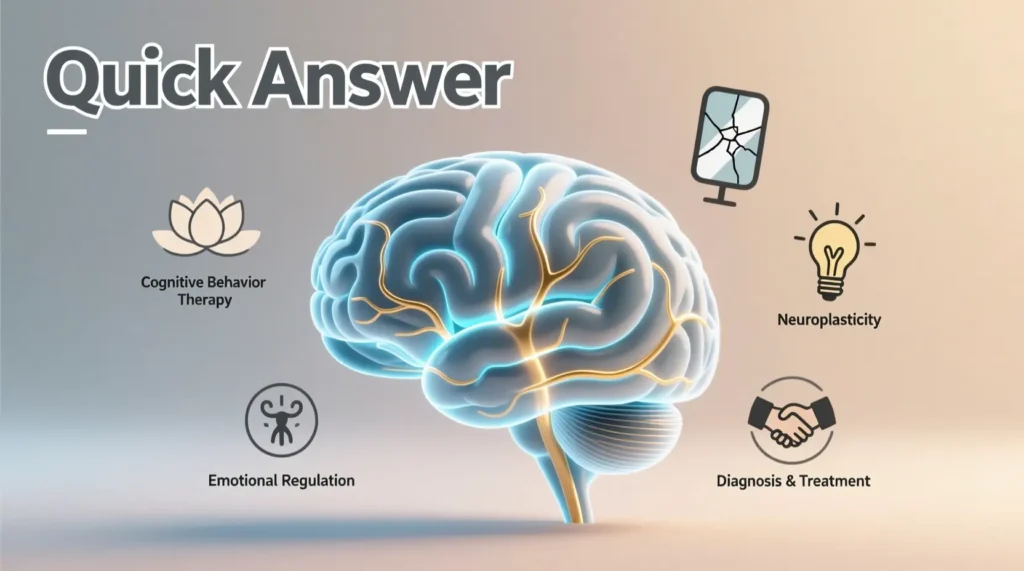
Psychology studies human behavior, thoughts, and emotions.
Psychiatry is a medical field that diagnoses and treats mental illness, often with medication.
Example:
- A psychologist helps with therapy for stress or phobias.
- A psychiatrist can prescribe medicine for depression or bipolar disorder.
The Origin of Psychology or Psychiatry
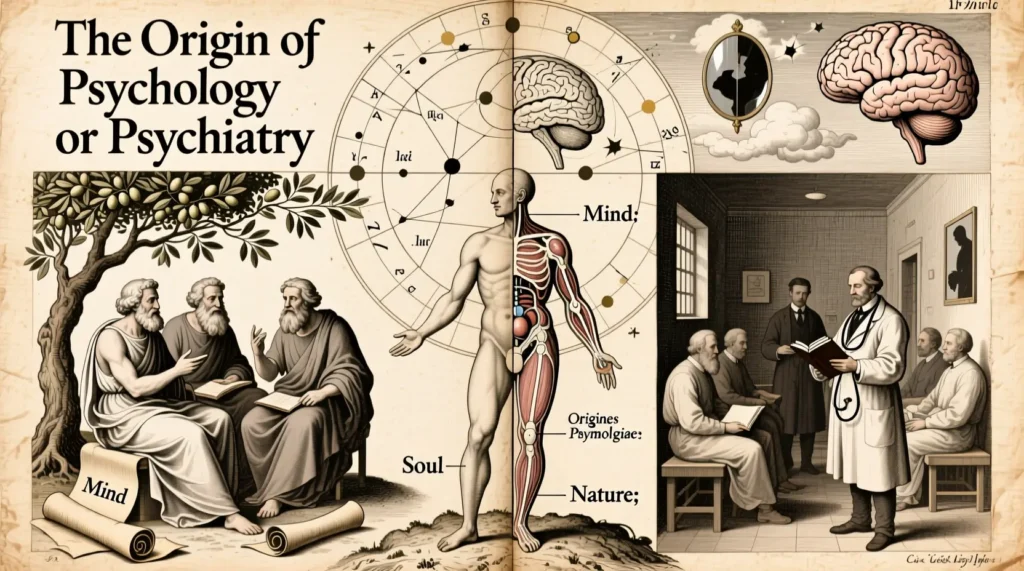
The word psychology comes from Greek:
- Psyche (mind or soul)
- Logos (study)
It originally meant “the study of the mind.”
Psychiatry also comes from Greek:
- Psyche (mind)
- Iatreia (healing or medical treatment)
Psychology developed first as a branch of philosophy. Psychiatry later emerged as a medical specialty. There are no spelling differences between the two terms only differences in meaning and practice.
British English vs American English Spelling
There is no spelling difference between British and American English for psychology or psychiatry.
| Term | British English | American English |
| Psychology | Psychology | Psychology |
| Psychiatry | Psychiatry | Psychiatry |
Both regions use the same spelling and meaning.
Which One Should You Use?
Choose based on context and audience:
- US, UK, Commonwealth: Use the same terms.
- Academic writing: Be precise about the field.
- Healthcare context:
- Use psychology for therapy and behavior.
- Use psychiatry for medical treatment and diagnosis.
- Use psychology for therapy and behavior.
Rule of thumb:
If medication is involved → psychiatry
If talk therapy is involved → psychology
Common Mistakes with Psychology or Psychiatry
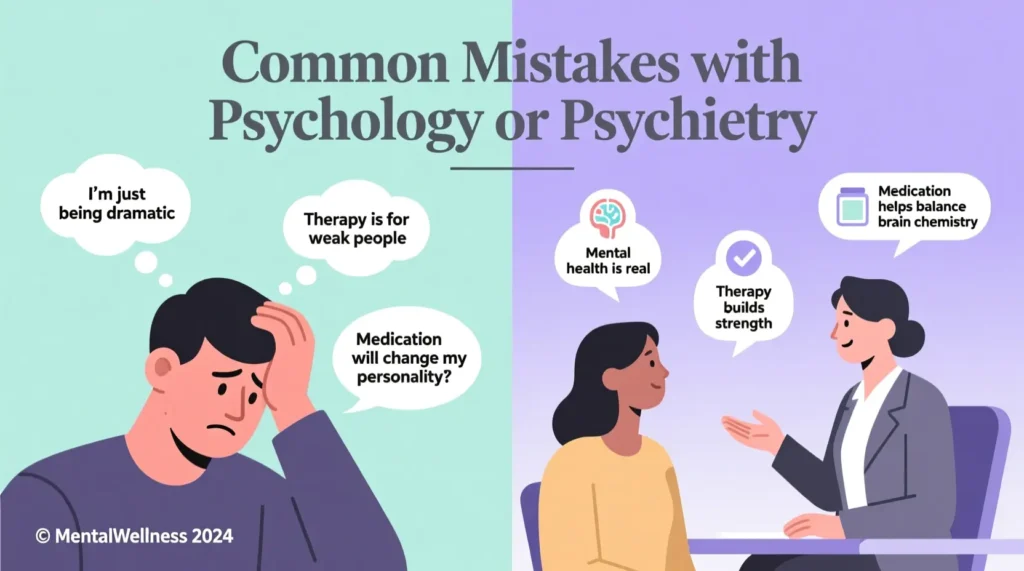
- ❌ Calling psychologists “medical doctors”
✅ Only psychiatrists are medical doctors. - ❌ Saying psychologists prescribe medicine
✅ Most cannot prescribe medication. - ❌ Using the words as synonyms
✅ They are related but different fields. - ❌ Choosing a psychiatrist for mild stress only
✅ A psychologist may be more suitable.
Psychology or Psychiatry in Everyday Examples
- Email:
“I’m studying psychology and plan to specialize in child behavior.” - News:
“Psychiatry plays a key role in treating severe mental disorders.” - Social Media:
“Therapy helped me—thanks to psychology.” - Formal Writing:
“Psychiatry integrates neuroscience with clinical medicine.”
Psychology or Psychiatry – Google Trends & Usage Data
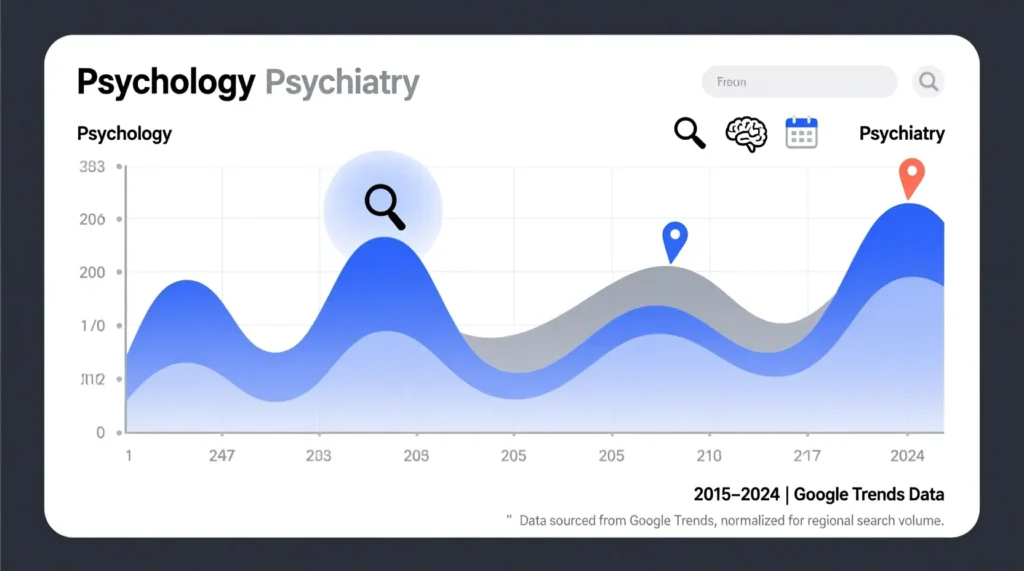
Search trends show:
- Psychology is more popular globally due to education, self-help, and careers.
- Psychiatry is searched more in medical and clinical contexts.
- Countries like the US, UK, Canada, and Australia search both terms equally.
- Students search psychology more; patients search psychiatry more.
Psychology vs Psychiatry: Comparison Table
| Feature | Psychology | Psychiatry |
| Field Type | Social science | Medical science |
| Degree | PhD / PsyD | MD |
| Medication | No (usually) | Yes |
| Therapy | Yes | Yes |
| Focus | Behavior and thoughts | Mental illness and treatment |
FAQs:
1. Is psychology better than psychiatry?
No. They serve different purposes.
2. Can a psychologist treat depression?
Yes, through therapy.
3. Can a psychiatrist provide therapy?
Yes, but many focus on medication.
4. Do I need a referral to see a psychiatrist?
Often yes, depending on the country.
5. Which is better for anxiety?
Mild anxiety: psychology. Severe anxiety: psychiatry.
6. Are both evidence-based?
Yes, both rely on scientific research.
7. Can I see both at the same time?
Yes, many people do.
Conclusion
Understanding psychology or psychiatry helps you make better choices in writing, education, and healthcare. While both fields focus on mental health, their roles are clearly different. Psychology centers on behavior, thoughts, and therapy. Psychiatry focuses on diagnosis, medical treatment, and medication. Neither is better they simply serve different needs.
If you are a student, writer, or professional, using the correct term improves clarity and credibility. If you are seeking help, the right choice can speed up recovery and reduce stress. For emotional challenges, psychology is often the first step. For complex mental illness, psychiatry is essential. In many cases, the best results come from using both together.

I am a professional English language writer and editor with a strong focus on word comparisons, spelling differences, and usage clarity. I specialize in explaining confusing English words in a simple, reader-friendly way. With a background in linguistics and digital content writing, I help learners understand British vs American English, commonly confused terms, and everyday grammar mistakes.




Post Comment