Sees or See’s – Which One Is Correct?
Have you ever typed a sentence like “She see’s the problem” and then paused, wondering if that apostrophe is right? You’re not alone.
The keyword “sees or see’s” is searched by thousands of people because English apostrophes are confusing even for native speakers.
The problem usually starts with plurals and possession. People learn that apostrophes show ownership, but then they see words like it’s or she’s and assume an apostrophe can also change a verb. That’s where the confusion kicks in.
In real life, this mistake shows up everywhere: emails, social media posts, school assignments, and even professional writing. Someone wants to say that a person notices or observes something, but they add an apostrophe by habit.
This article clears that confusion once and for all. You’ll learn the correct spelling, why the incorrect form exists, and how to avoid this mistake forever.
By the end, you’ll instantly know whether to use sees or see’s without second-guessing.
Sees or See’s – Quick Answer
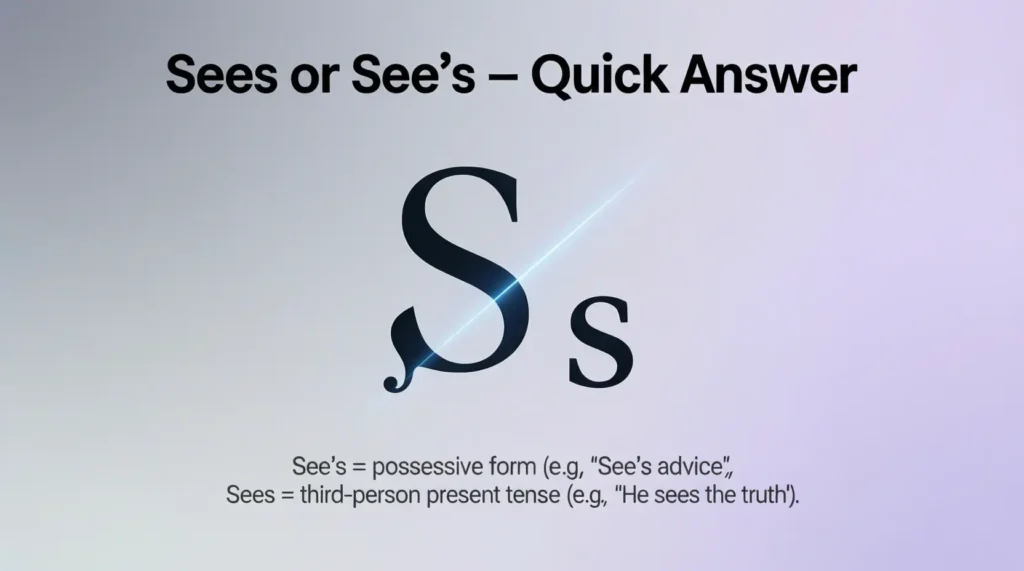
Correct: sees
Incorrect: see’s
Sees is the correct verb form.
See’s is never correct in standard English.
Examples:
- ✅ She sees the issue clearly.
- ❌ She see’s the issue clearly.
Rule: Apostrophes are not used to change verb tense.
The Origin of “Sees or See’s”
The verb see comes from Old English sēon, meaning “to look” or “to observe.” Over time, English added verb endings to show tense and subject. For third-person singular (he, she, it), we add -s.
That’s how we get:
- I see
- You see
- She sees
The confusion happens because apostrophes do appear in English—but for possession (John’s book) or contractions (it’s = it is). People wrongly apply this rule to verbs, creating see’s, which has no grammatical role.
British English vs American English Spelling
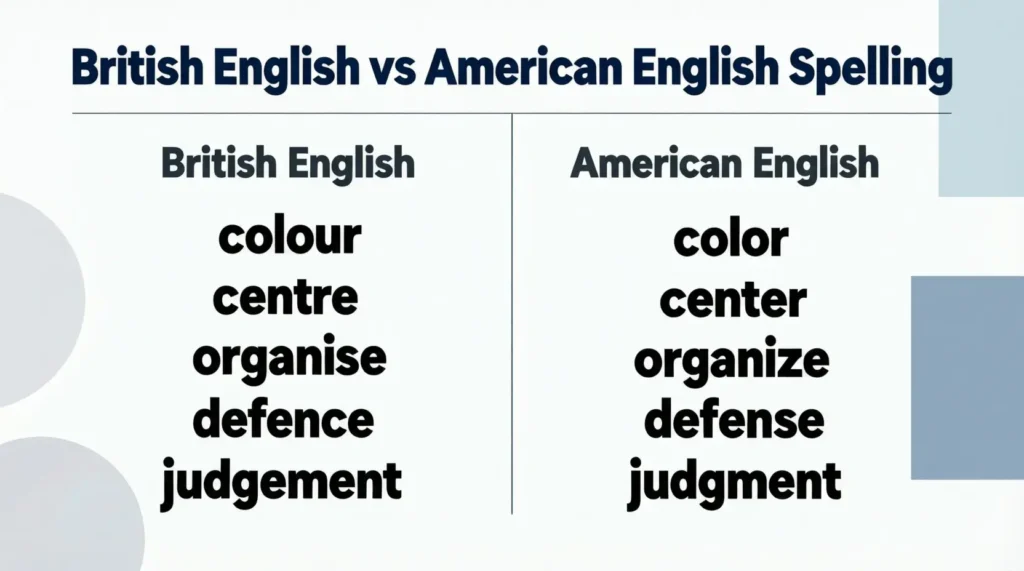
There is no difference between British and American English here.
| Version | Correct Form | Incorrect Form |
| British English | sees | see’s |
| American English | sees | see’s |
Both follow the same grammar rule.
Which Spelling Should You Use?
Always use sees, no matter your audience.
- US audience: Use sees
- UK audience: Use sees
- Global audience: Use sees
There is no situation where see’s is correct in formal or informal writing.
Common Mistakes with “Sees or See’s”
Here are frequent errors people make:
❌ Adding an apostrophe to verbs
- She see’s the answer.
❌ Confusing contractions
- See’s does not mean see is
✅ Correct usage
- She sees the answer.
Tip: If you can remove the apostrophe and the sentence still works, you never needed it.
“Sees or See’s” in Everyday Examples
Emails
- ✅ He sees your point and agrees.
News
- ✅ The minister sees progress in talks.
Social Media
- ❌ She see’s everything!
- ✅ She sees everything!
Formal Writing
- ✅ The study sees a rise in awareness.
Sees or See’s / Google Trends & Usage Data
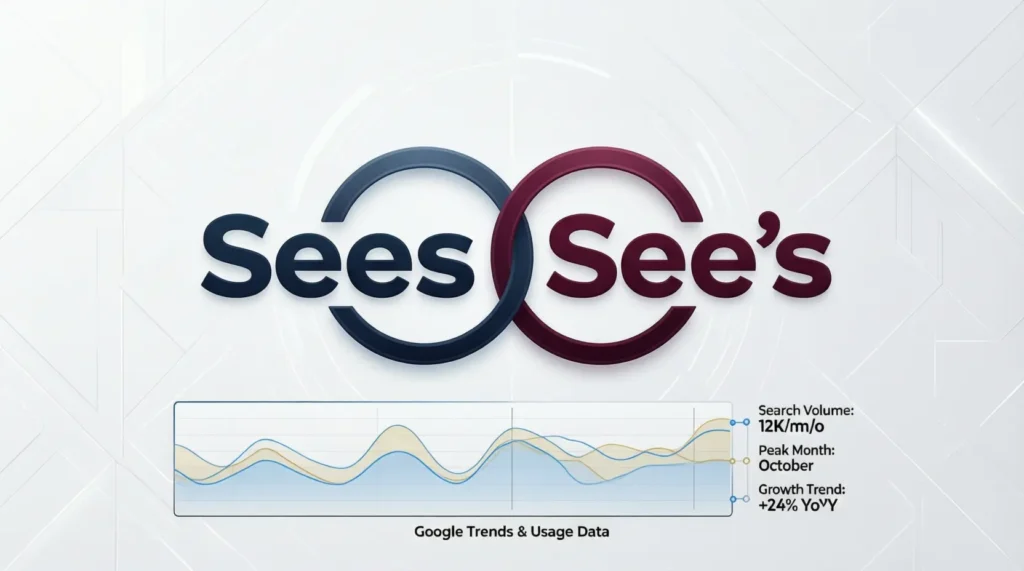
Search data shows that “see’s” spikes during school seasons and exam times. This tells us learners often struggle with apostrophes. Native speakers also search this keyword when writing quickly on phones or laptops. In professional writing, sees dominates completely, while see’s appears mostly in informal or mistaken usage.
Comparison Table: Sees vs See’s
| Form | Correct? | Reason |
| sees | ✅ Yes | Correct verb form |
| see’s | ❌ No | Apostrophe misuse |
FAQs:
1. Is “see’s” ever correct?
No. It is always incorrect.
2. Why do people write “see’s”?
Because they misunderstand apostrophe rules.
3. Does “see’s” mean “see is”?
No. That contraction does not exist.
4. Is this mistake common?
Yes, very common in informal writing.
5. Do British people use “see’s”?
No. It is incorrect everywhere.
6. How can I remember the rule?
Verbs don’t need apostrophes for tense.
7. Can grammar checkers catch this?
Yes, most modern tools flag it.
Conclusion:
The difference between sees or see’s is simple once you understand the rule. Sees is the correct verb form used to show that someone notices or observes something. See’s, on the other hand, is a spelling mistake caused by apostrophe confusion.
Apostrophes are used for possession or contractions not for verb endings. This rule stays the same in British English, American English, and global usage.
If you remember just one thing, let it be this: when you mean he, she, or it observes something, always write sees never see’s. This small fix can instantly make your writing clearer, more professional, and more confident.
If you’re writing an email, posting online, or working on an article, using the correct form helps your message look polished and trustworthy.

I am an experienced content writer specializing in modern English usage, vocabulary comparisons, and language learning guides. I write clear and concise explanations to help readers quickly understand the correct word choice. My writing style is practical, SEO-friendly, and ideal for students, bloggers, and non-native English learners


Post Comment