🤔 Silicon Or Silicone: What’s the Real Difference?
Have you ever seen the words silicon and silicone used as if they mean the same thing? You’re not alone. Many people search for “silicon or silicone” because these two words look similar, sound similar, and are often confused in writing, news articles, product descriptions, and even professional documents.
The confusion usually happens because both words are common in technology, science, and everyday life. You may hear silicon in talks about computers and chips, while silicone appears in kitchen tools, medical products, and cosmetics. One small spelling change, but a huge difference in meaning.
This article clears that confusion once and for all. You’ll get a quick answer, a clear explanation, and practical examples you can use right away. We’ll also look at spelling rules in British and American English, common mistakes, usage in real-life writing, Google Trends insights, and simple exercises to test your understanding.
By the end, you’ll know exactly when to use silicon and when to use silicone, with confidence and accuracy.
Silicon or Silicone – Quick Answer
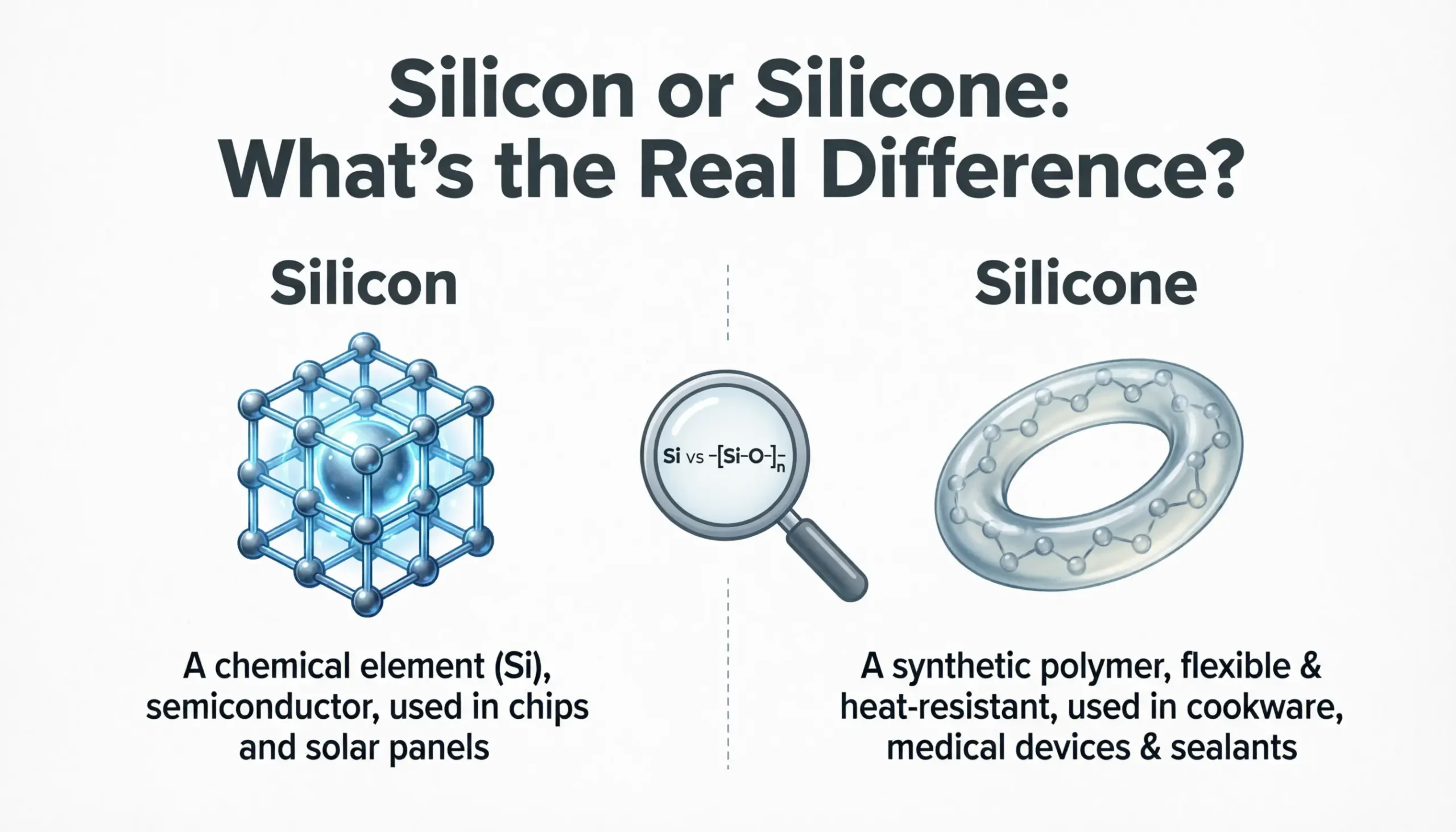
Silicon is a chemical element used in electronics and technology.
Silicone is a synthetic material used in products like cookware, sealants, and medical items.
Examples:
- The computer chip is made of silicon.
- The baking mat is made of silicone.
👉 They are not interchangeable.
The Origin of Silicon or Silicone
Silicon
The word silicon comes from the Latin silex, meaning flint or hard stone. It was named in the early 19th century when scientists identified it as a chemical element.
Silicone
Silicone was named later. The suffix -one was added because scientists once thought it was similar to other chemical compounds. Today, we know silicone is a artificial polymer, not an element.
Why the Confusion Exists
- Similar spelling
- Similar pronunciation
- Both linked to science and industry
But historically and scientifically, they are very different.
British English vs American English Spelling
There is no spelling difference between British and American English for these words. The confusion is about meaning, not regional spelling.
Comparison Table
| Word | British English | American English | Meaning |
| Silicon | Silicon | Silicon | Chemical element |
| Silicone | Silicone | Silicone | Synthetic rubber-like material |
Which Spelling Should You Use?
Use silicon if:
- You are talking about computers
- You mean electronics or semiconductors
- You are writing about chemistry or elements
Use silicone if:
- You mean flexible rubber-like materials
- You are writing about cookware, implants, or sealants
- You are describing household or medical products
Audience-Based Advice
- US audience: Same rules apply
- UK/Commonwealth: Same rules apply
- Global audience: Be precise—wrong usage looks unprofessional
Common Mistakes with Silicon or Silicone
❌ Incorrect
- Silicone Valley is famous for tech companies.
- The phone uses advanced silicone chips.
✅ Correct
- Silicon Valley is famous for tech companies.
- The phone uses advanced silicon chips.
Tip to Remember
- Silicon = hard + tech
- Silicone = soft + flexible
Silicon or Silicone in Everyday Examples
Emails
- Our device uses high-quality silicon processors.
News
- Demand for silicon chips is rising worldwide.
Social Media
- Love my new silicone phone case!
Formal Writing
- “Manufacturers widely use medical-grade silicone in implants.”
Silicon or Silicone – Google Trends & Usage Data
Search data shows:
- Silicon is most searched in tech-focused countries like the US, Germany, and South Korea.
- Silicone is popular in searches related to health, beauty, and kitchen products.
Usage by Context
| Context | Common Term |
| Technology | Silicon |
| Electronics | Silicon |
| Medical products | Silicone |
| Kitchen tools | Silicone |
| Construction sealants | Silicone |
Comparison Table: Silicon vs Silicone
| Feature | Silicon | Silicone |
| Type | Chemical element | Synthetic polymer |
| Texture | Hard | Soft/Flexible |
| Used in | Chips, electronics | Cookware, sealants |
| Natural or artificial | Natural element | artificial |
Practice Exercises
Exercise 1: Choose the Correct Word
- The CPU is made of _______.
- This spatula is made of _______.
Answers:
- Silicon
- Silicone
Exercise 2: Fix the Sentence
- She bought a silicone chip for her computer.
Corrected:
- She bought a silicon chip for her computer.
FAQs:
1. Are silicon and silicone the same thing?
No. Silicon is an element; silicone is a synthetic material.
2. Is Silicon Valley named after silicone?
“People named it after silicon used in computer chips.”
3. Can silicone conduct electricity?
No. Silicon conducts electricity; silicone does not.
4. Is silicone safe for cooking?
Yes. Food-grade silicone is heat-resistant and safe.
5. Which word is used in chemistry?
Silicon.
6. Which word is used in medical implants?
Silicone.
7. Do British and American English spell them differently?
No. The spelling is the same.
Conclusion:
The difference between silicon or silicone is small in spelling but huge in meaning. Silicon is a natural chemical element that powers modern technology, from smartphones to computers. Silicone, on the other hand, is a flexible, artificial material used in everyday products like cookware, medical devices, and sealants.
There is no British or American spelling difference here. The key is context. If you are writing about electronics or chips, use silicon. If you mean something soft, flexible, or rubber-like, use silicone. Mixing them up can change the meaning of your sentence and reduce your credibility.
By remembering a simple rule silicon for tech, silicone for flexibility you can avoid common mistakes and write with confidence. If you are a student, blogger, or professional, choosing the right word makes your writing clearer and more accurate.

I am an English language specialist and educational writer focused on grammar rules, word differences, and clear communication. I have years of experience creating easy-to-understand guides that simplify complex English topics. Mine content is trusted by learners looking for accurate and well-structured language explanations.






Post Comment