Tardies Or Tardys-Which Spelling Is Correct for 2026? Complete Guide
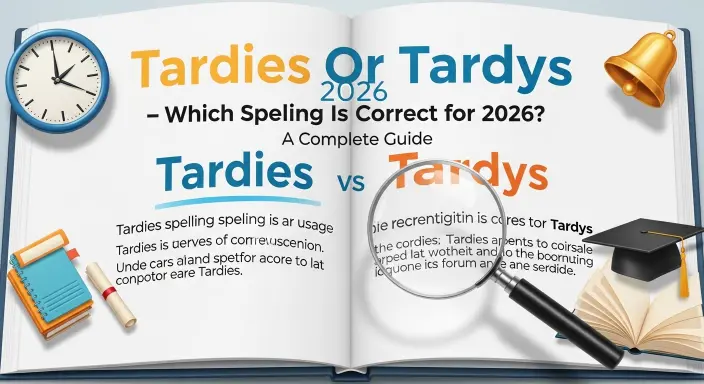
Have you ever paused while writing and wondered: is it tardies or tardys? You’re not alone. This is a common spelling confusion, especially for students, teachers, and professionals who deal with attendance records or formal writing. A small spelling mistake can make your writing look less polished, so getting it right matters.
People search for “tardies or tardys” because English plural rules can feel tricky. Words ending in “y” don’t always follow the same pattern, and that leads to confusion. Should you just add “s”? Or change the “y” to “ies”?
These questions often come up in everyday situations like school reports, emails, or workplace documentation.
In this guide, we’ll clear up the confusion once and for all. You’ll learn the correct spelling, why it works that way, and how to use it properly in real-life situations. By the end, you’ll feel confident using the right form every time no second guessing needed.
Tardies or Tardys – Quick Answer
The correct spelling is tardies.
Why?
“Tardy” ends with a consonant + “y,” so when making it plural, you replace the “y” with “ies.”
✅ Correct: tardies
❌ Incorrect: tardys
Examples:
- The student has three tardies this week.
- Too many tardies can affect your record.
The Origin of Tardies or Tardys
The word tardy comes from the Latin word tardus, meaning “slow” or “late.” Over time, it entered English and came to mean arriving late or delayed.
The plural form follows a standard English rule:
- If a word ends in a consonant + “y,” change “y” to “ies.”
This is why:
- tardy → tardies
- Not tardys
This rule has been consistent in English for centuries, which is why “tardys” is considered incorrect.
British English vs American English Spelling
Good news: there is no difference between British and American English for this word. Both use tardies as the correct plural form.
Key Rule
- Consonant + y → change to “ies”
Examples:
- baby → babies
- city → cities
- tardy → tardies
Comparison Table
| Singular | Correct Plural | Incorrect Form |
| tardy | tardies | tardys |
| baby | babies | babys |
| city | cities | citys |
No matter where you are USA, UK, or elsewhere tardies is always correct.
Which Spelling Should You Use?
You should always use tardies.
Audience-Based Advice
- United States (US): Use tardies in schools, reports, and official writing.
- United Kingdom (UK): Same rule applies—use tardies.
- Commonwealth Countries: Also follow the same spelling.
- Global/Online Writing: Always use tardies to stay correct and professional.
Using “tardys” may confuse readers or make your writing seem incorrect.
Common Mistakes with Tardies or Tardys
Here are frequent errors and how to fix them:
1. Adding “s” instead of “ies”
❌ He has two tardys.
✅ He has two tardies.
2. Forgetting the spelling rule
Some writers forget the consonant + y rule.
3. Mixing singular and plural
❌ She has many tardy.
✅ She has many tardies.
4. Using informal spelling in formal writing
“Tardys” might appear in casual typing but should never be used in formal contexts.
Tardies or Tardys in Everyday Examples
1. Emails
- Please note that repeated tardies will result in action.
2. School Reports
- The student has five tardies this month.
3. Social Media
- Too many tardies this week 😅
4. News or Formal Writing
- Schools are tracking student tardies more closely this year.
5. Workplace Communication
- Frequent tardies can affect attendance records.
Tardies or Tardys – Google Trends & Usage Data
In real-world usage, tardies is overwhelmingly more popular than “tardys.”
Key Insights:
- United States: High usage due to school attendance systems
- Canada & UK: Lower usage but still correct as “tardies”
- Search Trends: “tardies” appears far more often in search results and documents
“Tardys” is rarely used and usually appears as a spelling mistake.
Comparison Table: Tardies vs Tardys
| Feature | Tardies (Correct) | Tardys (Incorrect) |
| Spelling Rule | Follows grammar | Breaks rule |
| Usage | Common | Rare |
| Formal Writing | Accepted | Not accepted |
| Global Use | Yes | No |
| Example | 3 tardies | 3 tardys ❌ |
FAQs:
1. Is “tardys” ever correct?
No, “tardys” is always incorrect.
2. Why is it “tardies” and not “tardys”?
Because words ending in consonant + “y” change “y” to “ies” in plural form.
3. What does “tardies” mean?
It means instances of being late, especially in school or work.
4. Is “tardy” formal or informal?
It can be used in both, but is common in school settings.
5. Do British and American English differ here?
No, both use “tardies.”
6. Can I use “late arrivals” instead?
Yes, in formal writing, “late arrivals” is a good alternative.
7. Is “tardies” used in professional settings?
Yes, especially in attendance tracking and HR contexts.
8. How do I remember the rule?
Think: consonant + y = ies (tardy → tardies).
Conclusion:
The confusion between “tardies” and “tardys” comes down to a simple grammar rule, but it can make a big difference in how your writing looks. The correct plural form is tardies, and this applies across all forms of English American, British, and beyond.
Understanding why “tardies” is correct helps you avoid mistakes in the future. The rule is clear: when a word ends in a consonant followed by “y,” you replace the “y” with “ies” to form the plural. This same pattern applies to many everyday words, making it an important rule to remember.
Using the correct spelling is especially important in formal writing, such as school records, emails, or reports. It shows attention to detail and professionalism. On the other hand, using “tardys” may confuse readers or reduce the credibility of your writing.
In short, stick with tardies every time. It’s correct, widely accepted, and easy to use once you know the rule. With this knowledge, you can write confidently and clearly no more second guessing.

I am an experienced content writer specializing in modern English usage, vocabulary comparisons, and language learning guides. I write clear and concise explanations to help readers quickly understand the correct word choice. My writing style is practical, SEO-friendly, and ideal for students, bloggers, and non-native English learners






Post Comment