Teachers or Teacher’s – What’s the Correct Form?
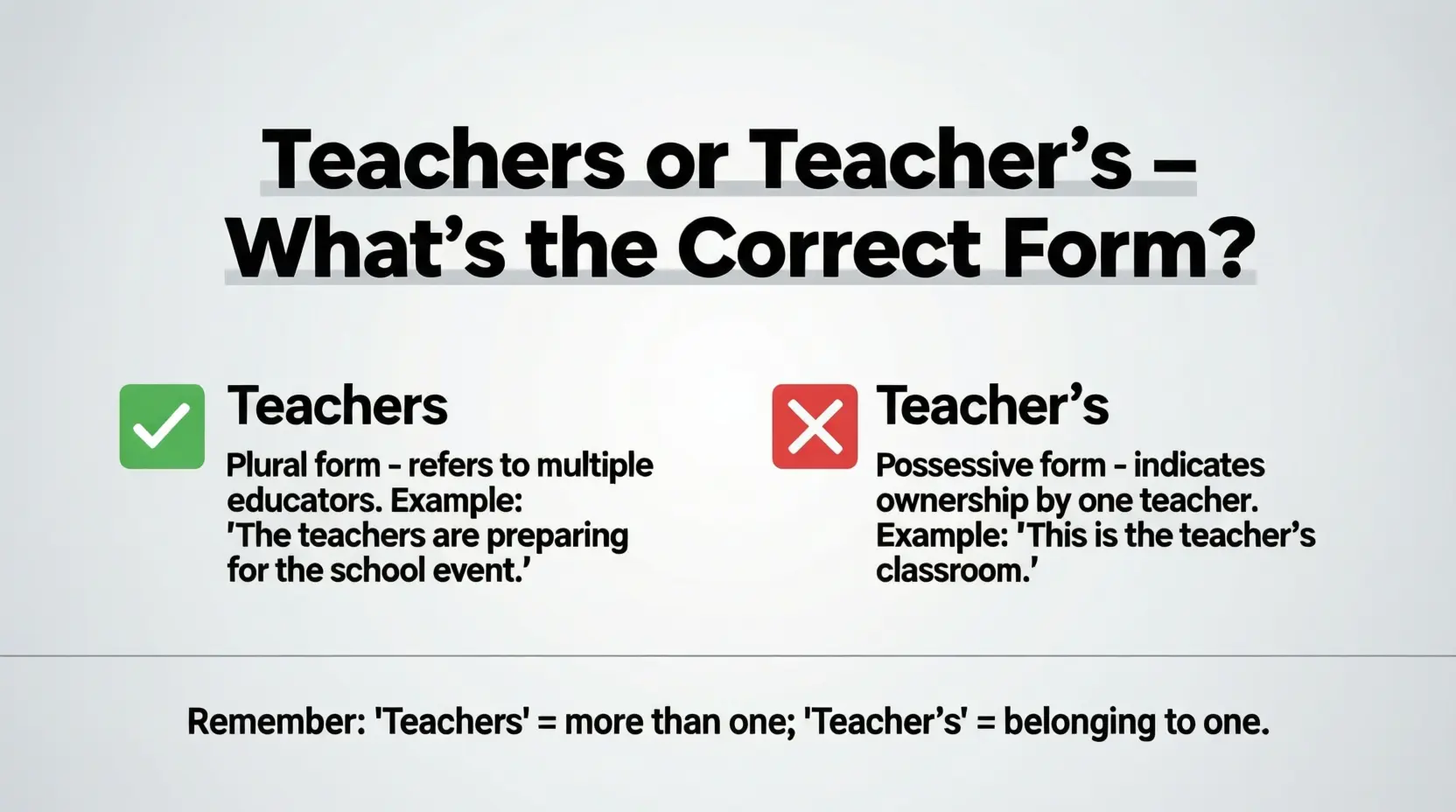
Many people search for “teachers or teacher’s” because these two forms look almost the same but mean very different things. A single apostrophe can completely change the meaning of a sentence.
Is it about many teachers, or something that belongs to one teacher? This confusion often appears in emails, school notices, essays, and social media posts.
Even native English speakers make mistakes with plurals and possessives, especially when words end in -er or -s sounds.
The good news is that this confusion is easy to solve once you understand one simple grammar rule. The word plural of teacher is teachers . The word teacher’s is possessive.
They are not interchangeable, and using the wrong one can make your writing unclear or unprofessional. Students, parents, writers, and educators all want to sound correct, especially in formal writing.
In this guide, you’ll get a quick answer, clear examples, history, usage tips, common mistakes, and real-life examples.
By the end, you’ll know exactly when to use teachers and when to use teacher’s with confidence.
Teachers or Teacher’s – Quick Answer

Teachers is the plural form of teacher.
Teacher’s is the possessive form of teacher (something belongs to one teacher).
Examples:
- Teachers are attending a training session.
- The teacher’s desk is near the window.
Simple rule:
- No apostrophe = more than one teacher
- Apostrophe + s = ownership by one teacher
The Origin of Teachers or Teacher’s
The word teacher comes from Old English tǣcan, meaning “to show or instruct.” Over time, English developed clear rules for plural forms and possessive forms.
- Plurals usually add -s → teacher → teachers
- Possession usually adds ’s → teacher → teacher’s
The confusion exists because English uses the same letter (s) for both ideas, and the apostrophe is easy to miss. Spoken English does not clearly show the difference, so the problem mostly appears in writing, not speech.
British English vs American English Spelling
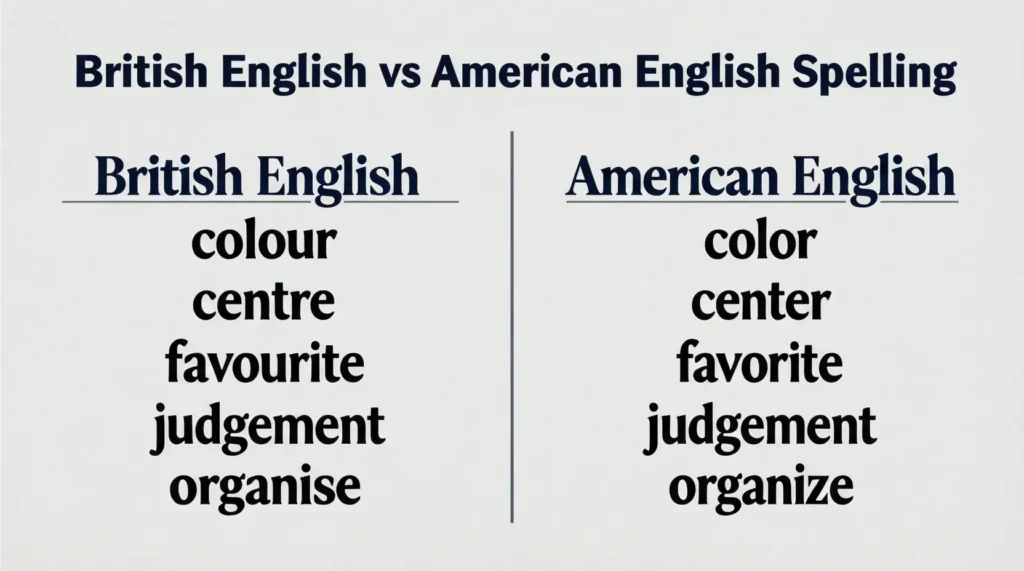
There is no spelling difference between British and American English for teachers or teacher’s. The grammar rules are the same in both.
Comparison Table
| Form | Meaning | British English | American English |
| teachers | plural (more than one teacher) | ✔ Same | ✔ Same |
| teacher’s | possessive (one teacher owns something) | ✔ Same | ✔ Same |
| teachers’ | possessive (many teachers own something) | ✔ Same | ✔ Same |
Which Spelling Should You Use?
Choose based on meaning, not location.
- US audience: Follow standard grammar rules
- UK / Commonwealth audience: Same rules apply
- Global audience: Clear grammar matters more than style
Quick guide:
- Writing about people → teachers
- Writing about ownership → teacher’s
- Writing about shared ownership → teachers’
Common Mistakes with Teachers or Teacher’s
Here are the most common errors and fixes:
❌ The teachers desk is broken.
✔ The teacher’s desk is broken.
❌ The teacher’s are meeting today.
✔ The teachers are meeting today.
❌ Teachers book is missing.
✔ The teacher’s book is missing.
Tip:
Ask yourself: Is something owned by someone?
If yes, use an apostrophe.
Teachers or Teacher’s in Everyday Examples
Emails
- Teachers, please submit grades by Friday.
- The teacher’s email was sent this morning.
News
- Teachers demand better resources.
- A teacher’s actions sparked debate.
Social Media
- Respect your teachers.
- A teacher’s advice can change lives.
Formal Writing
- Teachers play a vital role in education.
- The teacher’s responsibilities include assessment.
Teachers or Teacher’s /Google Trends & Usage Data
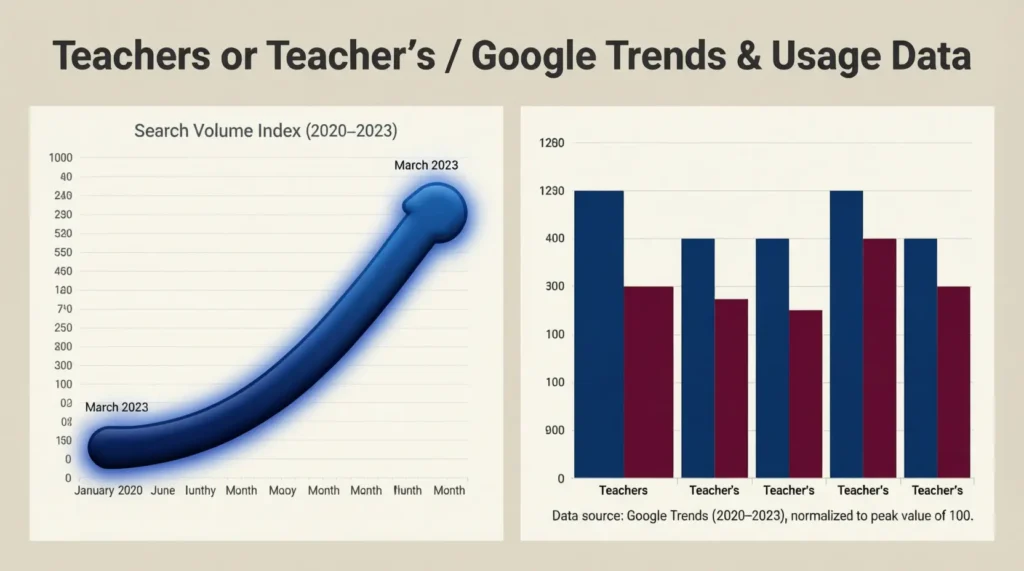
Search data shows that “teachers or teacher’s” is commonly searched by:
- Students
- ESL learners
- Parents
- Content writers
The plural teachers appears far more often in general content, while teacher’s appears mostly in:
- School policies
- Academic writing
- Emails and notices
Countries with high search interest include the US, UK, Canada, Australia, and India, where English education is widespread.
Teachers vs Teacher’s – Comparison Table
| Form | Type | Meaning | Example |
| teachers | plural noun | more than one teacher | Teachers are helpful. |
| teacher’s | singular possessive | belongs to one teacher | The teacher’s bag |
| teachers’ | plural possessive | belongs to many teachers | Teachers’ lounge |
FAQs:
1. Is “teachers” possessive?
No. It is only plural.
2. Is “teacher’s” plural?
No. It refers to one teacher owning something.
3. What does “teachers’” mean?
It shows ownership by multiple teachers.
4. Which one is correct in a sentence?
Both are correct, depending on meaning.
5. Do British and American English use different rules?
No. The rules are the same.
6. Why is this so confusing?
Because apostrophes are small and easy to miss.
7. How can I avoid mistakes?
Check if the sentence shows ownership.
8. Does teachers have an apostrophe?
It depends on how you’re using the word
Conclusion
Understanding the difference between teachers’ vs teacher’s is simple once you focus on meaning. Teachers refers to more than one teacher, while teacher’s shows ownership by a single teacher. The apostrophe is not decorative it has a clear purpose.
Using the wrong form can confuse readers and reduce the quality of your writing, especially in academic or professional settings.
There is no difference between British and American English here, which makes things easier. The same rules apply worldwide. Always pause and ask one question: Am I talking about people or possession? That single step will help you choose the correct form every time.
Clear grammar builds trust. If you are writing an email, an article, or a school notice, using teachers and teacher’s correctly shows attention to detail and strong language skills.

I am a English language specialist and educational writer focused on grammar rules, word differences, and clear communication. I have years of experience creating easy-to-understand guides that simplify complex English topics. Mine content is trusted by learners looking for accurate and well-structured language explanations.




Post Comment