Then or Than: What’s the Difference and When to Use Each?
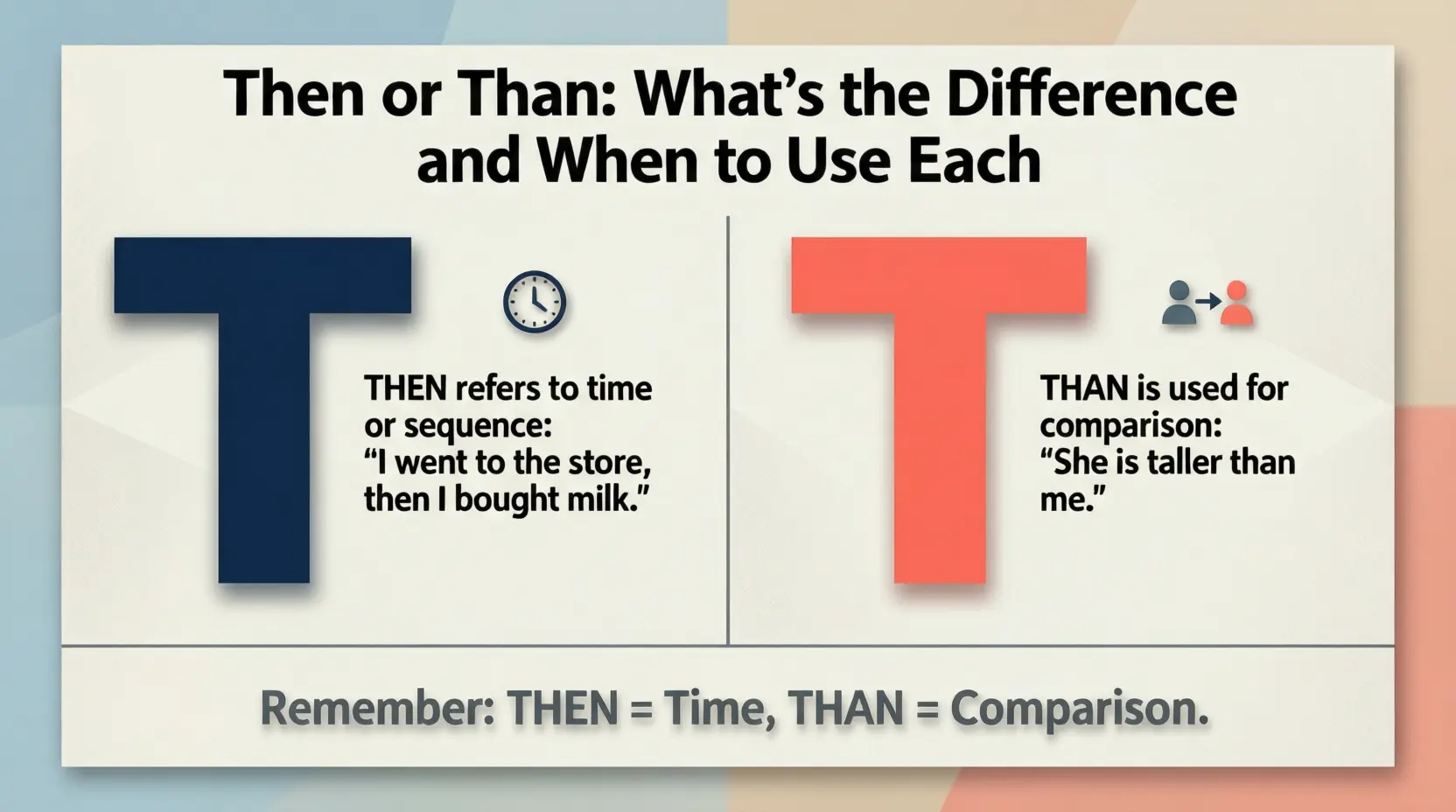
Many English learners and even native speakers often confuse then and than. They look similar, sound almost the same, and are easy to mix up when typing fast. That’s why “then or than” is one of the most searched grammar questions online.
The confusion usually happens because both words are short, common, and used in everyday sentences. But their meanings are very different.
Using the wrong one can change your sentence or make it sound incorrect. In exams, emails, or professional writing, this small mistake can cost marks or credibility.
This article solves that problem clearly and quickly. First, you’ll get a simple, direct answer. Then, you’ll learn where these words come from, how they are used in British and American English, and which one you should choose.
You’ll also see real-life examples, common mistakes, FAQs, and usage tips backed by search trends.
By the end, you’ll never confuse then and than again.
Then or Than – Quick Answer
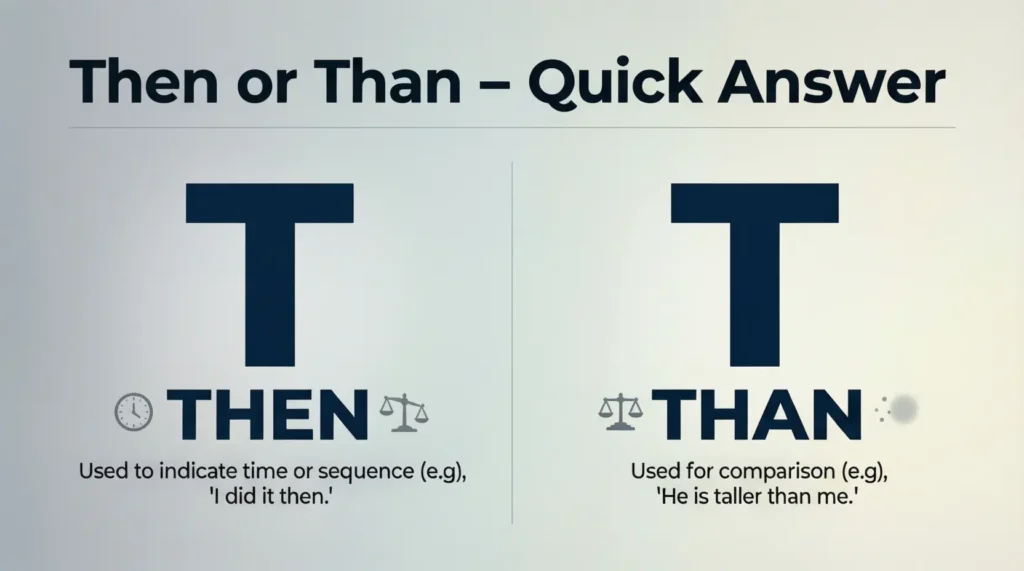
Then is used for time or order.
Than is used for comparison.
Examples:
- Finish your work, then go home.
- She is taller than her sister.
Easy trick:
- Then = time
- Than = compare
The Origin of Then or Than
Both words come from Old English, but they developed differently over time.
- Then comes from þænne, meaning “at that time.”
- Than comes from þonne, used to show comparison.
In early English, these words were sometimes used interchangeably. Over centuries, English grammar became more structured, and each word got a fixed role. That’s why spelling differences exist today — to separate time from comparison clearly.
British English vs American English Spelling
Good news: there is no spelling difference between British and American English for then and than. The rules are the same in both.
Comparison Table
| Usage Purpose | Word | Example (UK & US) |
| Time / Order | Then | We ate dinner, then watched TV. |
| Comparison | Than | This car is faster than that one. |
Which Spelling Should You Use?
Choose based on meaning, not location.
- US audience → Same rule
- UK audience → Same rule
- Global audience → Same rule
If your sentence talks about what happens next, use then.
If your sentence compares two things, use than.
Common Mistakes with Then or Than
❌ I am better then you.
✅ I am better than you.
❌ Finish your homework than sleep.
✅ Finish your homework then sleep.
❌ He is older then me.
✅ He is older than me.
Tip: If you can replace the word with “next”, use then.
Then or Than in Everyday Examples
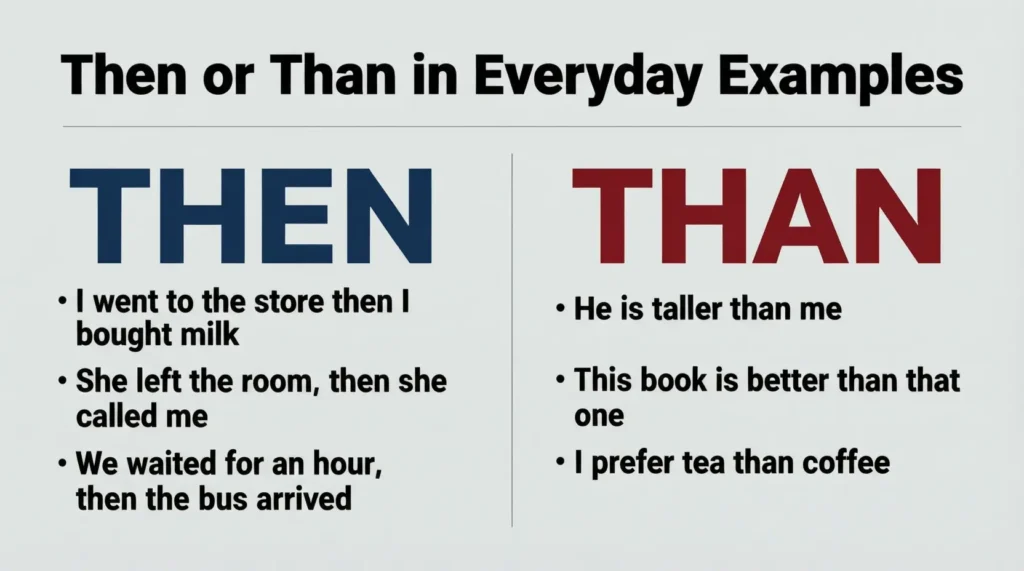
Emails:
- Please review the file, then reply.
News:
- Prices are higher than last year.
Social Media:
- Coffee first, then work ☕
- This phone is cheaper than the old one.
Formal Writing:
- The results were better than expected.
Then or Than / Google Trends & Usage Data
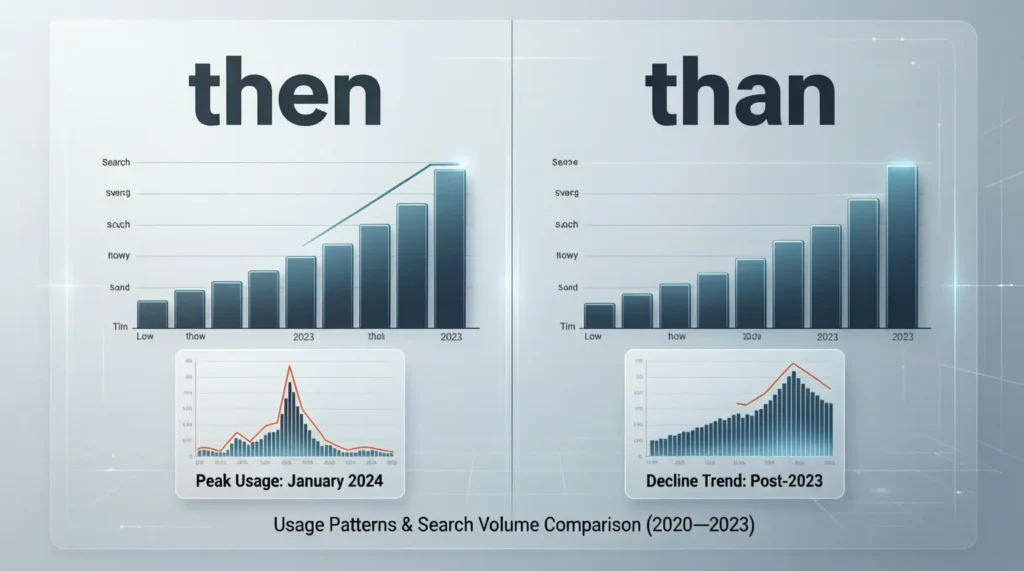
Search data shows “then or than” is popular in:
- India
- Pakistan
- UK
- USA
Most searches come from:
- Students
- Exam candidates
- ESL learners
- Content writers
The confusion appears most in comparisons, especially in quick typing and social media posts.
Then vs Than – Comparison Table
| Word | Main Use | Meaning | Example |
| Then | Time | What happens next | Eat first, then leave |
| Than | Compare | Difference between two things | Faster than before |
FAQs:
1. Is “then” ever used for comparison?
No. Then is only for time or order.
2. Can I use “than” for time?
No. Than is only for comparison.
3. Is this mistake common in exams?
Yes. It’s a very common grammar error.
4. Do native speakers confuse then and than?
Yes, especially in casual writing.
5. Is there a quick memory trick?
- Then = when
- Than = compare
6. Are rules different in British English?
No. The rules are the same worldwide.
7. Does autocorrect fix this mistake?
Not always. You must check the meaning.
Conclusion:
The difference between then and than is small but important. Then talks about time, order, or what comes next. Than is used to compare two things. Mixing them up is easy, but fixing the mistake is simple once you know the rule.
This confusion happens because the words look and sound similar. But their meanings never overlap. Whether you are writing an exam answer, an email, a social media post, or professional content, choosing the correct word improves clarity and confidence.
Remember the simple trick:
- If it’s about time, use then.
- If it’s about comparison, use than.
Practice with real sentences, slow down while typing, and double check comparisons. With this knowledge, you’ll avoid one of the most common English grammar mistakes and write more clearly every time.

I am an experienced content writer specializing in modern English usage, vocabulary comparisons, and language learning guides. I write clear and concise explanations to help readers quickly understand the correct word choice. My writing style is practical, SEO-friendly, and ideal for students, bloggers, and non-native English learners


Post Comment