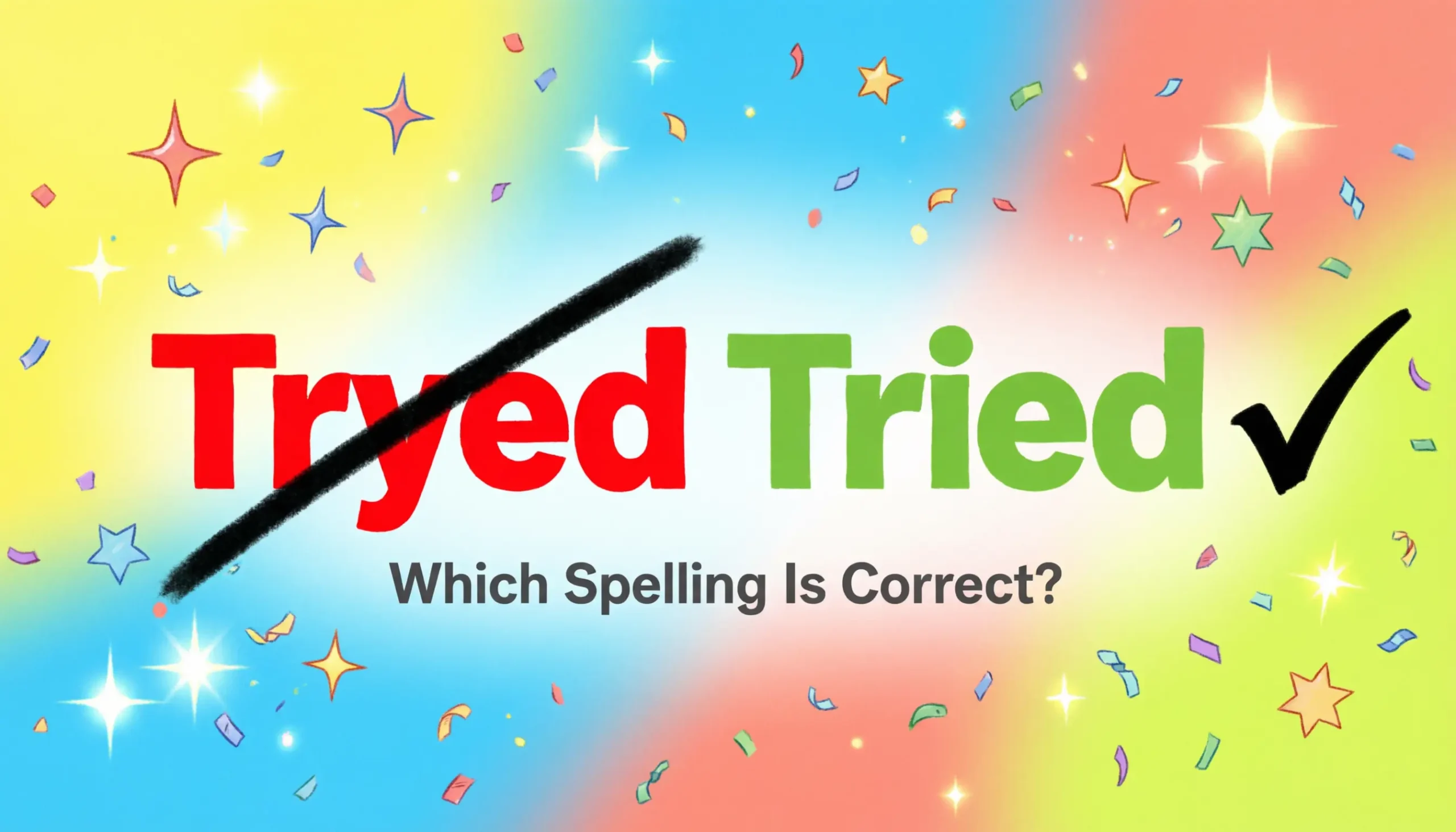
Tryed Or Tried: Which Spelling Is Correct?
When writing or typing quickly, many people get confused between “tryed” and “tried”. This is a common question because the English language has tricky rules for past tense verbs. Knowing the correct form not only improves your writing but also ensures clarity in emails, social media posts, and professional documents.
People often type “tryed” because it seems logical they add “-ed” to the base verb “try.” However, English spelling rules for verbs ending in “y” can change how we form the past tense. This confusion is especially common for students, non-native speakers, and anyone writing quickly on digital platforms.
In this article, we will break down the difference, explain the rules, and give clear examples. By the end, you’ll know exactly which spelling to use, avoid common mistakes, and write with confidence.
If you’re in the UK, the US, or elsewhere, this guide will make your English writing accurate and professional.
Tryed or Tried – Quick Answer ✅
The correct spelling is “tried.”
- Tried → past tense of try.
- Tryed → incorrect, does not exist in standard English.
Example:
- ✅ I tried the new restaurant yesterday.
- ❌ I tryed the new restaurant yesterday.
The rule: When a verb ends in a consonant + “y,” change the “y” to “i” before adding “-ed.”
The Origin of Tryed or Tried 🕰️
The verb try comes from the Old French trier, meaning “to choose or sift.” Over time, English adopted it, but the spelling rules for past tense remained consistent with English grammar:
- Verbs ending in a consonant + “y” → change “y” to “i” + “-ed.”
- Example: try → tried, carry → carried, study → studied
The form tryed likely appeared due to misunderstanding of these rules, especially by early learners of English and in informal writing.
British English vs American English Spelling 🇬🇧🇺🇸
In this case, both UK and US English agree on “tried”. There is no difference. Many verbs ending in “y” follow the same rule across English variants.
| Verb | Past Tense (UK) | Past Tense (US) |
| Try | tried | tried |
| Carry | carried | carried |
| Study | studied | studied |
| Fry | fried | fried |
So, whether writing for a British or American audience, “tried” is always correct.
Which Spelling Should You Use? 🖋️
- US/Canada: tried ✅
- UK/Commonwealth: tried ✅
- Global professional writing: tried ✅
Rule of thumb: Avoid “tryed” in all formal or professional contexts. Even informal social media posts look more polished with tried.
Common Mistakes with Tryed or Tried ❌
Many learners make these errors:
- Tryed – incorrect. ✅ Correct: tried
- Using tryed in formal writing
- Forgetting the “i” change in other verbs: studied not studyed, carried not carryed
Tip: Always check verbs ending with “y” when writing past tense.
Tryed or Tried in Everyday Examples ✍️
Emails:
- Correct: I tried to call you earlier today.
- Incorrect: I tryed to call you earlier today.
Social Media:
- ✅ Just tried the new coffee shop, amazing!
- ❌ Just tryed the new coffee shop, amazing!
News Articles:
- ✅ The scientist tried a new experiment.
- ❌ The scientist tryed a new experiment.
Formal Writing:
- ✅ We tried several methods before concluding.
- ❌ We tryed several methods before concluding.
Tryed or Tried – Google Trends & Usage Data 📈
Google Trends shows “tried” is vastly more popular than “tryed” worldwide. Searches for “tryed” are usually misspellings or educational queries about spelling rules.
- Top countries using tried: US, UK, Canada, Australia
- Top contexts: learning English, professional writing, casual conversation
Comparison Table: Keyword Variations
| Keyword Variation | Correct Usage | Popularity |
| tried | ✅ Correct | High |
| tryed | ❌ Incorrect | Low |
FAQs:
1. Is “tryed” ever correct?
No, it is always incorrect. Use tried.
2. Why do people write “tryed”?
Because adding “-ed” directly seems logical, but English rules require changing “y” to “i.”
3. Is “tried” UK or US English?
It is correct in both.
4. Are there other verbs like try?
Yes: carry → carried, study → studied, fry → fried.
5. Can I use “tryed” in informal text?
Better to avoid it; even casual writing looks more professional with tried.
6. How do I remember the rule?
Consonant + “y” → change “y” to “i” + -ed.
7. Is “tried” pronounced differently in UK and US English?
No, pronunciation is the same: /traɪd/.
8. Can spellcheck catch “tryed”?
Yes, most word processors flag it as incorrect.
9. What is the best way to teach this?
Use examples like try → tried, study → studied, carry → carried.
Conclusion:
When deciding between tryed or tried, always choose tried. It is grammatically correct, universally accepted in both British and American English, and avoids confusion in emails, social media, news, and professional writing. The key rule is simple: if a verb ends in a consonant + “y,” change the “y” to “i” before adding “-ed.”
Understanding this rule not only prevents mistakes but also improves your overall writing quality. “Tryed” may appear online as a common typo, but using it can make your work look unprofessional. If you are a student, professional, or casual writer, sticking to tried ensures your language is correct and readable.
Next time you type or write, remember this simple tip and confidently choose tried. Clear, accurate writing makes your message more credible, helps you avoid misunderstandings, and keeps you looking professional across all platforms.

I am an English language specialist and educational writer focused on grammar rules, word differences, and clear communication. I have years of experience creating easy-to-understand guides that simplify complex English topics. Mine content is trusted by learners looking for accurate and well-structured language explanations.



Post Comment