Uneligible or Ineligible: Which One is Correct?
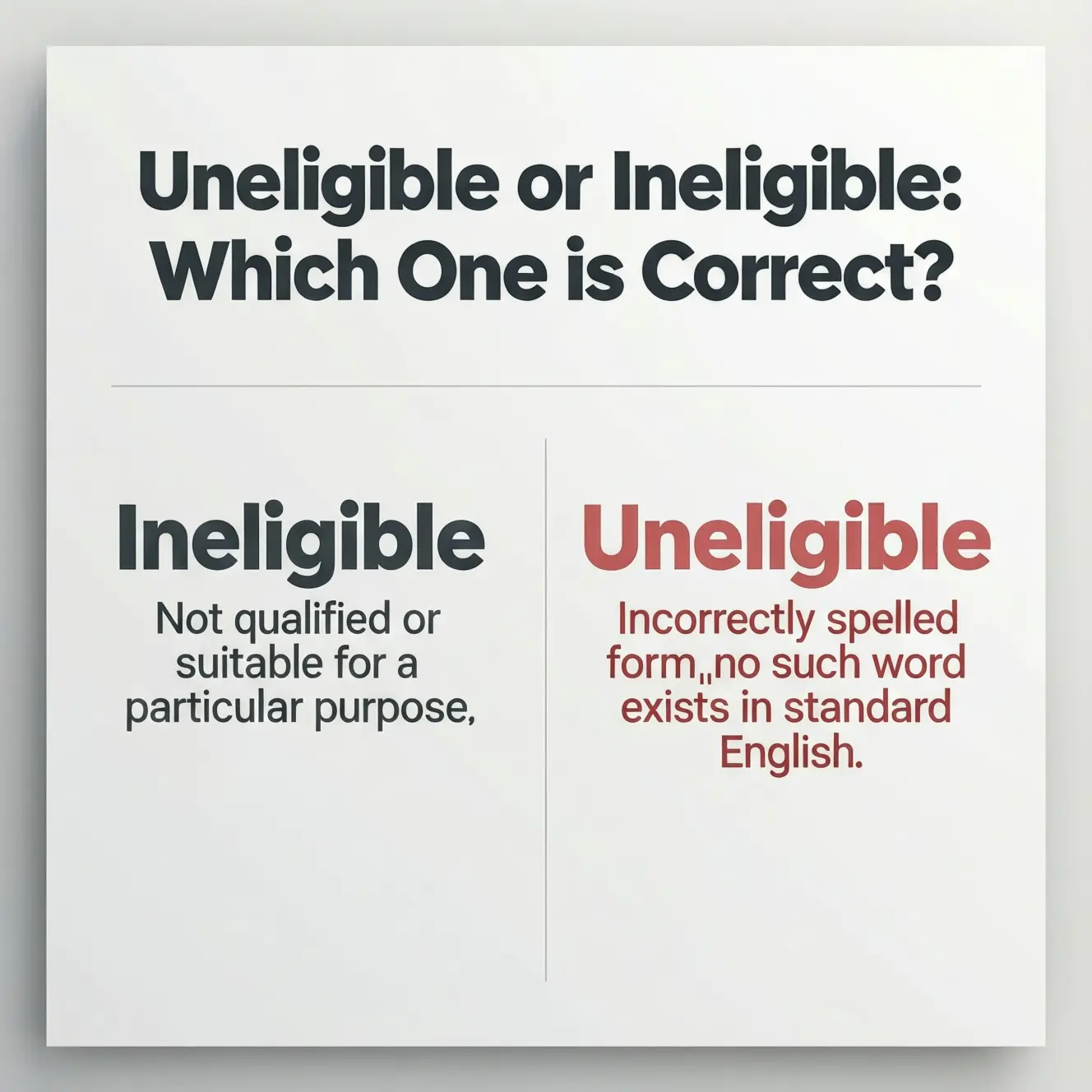
When it comes to official forms, job applications, or legal documents, choosing the correct word matters. Many people get confused between “uneligible” and “ineligible”.
You might have typed “uneligible” in a search engine and wondered if it’s correct, or seen it in informal writing and hesitated. The truth is, only one of these words is considered standard English.
Using the wrong term can make your writing look unprofessional. In this guide, we will clarify the difference, explain the origins, compare British and American usage, and provide clear examples to ensure you never make this mistake again.
People often search for “uneligible or ineligible” because the prefix “un-” seems like a natural choice to indicate the opposite of “eligible.”
However, English prefers “ineligible” in formal contexts. By the end of this article, you’ll know why, when, and how to use the correct form in everyday writing.
Uneligible or Ineligible – Quick Answer
The correct word is “ineligible”.
- ✅ Ineligible → Not qualified or allowed.
Example: She is ineligible for the scholarship because she missed the deadline. - ❌ Uneligible → Incorrect in standard English. It may appear in informal contexts or errors but is not recognized in dictionaries.
Tip: Always use ineligible in professional or academic writing.
The Origin of Uneligible or Ineligible

The word “ineligible” comes from Latin:
- In- → not
- Eligibilis → suitable or chosen
So literally, “ineligible” means “not suitable or not allowed.”
The confusion arises because English often uses un- to form opposites (e.g., unhappy, unkind). However, “eligible” already takes in- to form its negative. Hence, “uneligible” never became standard.
British English vs American English Spelling
Both British and American English use ineligible. The form uneligible is considered incorrect in both variants.
| Spelling | Usage Example (UK) | Usage Example (US) |
| ineligible | He is ineligible to vote. | She is ineligible for the loan. |
| uneligible | ❌ Incorrect | ❌ Incorrect |
Rule: Use ineligible consistently.
Which Spelling Should You Use?
- US English: Always ineligible.
- UK/Commonwealth English: Always ineligible.
- Global Writing: Use ineligible for clarity and professionalism.
Advice: Avoid “uneligible” in emails, resumes, or legal documents. It may confuse readers.
Common Mistakes with Uneligible or Ineligible
- Incorrect: He is uneligible for the promotion.
Correct: He is ineligible for the promotion. - Incorrect: Only uneligible candidates were rejected.
Correct: Only ineligible candidates were rejected. - Using “uneligible” in formal writing or legal documents.
Uneligible or Ineligible in Everyday Examples
- Emails:
Incorrect: You are uneligible for this offer.
Correct: You are ineligible for this offer. - News Articles:
“The player was ineligible to participate due to injury.” - Social Media:
“Sorry, you’re ineligible to vote online.” - Formal Writing:
“Applicants who are ineligible will not be considered.”
Uneligible or Ineligible / Google Trends & Usage Data

- Global Search Trends: “ineligible” is far more popular than “uneligible.”
- Top Searching Countries: USA, UK, Canada, Australia.
- Context: Frequently searched by students, job applicants, and legal professionals.
| Keyword | Search Popularity | Region Most Popular |
| ineligible | 95% | USA, UK, Canada |
| uneligible | 5% | Mostly mistakes |
FAQs
- Is “uneligible” a word?
No, it’s considered incorrect in standard English. - Can I use “uneligible” informally?
It may appear in casual writing, but it’s better to avoid it. - What does “ineligible” mean?
Not qualified, allowed, or suitable for something. - Is “ineligible” used in British English?
Yes, both British and American English use it. - Why do people use “uneligible”?
Because the “un-” prefix is common in English to form negatives. - Is there a difference between ineligible and not eligible?
No, “ineligible” is just a single-word form of “not eligible.” - Can I use “ineligible” for jobs and scholarships?
Yes, it’s commonly used in professional, academic, and legal contexts.
Comparison Table: Keyword Variations
| Variation | Correctness | Example Sentence |
| ineligible | ✅ Correct | She is ineligible for the competition. |
| uneligible | ❌ Incorrect | He is uneligible for the position. |
| not eligible | ✅ Correct | They are not eligible to apply. |
Conclusion
The confusion between uneligible and ineligible is common, but the answer is simple: always use ineligible. This word is universally accepted in British, American, and global English. Avoid “uneligible” in professional writing, emails, social media, or academic documents. Using the correct term will make your writing appear polished and credible.
Remember, ineligible is not just a spelling choice it’s a sign of proper English usage. If you’re applying for a job, filling out legal forms, or writing formally, this simple correction can save you from appearing careless. Stick with ineligible and use it confidently in all contexts.

I am an experienced content writer specializing in modern English usage, vocabulary comparisons, and language learning guides. I write clear and concise explanations to help readers quickly understand the correct word choice. My writing style is practical, SEO-friendly, and ideal for students, bloggers, and non-native English learners



Post Comment