Wane or Wain – What’s the Difference
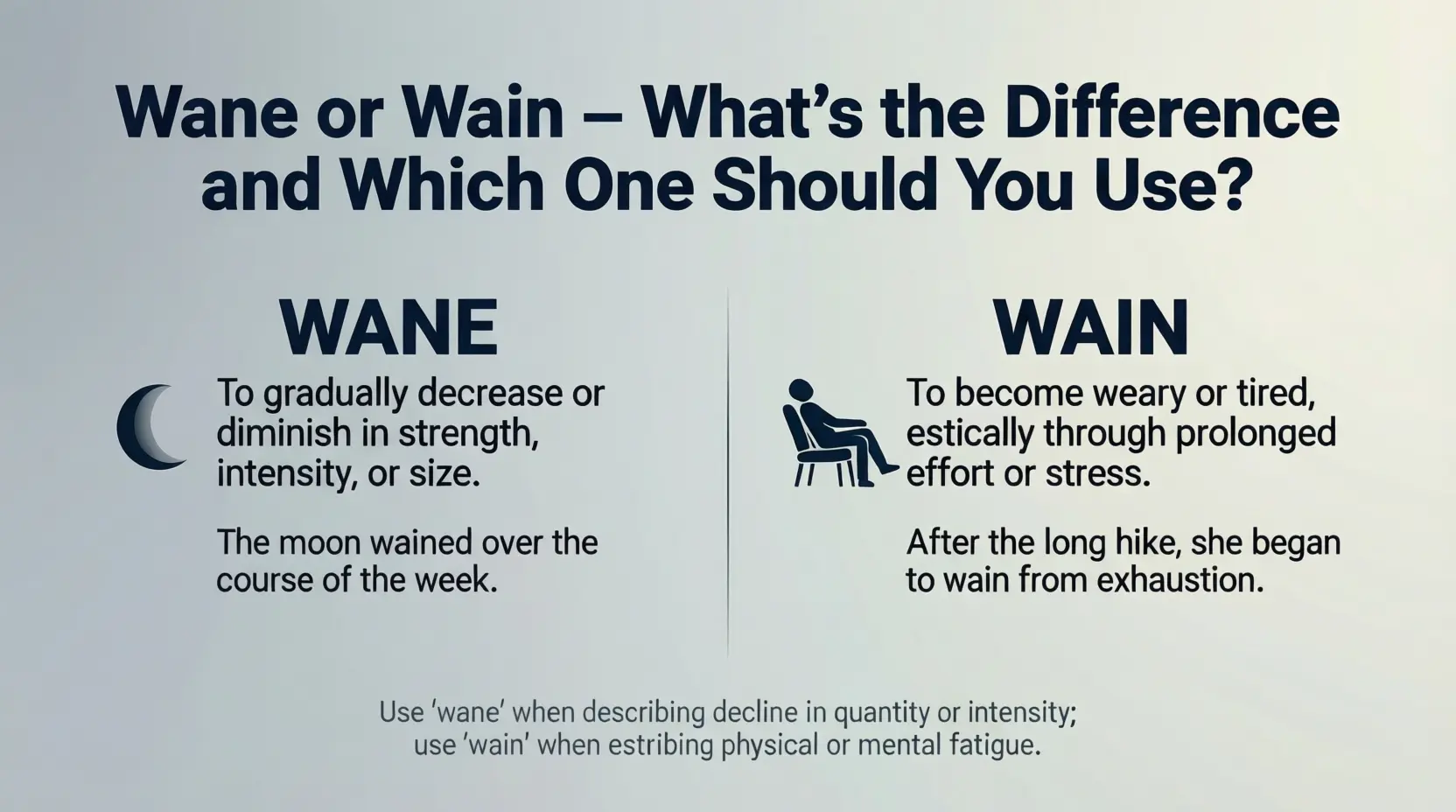
Have you ever paused while writing and wondered, “Should I write wane or wain?” You’re not alone. These two words look almost the same, sound similar, and often confuse writers, students, and even native English speakers.
Many people search for “wane or wain” because they see both words online and aren’t sure if one is American, one is British, or if one is just a spelling mistake.
The confusion usually happens when someone wants to describe something that is decreasing, like fading light, falling interest, or losing strength. In that case, wane is usually the correct word.
Wain, however, is a real word too but it means something very different and is much less common in modern English.
This article clears up that confusion once and for all. You’ll get a quick answer, simple explanations, real-life examples, spelling guidance for UK and US English, and practical advice on which word to use and when.
By the end, you’ll never mix up wane and wain again.
Wane or Wain – Quick Answer
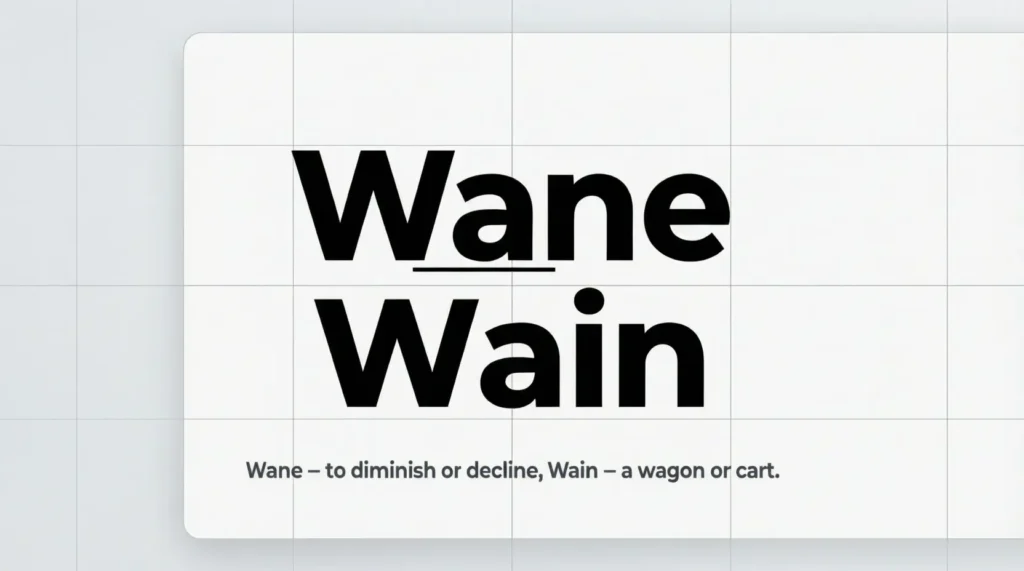
Wane means to become smaller, weaker, or less over time.
Wain means a wagon or cart and is mostly old-fashioned or poetic.
Examples:
- Her excitement began to wane after the delay. ✅
- The moon will wane after it is full. ✅
- The farmer loaded hay onto a wain. ✅ (rare usage)
👉 If you mean decrease or fade, use wane.
The Origin of Wane or Wain
Wane comes from Old English wanian, meaning “to lessen or diminish.” It has always been linked with ideas like fading light, shrinking power, or reduced intensity.
Wain comes from Old English wægn, meaning “wagon” or “cart.” It is related to the modern word wagon. Over time, wain fell out of everyday use and survived mainly in literature, poetry, and historical texts.
The spelling difference exists because these words come from different roots, not from British or American spelling variations.
British English vs American English Spelling
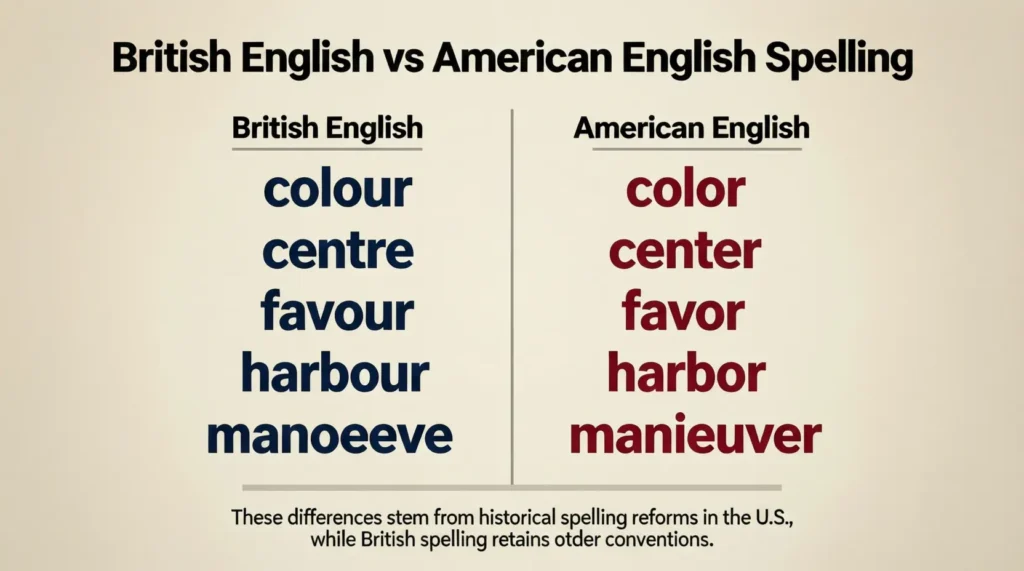
This is where many people get confused but here’s the key point:
👉 There is no UK vs US spelling difference here.
Both British and American English use:
- Wane → to decrease
- Wain → wagon (rare)
Comparison Table
| Word | Meaning | UK English | US English |
| Wane | Decrease or fade | ✅ Same | ✅ Same |
| Wain | Wagon or cart | ✅ Same | ✅ Same |
Which Spelling Should You Use?
Choose based on meaning, not location.
- US audience: Use wane for fading or decreasing.
- UK/Commonwealth audience: Use wane for the same reason.
- Global audience: Always use wane unless you truly mean a wagon.
💡 In modern writing, 99% of the time, “wane” is the correct choice.
Common Mistakes with Wane or Wain
❌ My interest started to wain
✅ My interest started to wane
❌ The moon will wain
✅ The moon will wane
❌ Sales are wain-ing
✅ Sales are waning
Mistake reason: People confuse spelling because both words sound similar.
Wane or Wain in Everyday Examples
Emails
- Our enthusiasm may wane if the project is delayed.
News
- Public support continues to wane over time.
Social Media
- Motivation tends to wane without goals.
Formal Writing
- The influence of the empire began to wane in the 18th century.
Wane or Wain /Google Trends & Usage Data
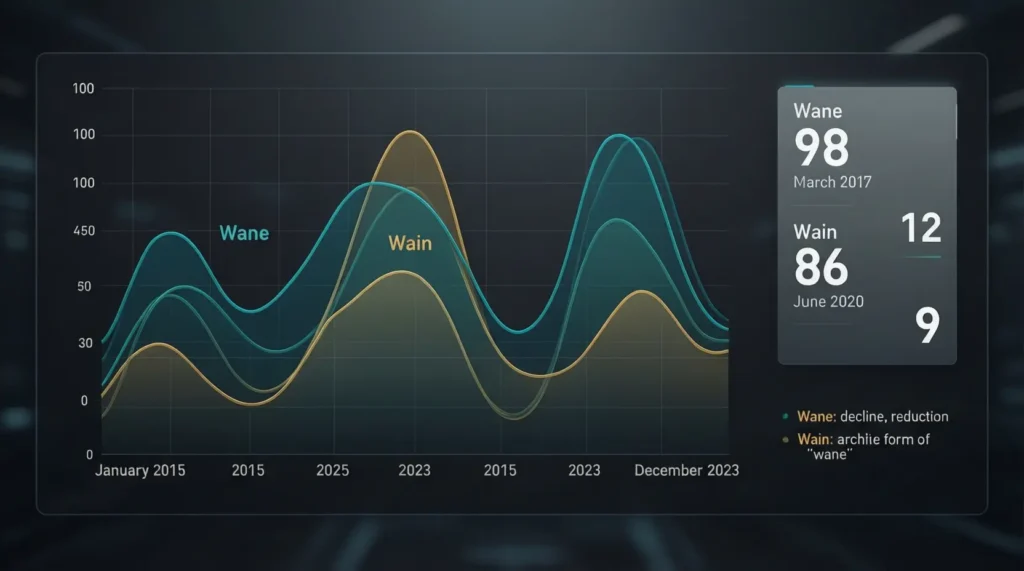
Search data shows that “wane” is far more popular worldwide.
- High usage: US, UK, Canada, Australia
- Context: emotions, time, power, moon phases
- Wain usage: extremely low, mostly academic or literary
This tells us users are usually looking for the correct spelling of “wane”, not “wain.”
Comparison Table: Wane vs Wain
| Feature | Wane | Wain |
| Part of speech | Verb / Noun | Noun |
| Meaning | Decrease, fade | Wagon, cart |
| Modern usage | Very common | Very rare |
| Seen in exams | Yes | Almost never |
| SEO relevance | High | Low |
FAQs:
1. Is “wain” a spelling mistake?
No, but it’s rarely used today.
2. Can I use “wain” instead of “wane”?
No. The meanings are different.
3. Does “wane” have anything to do with the moon?
Yes. The moon wanes after a full moon.
4. Is “wane” a verb or noun?
Both. Verb: to wane. Noun: on the wane.
5. Is this a UK vs US spelling issue?
No. Both countries use the same spellings.
6. Why do people confuse wane and wain?
They sound similar and look alike.
7. Which word should I learn first?
Wane. It’s far more useful.
Conclusion:
The confusion between wane or wain is common, but the solution is simple. Wane is the word you need when talking about something that fades, weakens, or decreases over time. It’s widely used in everyday English, formal writing, news, and exams. Wain, on the other hand, is an old word meaning a wagon or cart and rarely appears in modern content.
There is no British or American spelling difference here only a difference in meaning and usage. If your sentence is about emotions, power, time, interest, or the moon, wane is almost always the correct choice. Understanding this saves time, avoids mistakes, and makes your writing clearer and more professional.
Remember: Things fade → they wane.

I am an experienced content writer specializing in modern English usage, vocabulary comparisons, and language learning guides. I write clear and concise explanations to help readers quickly understand the correct word choice. My writing style is practical, SEO-friendly, and ideal for students, bloggers, and non-native English learners



Post Comment