Weening Or Weaning – Which Is Correct for 2026?
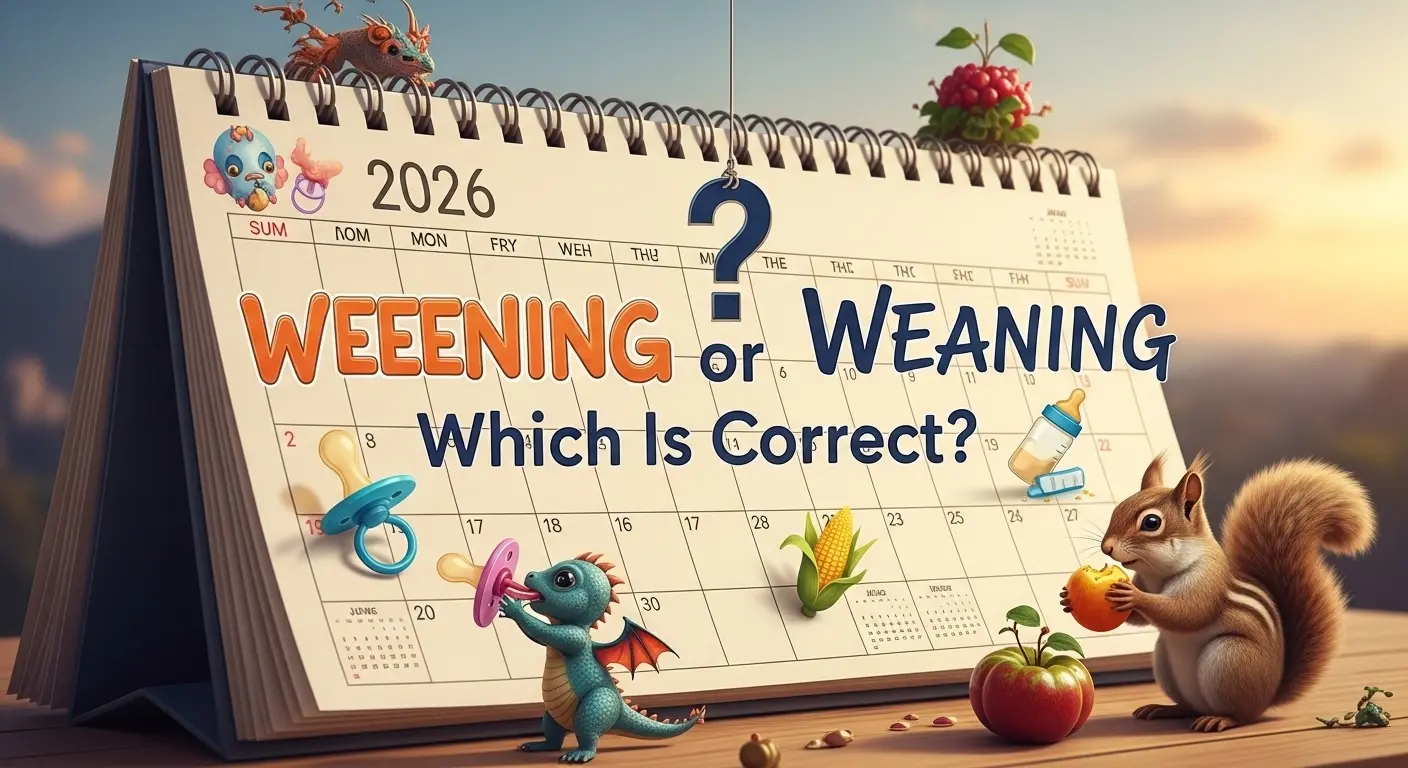
Parents, writers, and English learners often get confused between “weening” and “weaning.” Are they the same, or is one just a spelling mistake? This confusion is common because English is full of tricky words where one letter can change meaning entirely. If you’ve ever wondered whether to type “weening your baby off formula” or “weaning your baby off formula,” this guide clears it all up.
Understanding the difference matters in writing, especially in parenting blogs, medical advice articles, and formal communications. Choosing the wrong spelling can make your content look unprofessional or even change the meaning.
In this article, we explain the correct spelling, the origin of the word, the difference between British and American English usage, common mistakes, and examples you can confidently use in daily writing.
If you’re drafting an email, posting on social media, or writing an article for an audience across the globe, this guide ensures you use the right word every time.
Weening or Weaning – Quick Answer
The correct spelling is “weaning.”
- Weaning (verb): Gradually introducing a baby or animal to solid food while reducing breastfeeding or milk feeding.
- Weening is considered a common misspelling in modern English.
Examples:
- Correct: “The baby is weaning off breast milk.”
- Incorrect: “The baby is weening off breast milk.”
The term is also used metaphorically:
- “He is weaning himself off caffeine.”
In short, if you want to be grammatically correct and clear, always use weaning.
The Origin of Weaning
The word “wean” comes from Old English “wenian”, meaning “to accustom a child to something else.” It has been used since the 12th century to describe gradually ending breastfeeding.
Over time, English spelling became standardized, but the similarity between weening and weaning caused confusion. While “weening” occasionally appears in historical texts, modern dictionaries and style guides universally prefer weaning.
British English vs American English Spelling
In this case, there is no difference between British and American spelling—the correct form is weaning in both varieties.
| Aspect | British English | American English | Notes |
| Correct Spelling | weaning | weaning | Both use “weaning.” |
| Incorrect Spelling | weening | weening | Common typo, not recognized officially. |
| Usage in medical texts | Standard | Standard | Universally accepted. |
| Metaphorical use | Yes | Yes | E.g., weaning off bad habits. |
✅ Both UK and US English writers should stick to weaning for consistency.
Which Spelling Should You Use?
If your audience is global, always use weaning.
- US audience: Use weaning in parenting, health, or diet articles.
- UK/Commonwealth audience: Use weaning—the same as US English.
- Social media or casual posts: Still prefer weaning for clarity.
Pro tip: Never use weening unless quoting historical texts; it may confuse readers.
Common Mistakes with Weaning
- Weening instead of weaning
- ❌ “She is weening the child off formula.”
- ✅ “She is weaning the child off formula.”
- ❌ “She is weening the child off formula.”
- Using weaning for unrelated words
- ❌ “He is weaning a car engine.”
- ✅ “He is phasing out use of a car engine” (correct metaphorical use).
- ❌ “He is weaning a car engine.”
- Confusing wean with wane
- ❌ “The moon is weaning.”
- ✅ “The moon is waning.”
- ❌ “The moon is weaning.”
Weaning in Everyday Examples
Emails:
- “We are weaning our team off outdated software gradually.”
News:
- “Hospitals encourage parents to wean babies from formula after six months.”
Social Media:
- “Trying to wean myself off coffee wish me luck!”
Formal Writing:
- “The patient is weaning from opioid medication under supervision.”
Weening or Weaning – Google Trends & Usage Data
- Global search volume: “weaning” dominates with over 50x more searches than “weening.”
- Top countries searching for “weaning”: US, UK, Australia, Canada, India
- Top contexts: Parenting, baby nutrition, medical guidance, and dietary transitions
“Weening” rarely appears except as a typo or in outdated texts.
Keyword Comparison Table
| Variation | Correctness | Usage Frequency | Notes |
| weaning | ✅ Correct | High | Standard form, universally accepted |
| weening | ❌ Incorrect | Low | Typo; avoid in modern writing |
FAQs:
- Is “weening” ever correct?
Only in historical or archaic texts; modern English requires weaning. - Can “weaning” be used metaphorically?
Yes, it refers to gradually stopping any habit or dependency. - Do UK and US English differ for this word?
No, both use weaning. - Is there a pronunciation difference?
No, both are pronounced /ˈwiːnɪŋ/. - Can pets be “weaned”?
Yes, animals like puppies and kittens are weaned off milk onto solid food. - Is “weaning off caffeine” correct?
Yes, commonly used in health and lifestyle contexts. - Is “weening” ever used in tech?
Rarely, mostly as a typo; do not use in professional writing. - At what age do babies start weaning?
Typically between 4–6 months for introducing solid foods. - Can adults be “weaned”?
Yes, adults can be weaned from habits, medications, or substances gradually.
Conclusion:
The word weaning is the correct and universally accepted spelling. Confusion with weening is common, but sticking to weaning ensures clarity in both professional and casual writing. This word is not only about baby nutrition it’s also widely used metaphorically for gradually stopping habits or dependencies.
When writing for a global audience, always choose weaning, whether you’re drafting an article, social media post, email, or academic text. Avoid the typo weening, as it could confuse readers and reduce the credibility of your content. Remember, both British and American English use weaning, making it easy to standardize your writing worldwide.
By mastering this small but important word, you improve your writing’s clarity and avoid one of the most common spelling pitfalls in English.

I am an English language specialist and educational writer focused on grammar rules, word differences, and clear communication. I have years of experience creating easy-to-understand guides that simplify complex English topics. Mine content is trusted by learners looking for accurate and well-structured language explanations.



Post Comment