Were or We’re – What’s the Difference and Use each for 2026?
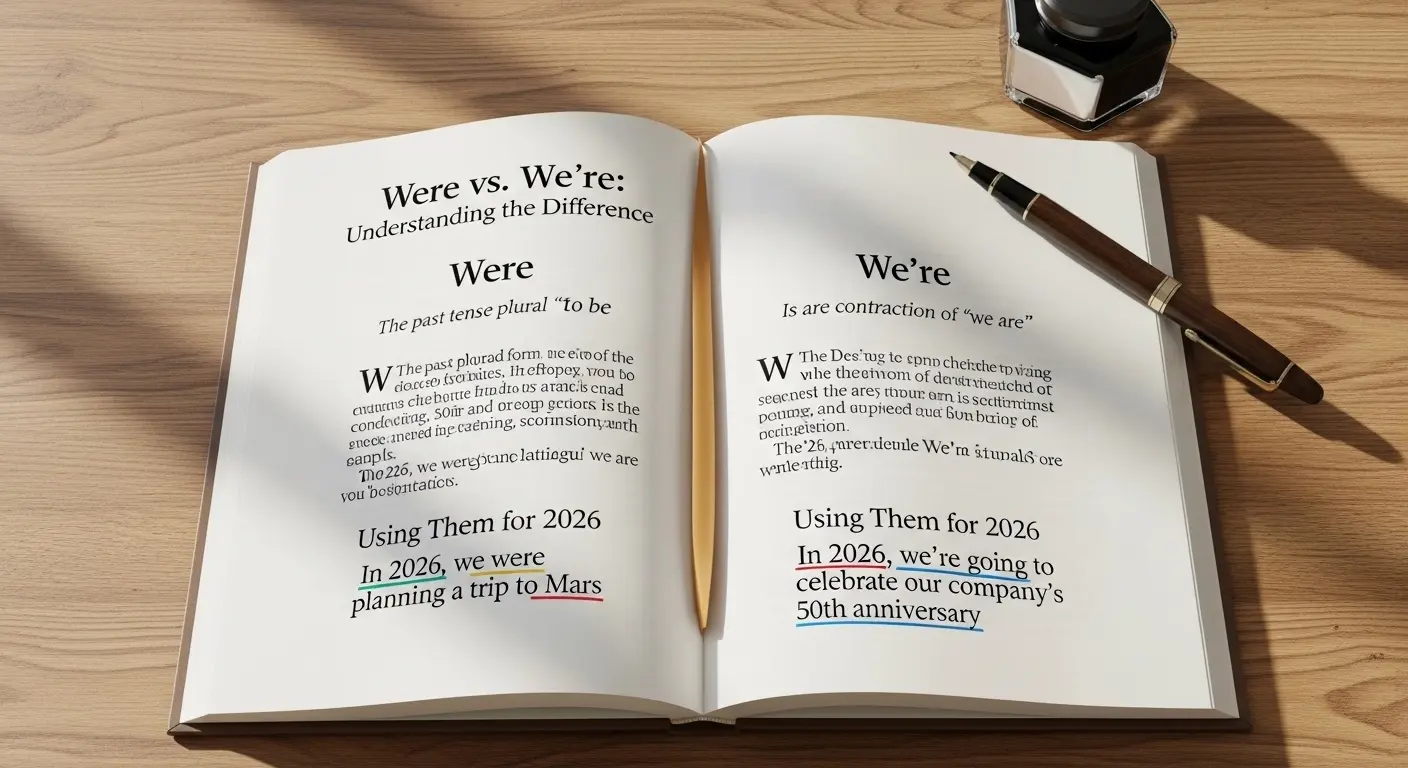
Have you ever paused while writing and wondered whether to use “were” or “we’re”? You’re not alone. This small spelling difference confuses many English learners and even native speakers.
The words “were” and “we’re” look similar, sound almost the same in conversation, and appear often in everyday writing. Because of this, people frequently search online to understand which one is correct.
The confusion happens because these words serve different grammatical roles. One is a past tense verb, while the other is a contraction (a shortened form of two words). If you mix them up, your sentence can change meaning or become grammatically incorrect.
For example:
- We were happy to see you.
- We’re happy to see you.
Both sentences are correct, but they mean different things. One talks about the past, and the other talks about the present.
This guide will explain the difference between were and we’re in simple terms. You will learn their meaning, history, common mistakes, and how to choose the correct one in writing. By the end, you will be able to use them confidently in emails, messages, and professional writing.
Were or We’re – Quick Answer
The difference between were and we’re is simple:
| Word | Meaning | Example |
| Were | Past tense of “are” | They were at the park yesterday. |
| We’re | Contraction of “we are” | We’re going to the park today. |
Simple Rule
- Use “were” when talking about the past.
- Use “we’re” when you mean “we are.”
Examples
Were (past tense):
- We were late to the meeting.
- They were excited about the trip.
- The kids were playing outside.
We’re (we are):
- We’re going to the meeting now.
- We’re excited about the trip.
- We’re ready to start.
Quick Test
Replace “we’re” with “we are.”
If the sentence still makes sense, we’re is correct.
Example:
- We’re happy today → We are happy today ✔
The Origin of Were or We’re
Understanding the history of these words helps explain why they look similar but function differently.
Origin of “Were”
The word “were” comes from Old English, specifically from the word “wǣron.” It was used as the plural past tense of the verb “to be.”
Over time, English simplified many verb forms, but “were” remained as the past plural form.
Examples today:
- They were tired.
- We were students.
- You were right.
It is also used in subjunctive grammar, such as:
- If I were you, I would study more.
Origin of “We’re”
The word “we’re” is much newer. It is a contraction formed by combining “we” + “are.”
Contractions became popular in English writing during the 17th century as writers wanted a more natural, conversational style.
Examples:
- We’re learning English.
- We’re ready to begin.
- We’re excited about the project.
The apostrophe (’) replaces the missing letter “a” in are.
British English vs American English Spelling
Unlike many English spelling differences (like color vs colour), “were” and “we’re” are spelled the same in both British and American English.
Both varieties follow the same grammatical rules.
However, writing style can vary slightly. For example, American writing often uses contractions more frequently, especially in informal contexts.
Comparison Table
| Feature | British English | American English |
| Past tense verb | were | were |
| Contraction of “we are” | we’re | we’re |
| Use in formal writing | Contractions used less | Contractions used more |
| Grammar rules | Same | Same |
Examples
British style:
- We were pleased with the results.
American style:
- We’re excited about the results.
Both forms are correct in either version of English.
Which Spelling Should You Use?
Choosing between were and we’re depends on grammar, not location.
Use “Were” If:
- The sentence talks about the past.
- You need the past form of “are.”
Examples:
- We were in London last week.
- They were happy with the decision.
Use “We’re” If:
- You mean “we are.”
- The sentence talks about the present.
Examples:
- We’re planning a new project.
- We’re ready to begin.
Advice for Different Audiences
| Audience | Recommendation |
| US readers | Use contractions freely in casual writing |
| UK readers | Contractions fine in casual contexts |
| Global audiences | Avoid contractions in very formal writing |
For formal documents, some writers prefer “we are” instead of “we’re.”
Common Mistakes with Were or We’re
Many writers confuse these two words because they sound similar when spoken.
Mistake 1: Using “were” instead of “we’re”
Incorrect:
- Were going to start the meeting.
Correct:
- We’re going to start the meeting.
Mistake 2: Using “we’re” for past tense
Incorrect:
- We’re late yesterday.
Correct:
- We were late yesterday.
Mistake 3: Forgetting the apostrophe
Incorrect:
- Were excited about the news.
Correct:
- We’re excited about the news.
Mistake 4: Confusing with “where”
Incorrect:
- Where happy today.
Correct:
- We’re happy today.
Were or We’re in Everyday Examples
These words appear often in daily communication.
- We’re pleased to inform you about the update.
- We were happy to receive your message.
News Writing
- Officials said they were aware of the issue.
- We’re seeing strong growth this year.
Social Media
- We’re launching a new product tomorrow!
- We were surprised by the response.
Formal Writing
Formal writing may avoid contractions:
- We are grateful for your support.
- We were grateful for the opportunity.
Were or We’re – Google Trends & Usage Data
Search data shows that many people look up “were or we’re” because the pronunciation is very similar.
Common Search Questions
People often search for:
- “difference between were and we’re”
- “were vs we’re meaning”
- “when to use were”
Usage by Country
| Country | Usage Notes |
| United States | Contractions like “we’re” common |
| United Kingdom | Similar usage patterns |
| Canada | Both forms widely used |
| Australia | Similar to British English |
| India & Pakistan | Learners often search grammar differences |
Most searches happen in regions where English learners want grammar clarity.
Comparison Table: Were vs We’re
| Word | Type | Meaning | Example |
| Were | Verb (past tense) | Past form of “are” | We were tired yesterday |
| We’re | Contraction | Short form of “we are” | We’re tired today |
FAQs:
1. What is the difference between were and we’re?
Were is a past tense verb. We’re means we are.
2. Is “we’re” formal or informal?
It is slightly informal because it is a contraction. In formal writing, use we are.
3. Can “were” be used with “I”?
Yes, in hypothetical situations.
Example:
If I were you, I would study more.
4. How can I remember the difference?
Check if “we are” fits in the sentence. If yes, use we’re.
5. Why do people confuse were and we’re?
They sound almost the same when spoken.
6. Is “were” always past tense?
Usually yes, but it can also appear in hypothetical sentences.
7. Can contractions appear in academic writing?
Many academic styles avoid them, so “we are” is often preferred.
8. Is “we’re” correct in professional emails?
Yes, but avoid it in very formal communication.
Conclusion:
The difference between were and we’re is small but important. These two words look similar and sound almost identical, but they serve very different roles in English grammar.
“Were” is the past tense of the verb “to be.” It is used when talking about events or situations that already happened. For example: We were at the conference yesterday. It can also appear in hypothetical statements, such as If I were you.
“We’re,” on the other hand, is a contraction of “we are.” It describes something happening in the present. For instance: We’re preparing a report today. The easiest way to avoid mistakes is to perform a quick test: replace “we’re” with “we are.” If the sentence still works, the contraction is correct.
Both British and American English follow the same spelling rules for these words, so the choice depends only on grammar and context. By understanding the difference and practicing with real examples, you can confidently choose the right word in emails, messages, essays, and professional writing.
Discover More Article:
Fare Or Fair- What’s the Difference and When Should You Use for 2026?

I am an experienced content writer specializing in modern English usage, vocabulary comparisons, and language learning guides. I write clear and concise explanations to help readers quickly understand the correct word choice. My writing style is practical, SEO-friendly, and ideal for students, bloggers, and non-native English learners


Post Comment