Whiff or Wiff? The Correct Spelling Explained
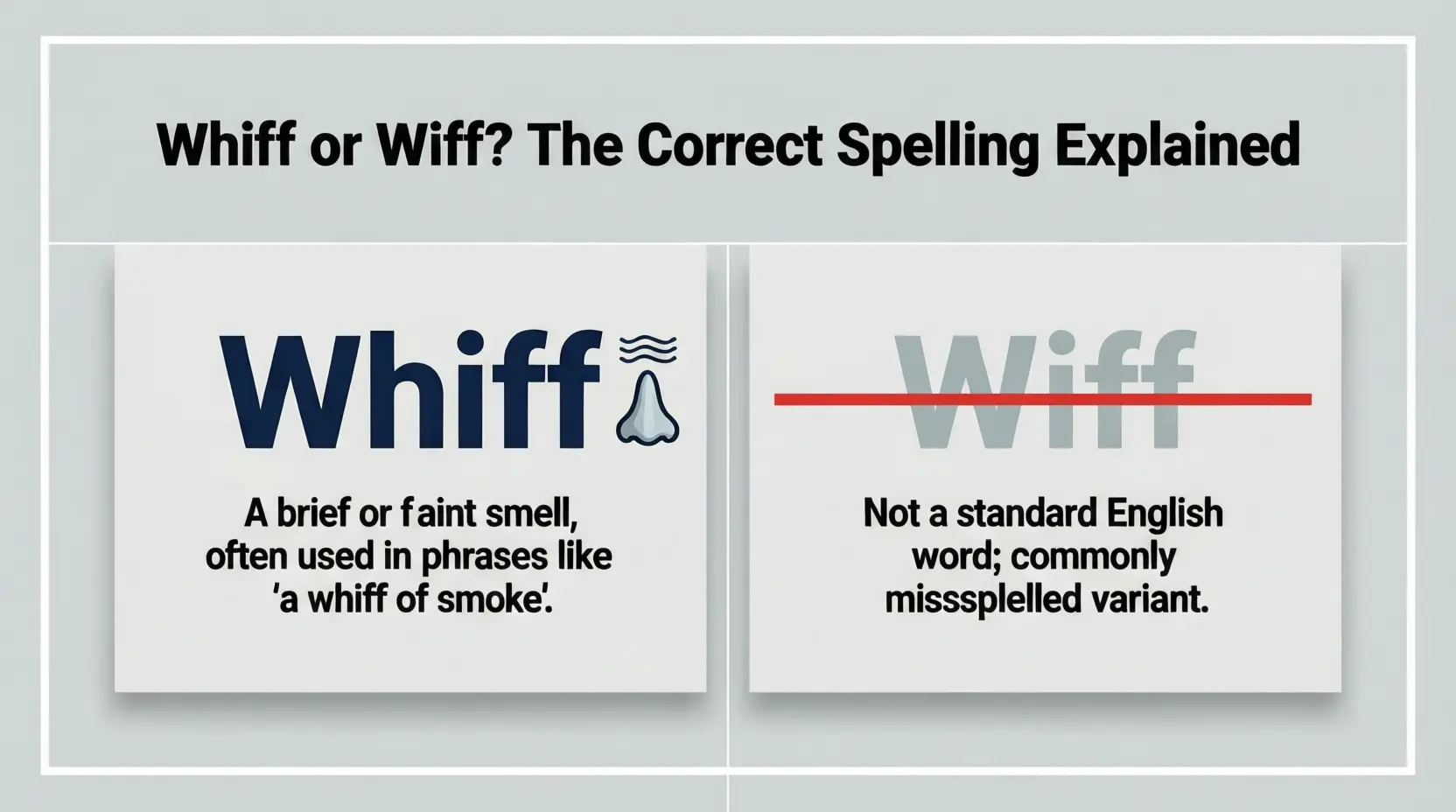
Have you ever paused while writing and wondered: is it “whiff” or “wiff”? You’re not alone. This confusion is very common, especially for non-native English speakers, students, and even native writers. Both words sound the same, but only one is correct in standard English.
Because English has many words with silent letters and unusual spellings, people often search for “whiff or wiff” to avoid mistakes in emails, exams, blogs, and professional writing.
This article solves that confusion once and for all. You’ll get a clear, quick answer, followed by a deeper explanation of where the word comes from, how it’s used in British and American English, and why one spelling is accepted while the other is not.
You’ll also see real-life examples, common mistakes to avoid, usage data insights, and simple advice on which spelling you should use depending on your audience.
By the end of this guide, you’ll confidently know which spelling is correct, why it’s correct, and how to use it properly in everyday and professional English.
Whiff or Wiff – Quick Answer

✅ “Whiff” is the correct spelling.
❌ “Wiff” is incorrect and not accepted in standard English.
Whiff means:
- A smell, often brief or unpleasant
- A short breath or puff of air
- A miss, especially in sports (like baseball)
Examples:
- I caught a whiff of smoke.
- He took a quick whiff of the coffee.
- The batter swung and missed — a complete whiff.
“Wiff” is simply a misspelling of whiff and should be avoided.
The Origin of Whiff or Wiff
The word “whiff” dates back to the 16th century. It likely comes from imitative sounds, copying the noise of blowing or breathing air quickly. Early English used words like whif and whiffe to describe a sudden movement of air or smell.
Over time, “whiff” became standardized in dictionaries and written English. The double “f” followed common English spelling patterns for short vowel sounds.
So why does “wiff” exist at all?
It doesn’t — at least not officially. “Wiff” appears because:
- English pronunciation hides spelling rules
- The f sound makes people assume one “f” is enough
- Typing and spelling errors spread online
But historically and linguistically, only “whiff” is correct.
British English vs American English Spelling
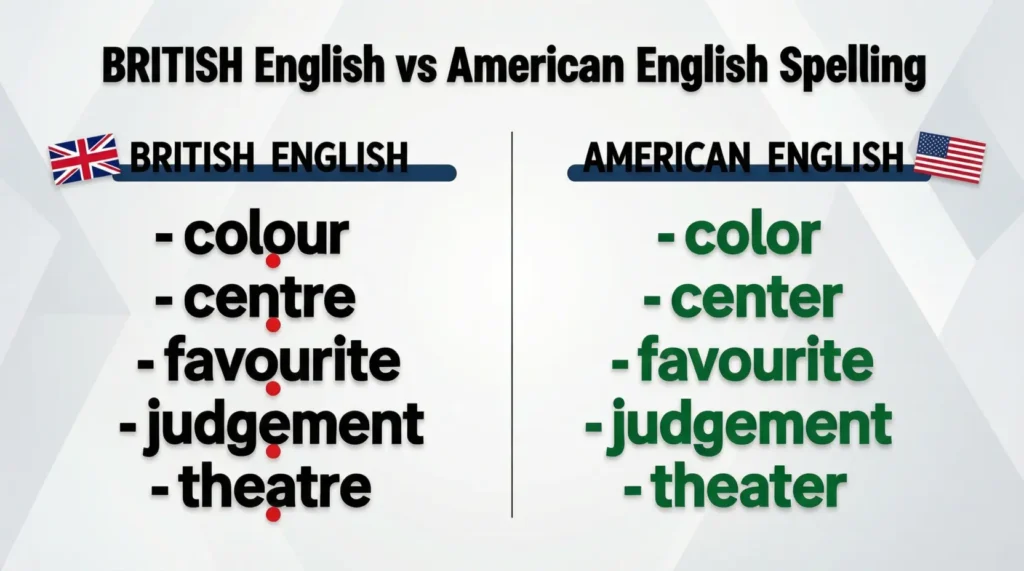
Good news: there is NO spelling difference here.
Both British English and American English use “whiff.”
“Wiff” is incorrect in both systems.
Comparison Table
| Feature | British English | American English |
| Correct spelling | Whiff | Whiff |
| Meaning | Smell, puff, miss | Smell, puff, miss |
| “Wiff” usage | ❌ Incorrect | ❌ Incorrect |
| Dictionary acceptance | ✅ Yes | ✅ Yes |
👉 Unlike colour/color or centre/center, “whiff” stays the same worldwide.
Which Spelling Should You Use?
Always use “whiff”, no matter your audience.
Audience-based advice:
- US audience → Use whiff
- UK audience → Use whiff
- Canada, Australia, New Zealand → Use whiff
- Global or ESL audience → Use whiff
There is no context where “wiff” is correct in standard English writing.
Common Mistakes with Whiff or Wiff
Here are frequent errors people make:
❌ Mistake 1: Using “wiff” in writing
- I smelled a wiff of gas. ❌
✔ I smelled a whiff of gas.
❌ Mistake 2: Assuming one “f” is acceptable
English often doubles consonants after short vowels.
❌ Mistake 3: Using “wiff” in formal writing
“Wiff” looks unprofessional and may hurt credibility.
❌ Mistake 4: Confusing pronunciation with spelling
Same sound ≠ same spelling.
Whiff or Wiff in Everyday Examples
Emails
- There was a whiff of confusion in his message.
News
- Residents reported a whiff of gas near the factory.
Social Media
- Did anyone else get a whiff of drama here?
Sports
- The striker took a swing and completely whiffed.
Formal Writing
- The report mentioned a faint whiff of chemicals.
In all cases, “whiff” is the correct and accepted form.
Whiff or Wiff / Google Trends & Usage Data
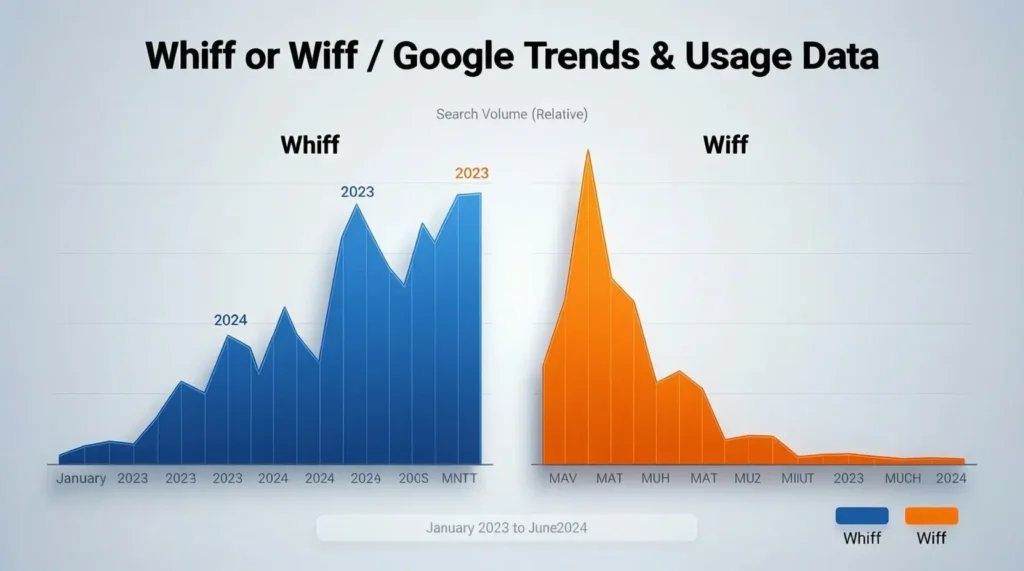
Search data shows:
- “Whiff” is widely used in news, books, sports, and daily English.
- “Wiff” appears mostly in:
- Spelling questions
- Typos
- Informal social media errors
- Spelling questions
Usage by Region:
- USA & UK: “whiff” dominates
- ESL countries: searches spike for “whiff or wiff”
- Sports context: “whiff” is common slang
This proves people search to confirm the correct spelling, not because both are valid.
Whiff vs Wiff – Comparison Table
| Feature | Whiff | Wiff |
| Correct spelling | ✅ Yes | ❌ No |
| Dictionary listed | ✅ Yes | ❌ No |
| Used in US English | ✅ | ❌ |
| Used in UK English | ✅ | ❌ |
| Professional writing | ✅ | ❌ |
| Common meaning | Smell, puff, miss | None |
FAQs:
1. Is “wiff” ever correct?
No. “Wiff” is always a misspelling.
2. Why do people spell whiff as wiff?
Because both sound the same and English spelling is tricky.
3. Is “whiff” informal?
No. It works in both informal and formal contexts.
4. Can “whiff” be a verb?
Yes. He whiffed the ball.
5. Is “whiff” used in British English?
Yes. British and American English both use “whiff.”
6. Does “whiff” always mean a bad smell?
No. It can mean any brief smell, good or bad.
7. Is “whiff” slang?
It can be casual in sports, but it’s still a standard word.
Conclusion
So, when it comes to whiff or wiff, the answer is clear and simple: “whiff” is the only correct spelling. The confusion happens because both words sound the same, but English spelling does not always follow pronunciation. Historically, linguistically, and grammatically, “whiff” is the accepted form in British English, American English, and all global standards.
Using “wiff” can make your writing look careless, especially in professional emails, articles, or academic work. Whether you’re talking about a smell, a quick breath, or a missed swing in sports, “whiff” works in every context. There is no audience, region, or style where “wiff” is correct.
If you remember just one thing, remember this:
👉 If you can smell it, miss it, or sense it briefly — it’s always a “whiff.”

I am a professional English language writer and editor with a strong focus on word comparisons, spelling differences, and usage clarity. I specialize in explaining confusing English words in a simple, reader-friendly way. With a background in linguistics and digital content writing, I help learners understand British vs American English, commonly confused terms, and everyday grammar mistakes.






Post Comment