Whisky or Whiskey: What’s the Difference for 2026?
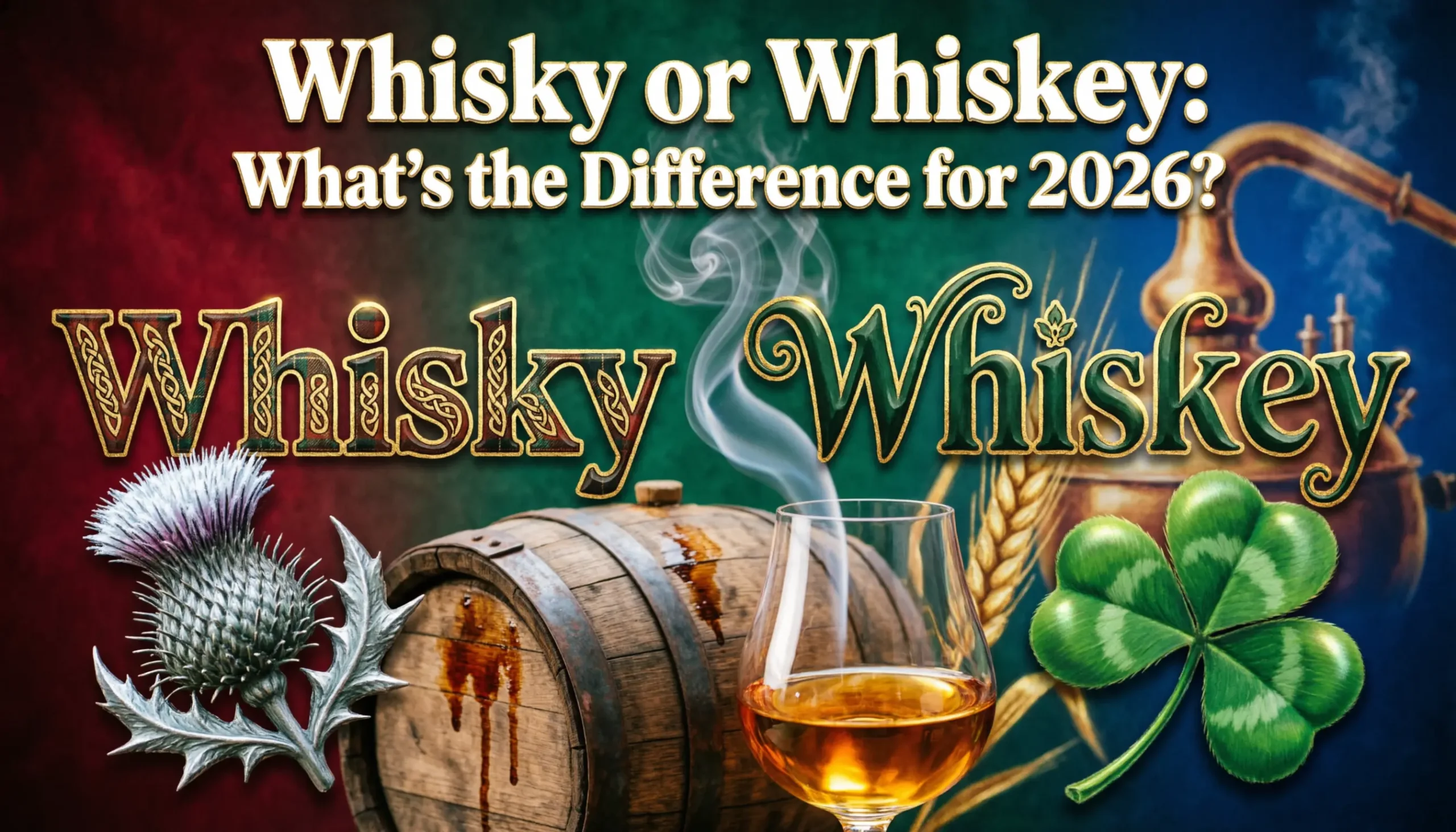
If you’ve ever typed whisky or whiskey into Google, you’re not alone. This is one of the most searched spelling questions in the English language, especially among readers, writers, bloggers, and drinks enthusiasts. The confusion exists because both spellings are correct, but they are used in different regions and traditions.
At first glance, the difference seems tiny just one extra letter. Yet that single “e” changes meaning, context, and even cultural identity. You’ll see whisky on bottles from Scotland and whiskey on labels from the United States and Ireland. This leaves many people unsure which spelling to use in articles, emails, menus, blogs, content.
Searchers want a quick answer, but they also want to know why the difference exists, where each spelling comes from, and which one is correct for their audience. This article solves that confusion completely.
By the end, you’ll know the exact difference between whisky and whiskey, how British and American English treat them, common mistakes to avoid, and how to choose the right spelling for global or local audiences confidently and professionally.
Whisky or Whiskey – Quick Answer
Whisky and whiskey refer to the same alcoholic drink, but the spelling depends on where it is made or written.
- Whisky → Used in Scotland, Canada, Japan, and most Commonwealth countries
- Whiskey → Used in Ireland and the United States
Examples:
- Scottish whisky is aged in oak barrels.
- Irish whiskey often has a smoother taste.
Rule to remember:
👉 Countries with an “E” in their name tend to use “whiskey.”
The Origin of Whisky or Whiskey
The word comes from the Gaelic phrase “uisge beatha,” meaning water of life. Over time, this phrase was shortened to uisge, then Anglicised into whisky.
Why did “whiskey” appear?
In the 19th century, Irish distillers added the letter “e” to distinguish their product from Scottish whisky. When Irish immigrants moved to America, the spelling whiskey went with them.
That’s why today:
- Scotland kept whisky
- Ireland and the US use whiskey
The spelling difference reflects history, branding, and national pride, not a different drink.
British English vs American English Spelling
British and American English follow regional tradition, not grammar rules, for this word.
Spelling Comparison Table
| Region / Country | Preferred Spelling |
| United Kingdom | Whisky |
| Scotland | Whisky |
| Ireland | Whiskey |
| United States | Whiskey |
| Canada | Whisky |
| Japan | Whisky |
| Australia | Whisky |
Examples:
- British English: He enjoys a glass of single-malt whisky.
- American English: She ordered a rye whiskey.
Which Spelling Should You Use?
Choose based on your audience.
Use whisky if:
- Writing for UK or Commonwealth readers
- Referring to Scottish or Japanese products
- Creating British English content
Use whiskey if:
- Writing for a US or Irish audience
- Discussing American bourbon or rye
- Following American English style
For global or SEO content:
- Use both spellings once
- Then stay consistent with the dominant audience
Common Mistakes with Whisky or Whiskey
Many writers make simple but avoidable errors.
❌ Common mistakes:
- Mixing spellings in the same article
- Using whiskey for Scottish brands
- Assuming one spelling is incorrect
✅ Correct usage:
- Pick one spelling and stay consistent
- Match spelling to origin or audience
- Use the correct spelling in headings and metadata
Whisky or Whiskey in Everyday Examples
Emails
- Let’s discuss the whisky selection for the event.
- He collects rare American whiskeys.
News Writing
- Scottish whisky exports increased this year.
- US whiskey sales hit record highs.
Social Media
- Nothing beats a smooth Japanese whisky 🥃
- Friday night whiskey vibes.
Formal Writing
- The history of Irish whiskey dates back centuries.
Whisky or Whiskey – Google Trends & Usage Data
Search data shows regional dominance:
- “Whisky” is most searched in:
- UK
- Canada
- Australia
- India
- UK
- “Whiskey” dominates in:
- United States
- Ireland
- United States
Globally, whisky slightly leads in written content, while whiskey dominates American searches. For SEO, using both spellings strategically can improve visibility across regions.
Whisky vs Whiskey – Comparison Table
| Feature | Whisky | Whiskey |
| Spelling Style | British / Commonwealth | American / Irish |
| Countries | Scotland, Canada, Japan | USA, Ireland |
| Extra “E” | No | Yes |
| Meaning | Same drink | Same drink |
| Grammar Rule | Regional tradition | Regional tradition |
FAQs:
1. Are whisky and whiskey the same drink?
Yes. The difference is spelling and region, not the drink itself.
2. Is one spelling more correct?
No. Both are correct in their respective regions.
3. Why does American whiskey have an “e”?
It comes from Irish influence in early American distilling.
4. Should I use whisky or whiskey for Content?
Use the spelling your target audience searches for, or include both.
5. Is bourbon whisky or whiskey?
Bourbon is American whiskey, so it uses the “e”.
6. What spelling does Canada use?
Canada uses whisky.
7. Can I mix spellings in one article?
It’s better to stay consistent unless comparing both.
8. Does pronunciation change?
No. Both are pronounced the same.
Conclusion:
The difference between whisky or whiskey is simple once you understand the history behind it. Both spellings describe the same drink, but each reflects regional identity and tradition. Scotland, Canada, and Japan prefer whisky, while Ireland and the United States use whiskey. Neither is wrong it all depends on where you are and who you’re writing for.
For writers, bloggers, the key is consistency and audience awareness. Choose the spelling that matches your target readers or he product’s origin. If your content is global, acknowledge both spellings early and then stick to one. Avoid mixing them randomly, as this can look unprofessional and confuse readers.
Understanding this difference not only improves your writing accuracy but also builds trust with your audience. If you’re crafting an article, menu, email, or social post, using the right spelling shows attention to detail and cultural awareness..

I am an experienced content writer specializing in modern English usage, vocabulary comparisons, and language learning guides. I write clear and concise explanations to help readers quickly understand the correct word choice. My writing style is practical, SEO-friendly, and ideal for students, bloggers, and non-native English learners



Post Comment