Comparing Professional Japanese Translation Companies: A Buyer’s Scorecard
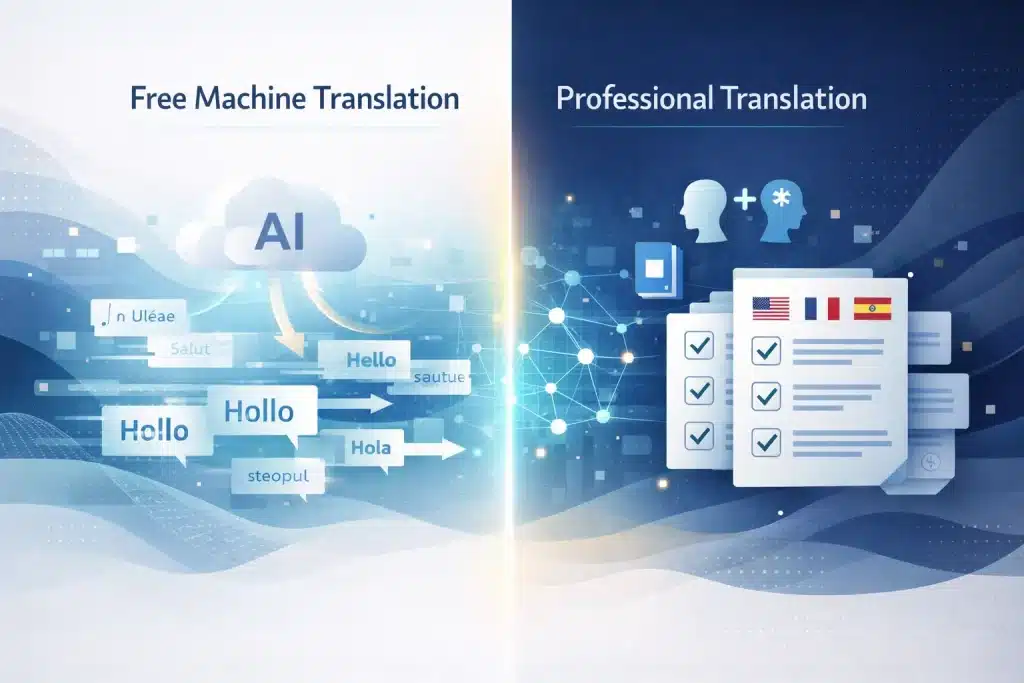
Choosing a Japanese translation provider can be difficult when several companies appear to offer similar services. Their websites may list experienced translators, fast delivery, competitive prices, and quality guarantees. However, these claims do not always tell you how well a provider will handle your specific project.
A buyer’s scorecard gives you a practical way to compare providers. Instead of choosing based only on price, you can assess language quality, subject expertise, review procedures, communication, confidentiality, turnaround time, and overall value.
When comparing a professional japanese translation company, start by identifying what your project actually requires. A short business email does not need the same workflow as a technical manual, legal document, or large website.
Define Your Translation Requirements
Before contacting providers, write down your requirements.
Include:
- Source language
- Target language
- Word count
- Subject
- Intended audience
- File format
- Deadline
- Required quality level
This gives each company the same information and makes their proposals easier to compare.
Score Language Expertise
The first category should be language quality.
A provider should demonstrate strong English and Japanese capabilities. For customer-facing content, native Japanese expertise can be especially valuable.
Look at whether the company can produce Japanese that sounds natural rather than mechanically translated.
A grammatically correct translation can still feel awkward if the sentence structure follows the source language too closely.
Check Subject-Matter Experience
Language ability alone may not be enough.
A technical document requires different knowledge from a marketing campaign.
Consider whether the provider has experience with your industry.
Relevant areas may include:
- Technology
- Healthcare
- Finance
- Manufacturing
- Legal content
- E-commerce
- Marketing
Industry experience can reduce terminology problems and improve consistency.
Evaluate Translation Methods
Ask how the company handles your project.
Some providers use individual translators. Others use translation teams, editing workflows, or technology-assisted processes.
You should understand what happens after the initial translation.
A strong process may include translation, editing, proofreading, and quality checks depending on the project.
Check Native Japanese Review
If the content will be published for Japanese customers, ask whether native Japanese professionals review the final text.
This can be particularly important for:
- Websites
- Advertising
- Product descriptions
- Social media
- Corporate communication
Native review can identify unnatural wording and inappropriate expressions.
Compare Quality Assurance
Ask each provider how they check completed work.
Quality assurance may involve terminology checks, bilingual review, proofreading, and final formatting checks.
Do not rely only on statements such as “high quality.”
Ask what the quality process actually includes.
Assess Terminology Management
Businesses often have preferred terms for products, services, departments, and technical concepts.
A translation provider should be able to follow these preferences consistently.
Ask whether the company can create or maintain a glossary.
For large projects, terminology management can make a significant difference.
Review Sample Work
If samples are available, examine them carefully.
Look for:
• Natural Japanese
• Consistent terminology
• Appropriate tone
• Clear sentence structure
• Accurate meaning
A sample can provide useful evidence of the provider’s capabilities.
However, make sure the sample is relevant to your type of content.
Consider a Test Project
A small paid test can be more useful than a generic sample.
Give the provider a short section from your actual project.
Then evaluate:
- Translation quality
- Communication
- Turnaround
- Terminology
- Response to feedback
This gives you a better understanding of how the provider will handle the full project.
Compare Pricing Carefully
Price is an important factor, but it should not be the only score.
A low quote may exclude editing, proofreading, formatting, or other services.
A higher quote may include several review stages.
Ask for an itemized proposal when possible.
Compare what you receive for the quoted price rather than comparing the price alone.
Understand the Pricing Model
Translation companies may calculate prices in different ways.
The quote might depend on:
- Source word count
- Target word count
- Document type
- Language pair
- Subject complexity
- Urgency
- Review requirements
Make sure you understand how the final cost is calculated.
Check Turnaround Times
Fast delivery can be useful, but extremely short deadlines may affect the workflow.
Ask how long the company needs for your project and whether rush service is available.
For large projects, find out whether multiple translators will work on the content and how consistency will be maintained.
Evaluate Communication
Communication is easy to overlook during the buying process.
A good provider should respond clearly to questions and explain project requirements.
Look at:
- Response times
- Clarity of answers
- Project updates
- Availability
- Handling of revisions
Poor communication before the project starts may create problems later.
Check Revision Policies
Ask what happens if you need changes.
Find out:
- How many revisions are included
- What counts as a correction
- Whether terminology changes are included
- How source-text changes are handled
Clear revision terms help avoid unexpected costs.
Assess Confidentiality
Translation projects may contain confidential information.
You may be sharing contracts, product plans, financial information, customer data, or internal business documents.
Ask how files are handled and who can access them.
If your organization has specific confidentiality requirements, communicate them before work begins.
Review File and Formatting Support
Your final requirement may involve more than translated text.
You might need the translated content returned in:
• Word documents
• Spreadsheets
• Presentations
• PDFs
• Website files
• Design layouts
Confirm whether formatting is included.
Japanese text can change the layout of documents, so formatting support can be useful for customer-facing material.
Check Localization Capability
Translation and localization are different.
Translation focuses on transferring meaning between languages.
Localization adapts content to the expectations and conventions of the target audience.
Marketing campaigns, websites, applications, and consumer products may benefit from localization.
Ask whether the provider offers both services if your project requires them.
Evaluate Technology and Translation Memory
Some professional providers use translation memory and terminology tools.
These systems can help maintain consistency when the same phrases appear repeatedly.
They can also be useful for large projects and ongoing translation work.
Ask how these tools are used and whether human review remains part of the process.
Check Long-Term Support
If you expect regular Japanese translation work, consider whether the provider can support future projects.
A long-term provider can maintain:
- Glossaries
- Style guides
- Translation memories
- Approved terminology
- Previous project references
This can make future work more consistent.
Build a Simple Scorecard
You can compare providers using categories such as:
| Category | Suggested Weight |
| Japanese language quality | 20% |
| Subject expertise | 15% |
| Quality assurance | 15% |
| Native review | 10% |
| Terminology management | 10% |
| Price | 10% |
| Turnaround | 5% |
| Communication | 5% |
| Confidentiality | 5% |
| Formatting and localization | 5% |
Adjust the weights based on your project.
For a technical document, subject expertise may deserve a higher score. For marketing content, localization and native review may matter more.
Do Not Choose the Highest Score Automatically
A scorecard helps organize your decision.
It does not replace professional judgment.
A provider may score well overall but lack experience with your specific industry.
Review the results alongside your project’s requirements.
Watch for Red Flags
Be careful if a provider:
- Avoids explaining its process
- Gives an unusually low quote without details
- Cannot explain who will translate the content
- Offers no clear revision policy
- Ignores terminology requirements
- Makes unrealistic delivery promises
One problem may not automatically disqualify a company, but several should receive attention.
Ask the Right Questions
Before choosing a professional japanese translation company, ask direct questions.
For example:
- Who will translate my content?
- Do you use native Japanese reviewers?
- Do you have experience in my industry?
- What quality checks are included?
- How do you manage terminology?
- What is included in the quoted price?
- How are revisions handled?
- How do you protect confidential documents?
- Can you support future projects?
- What is the expected delivery date?
The answers can reveal more than a company’s marketing claims.
Think About Total Value
The cheapest translation may become expensive if you need extensive corrections afterward.
Likewise, the most expensive provider may offer services your project does not require.
Focus on total value.
Consider the cost of translation, review, corrections, delays, formatting, and potential misunderstandings.
Make the Final Decision
After scoring each provider, compare the results against your priorities.
Choose the company that offers the strongest combination of:
• Language quality
• Relevant expertise
• Reliable review
• Clear communication
• Appropriate pricing
• Dependable delivery
Your final choice should reflect the actual purpose of the translation.
Comparing a professional japanese translation company should involve more than looking at a price list. A useful buyer’s scorecard allows you to compare language expertise, subject knowledge, quality assurance, native review, terminology management, communication, confidentiality, and delivery.
Start by defining your requirements. Give each provider the same project information and ask for clear details about its workflow and pricing.
If possible, use a small test project to evaluate actual translation quality. Check whether the Japanese sounds natural, whether terminology is consistent, and whether the provider responds well to feedback.
For long-term projects, also consider translation memories, glossaries, style guides, and ongoing support. These resources can improve consistency across multiple assignments.
The best provider is not necessarily the cheapest or the most expensive. It is the one whose skills, process, and service level match your specific requirements.





Post Comment