I Work From Home With a Bad Knee: I Spent 8 Weeks Testing Every Topical Fix the Internet Recommended
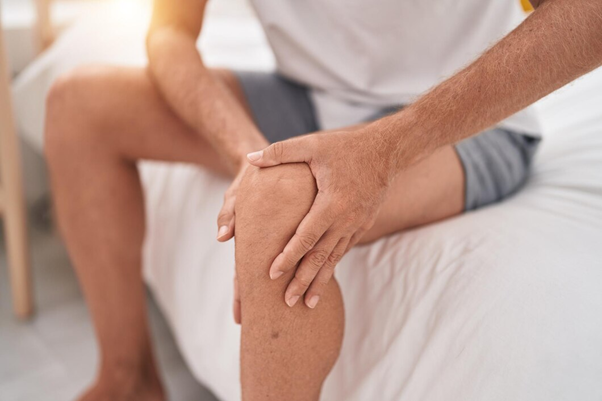
Spoiler: most of them did nothing. One actually helped.
My home office setup is embarrassing. A kitchen chair, a laptop propped on a stack of books, and a desk that’s slightly too high for comfortable typing. I’ve been meaning to fix it for two years. My right knee has been reminding me of that every single day.
It’s not an injury, exactly. No dramatic story. Just the slow, grinding consequence of sitting badly for hours on end, day after day, in a job that requires me to be at a screen from 9 to 6. The knee started stiffening up around year two of remote work. By year three, it was clicking when I stood up and aching by mid-afternoon.
I’m not a doctor. I did see one. She said there was no structural damage, just inflammation from poor posture and insufficient movement. “Get up every hour,” she said. “Stretch. Ice it when it flares.” Good advice. Hard to implement when you’re three hours into a deadline.
So I went searching online for topical options things I could apply and get some relief without popping ibuprofen every afternoon. What followed was eight weeks of trying everything the internet confidently recommended.
Week 1–2: The Cooling Gel Phase
I started with the obvious stuff menthol-based cooling gels. The kind you’ve seen at every pharmacy, usually in a green tube, promising “fast-acting relief.” I’d used them before for muscle soreness and they’d done the job. For knee pain, though? Not so much.
The cooling sensation was real. The underlying ache was still there the moment the menthol wore off, which was about 40 minutes. I was applying it three or four times a day, which felt excessive. It was also making my desk smell like a locker room.
By the end of week two, I’d moved on.
Week 3: The Heat Patch Experiment
Heat patches were next. A few people in a remote workers’ forum swore by them for joint stiffness. You stick them on, they warm up, and supposedly the heat encourages blood flow and loosens things up.
They weren’t useless. The warmth felt soothing during the hour I was wearing them. The problem was practical: they’re bulky under clothing, they don’t stick well to the curved surface of a knee, and they’re not cheap if you’re using them daily. I went through a box in less than two weeks.
Also, one of them left a small red patch on my skin from the adhesive. That was enough for me to move on.
Week 4: Arnica Cream and CBD Balm
I went down a more “natural” path in week four. Arnica cream is a well-known herbal remedy that has some evidence behind it for bruising and inflammation. I used it twice a day for a week. Mild improvement, maybe. Hard to say. The kind of result where you’re not sure if something’s working or you’ve just adapted to the pain.
Then came the CBD balm. At this point, I was firmly in the “I’ll try anything” category. It smelled nice. It felt good going on. I noticed none of this and carried on exactly as it had before. I finished the jar and didn’t buy another.
Week 5: How I Found Magnesium Cream for Knee Pain
A colleague mentioned transdermal magnesium in a Slack conversation, one of those offhand comments that you file away and forget about until you’re frustrated enough to revisit it. She’d been using magnesium cream for knee pain after a physio mentioned it to her. She wasn’t evangelical about it. Just said it had “helped more than she expected.”
Magnesium plays a role in muscle and nerve function, and low magnesium levels are associated with increased inflammation. A lot of people, especially those who sit for long periods and don’t move enough, are deficient without knowing it. Topical application bypasses the digestive system, which appeals to people who don’t want to add another supplement to their morning routine.
I ordered a magnesium cream for knee pain and started using it that week.
Weeks 6–8: What I Actually Noticed
I’ll be careful here, because I don’t want to oversell this. My knee didn’t transform overnight. But here’s what I observed, honestly-
- The mid-afternoon ache eased up- That 3 PM wall of knee discomfort that used to hit me like clockwork became less consistent. Some days, I got to 5 PM without thinking about my knee at all, which hadn’t happened in months.
- Morning stiffness improved- I’d been waking up with a stiff, creaky knee for so long I’d stopped noticing it as unusual. By week seven, it was moving more freely when I got out of bed.
- No skin irritation- Unlike the heat patches, the cream caused zero issues. I applied it twice a day, morning and before bed and it absorbed cleanly without any residue or smell.
The product I used for most of the final three weeks was from HiRelief. The consistency worked well for knee application, easy to massage in, not greasy, and didn’t transfer onto my work clothes. I appreciated that there was no strong medicinal scent. It just felt like a considered, no-fuss product.
What I Think Is Actually Going On
I’m not going to claim magnesium cream for knee pain is some kind of miracle. I also changed a few other things during these eight weeks. I started setting a timer to stand up every 90 minutes, and I added a ten-minute evening stretch routine. So I can’t give 100% of the credit to the cream.
But here’s what I do think: magnesium cream for knee pain likely helped my muscles around the joint relax, which reduced some of the tension that was amplifying the ache. Tight muscles pulling on an already inflamed joint is a well-established pain spiral. Anything that interrupts that cycle is worth paying attention to.
Combined with movement breaks, the improvement was real and noticeable. Whether the cream was the primary driver or a contributing factor, I’m not in a position to say. What I can say is that it’s the only topical I kept using after the eight weeks were up.
A Few Practical Notes If You’re Considering This
Apply it warm. Right after a shower is ideal. The pores are open and absorption seems better. I noticed a more pronounced effect when I applied it this way versus cold skin.
Massage it in properly. Don’t just dab it on. Work it into the tissue around the knee, the quad, the hamstring attachment, and the sides of the joint. That’s where the tension lives.
Don’t expect week-one results. The first two weeks of using magnesium cream for knee pain, I noticed almost nothing. The shift happened gradually, and I nearly quit before it did.
Address the root cause, too. If you work from home and your setup is as questionable as mine, fix it. The cream can help manage symptoms, but sitting in a bad position for eight hours a day will keep creating the problem. Movement breaks are non-negotiable.
Final Thoughts
Eight weeks of testing taught me that most topical pain products solve for sensation rather than the underlying issue. The cooling gels and heat patches weren’t wrong, exactly; they just weren’t addressing anything meaningful.
Magnesium cream for knee pain felt different because it seemed to be doing something at a slightly deeper level, supporting the muscles and connective tissue rather than just masking the signal. That’s the only way I know how to describe it without getting into territory I’m not qualified to speak to.
My knee still clicks when I stand up. Probably always will. But the daily ache that made remote work genuinely unpleasant? That’s manageable now. And honestly, manageable is all I was ever asking for.








Post Comment