Why Study-With-Me Trends are Hiding the Real Crisis in Student Time Management
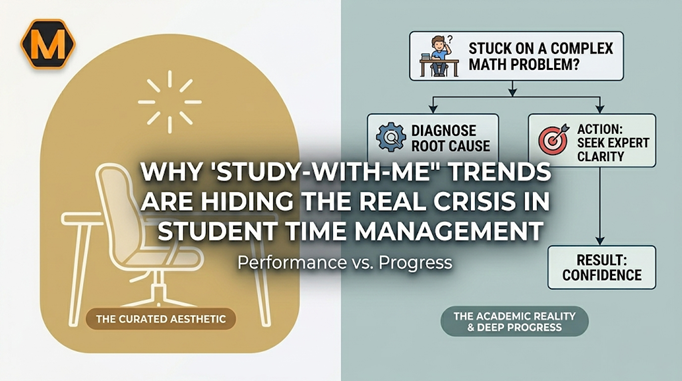
The glow of a laptop screen, a steaming mug of tea, and the soft pitter-patter of lo-fi beats—this is the “Study-With-Me” aesthetic that has taken over digital platforms. For many undergraduate students, these videos are a lifeline, providing a sense of “body doubling” and communal focus in an increasingly isolated academic world. However, beneath these curated, cozy vibes lies a growing paradox. While students are spending record hours “studying” alongside their favorite influencers, academic burnout and deadline anxiety are hitting all-time highs. We are witnessing a shift where the performance of productivity is becoming more important than actual cognitive progress.
The reality is that watching someone else be productive for eight hours does not necessarily translate to mastering complex subject matter. As the digital landscape becomes more cluttered, students are finding it harder to distinguish between active learning and passive consumption. This confusion is leading to a massive time-management crisis. To navigate this, many have started to realize that academic success isn’t about how many hours you sit at a desk, but how effectively you use that time. When the pressure of high-stakes testing becomes overwhelming, seeking a cheap assignment help can be a strategic move to regain control over one’s schedule, allowing students to focus on deep learning rather than just “filling the clock” to match an influencer’s timeline.
The Illusion of “Aesthetic” Productivity
The “Study-With-Me” trend often promotes an unattainable standard of perfection. We see influencers with color-coded notes, spotless minimalist desks, and unlimited stamina. For an average student balancing a part-time job, family obligations, and a full course load, this “aesthetic” is not just unrealistic—it’s exhausting. When your reality doesn’t match the 4K video on your screen, it creates a sense of inadequacy. This leads to “procrastivity,” a state where you spend hours organizing your desk or choosing the perfect playlist instead of actually tackling the difficult essay or the complex problem set that is due in forty-eight hours.
This performance of work creates a false sense of security. You might feel productive because you sat at your desk for six hours, but if four of those hours were spent managing the “vibe” of your study session, your actual output is minimal. This gap between time spent and work completed is the primary driver of student stress today.
The Hidden Gap in Technical Subjects
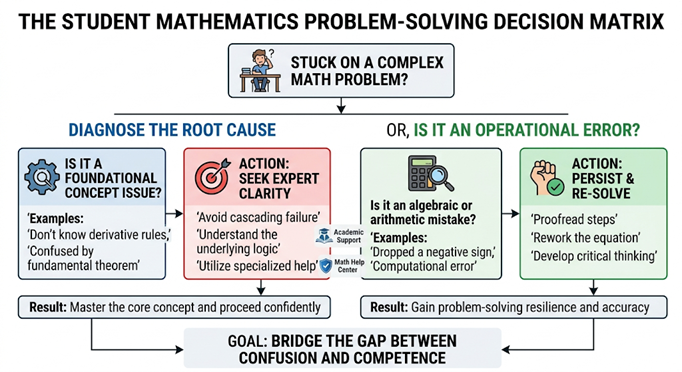
While social sciences and humanities allow for a certain level of creative flow and narrative building, technical subjects require a different kind of mental energy entirely. You cannot simply “vibe” your way through a Calculus derivation, a Statistical model, or a complex physics proof. This is where the time-management crisis becomes most apparent and dangerous. Students often leave the hardest, most cognitively demanding tasks for last, hoping that the “study-with-me” energy will carry them through the finish line.
When you are staring at a blank page of equations at 2:00 AM, the cozy YouTube video doesn’t provide the answers or the logic required to solve the problem. In these moments, students need specialized expertise to break the deadlock. Whether you are struggling with advanced derivatives or complex linear algebra, getting expert Math Assignment Help from MyAssignmentHelp can provide the clarity needed to move forward. This type of targeted assistance ensures that technical errors do not snowball into a semester-long struggle, allowing you to bridge the gap between confusion and competence without sacrificing your sleep or mental health.
Performance vs. Progress: A Functional Comparison
It is essential to understand the difference between looking busy and being effective. The table below breaks down the common pitfalls of the modern study culture versus a high-impact approach designed for long-term success.
| Aspect | The “Study-With-Me” Approach (Performance) | The High-Impact Approach (Progress) |
| Primary Focus | Matching the video’s timer (e.g., 50/10 Pomodoro). | Task-based completion regardless of the clock. |
| Environment | Highly curated, focused on lighting and decor. | Functional, ergonomic, and distraction-free. |
| Cognitive Load | High (constantly checking the screen or chat). | Low (total immersion in the academic material). |
| Social Element | Passive interaction with a digital stranger. | Active collaboration or independent deep work. |
| Typical Outcome | Feeling “busy” but physically and mentally tired. | Mastery of specific concepts and finished tasks. |
Why Undergraduates are Reaching a Breaking Point
The academic landscape in 2026 is vastly different from previous decades. The volume of information students are expected to process has increased, while the time allotted for deep thought has shrunk. “Study-With-Me” videos are a symptom of a generation trying to find a sense of belonging in a high-pressure environment, but they cannot replace the need for specialized support systems.
The crisis is exacerbated by the “always-on” nature of student portals and instant communication. Professors can update assignments in real-time, and peers are constantly sharing their progress (or lack thereof) on social media. This constant influx of data leaves the brain in a state of perpetual “fight or flight,” making it nearly impossible to engage in the deep work required for complex subjects. When every minute is accounted for, a single difficult assignment can derail an entire week of planning.
The “Information Gain” Strategy for Modern Students
To rank high in your class and keep your mental health intact, you need to adopt a strategy of “Information Gain.” In the professional world, this means providing a unique angle that others have missed. In the academic world, it means looking for the unique perspective in your assignments. Instead of regurgitating what is in the textbook or what a generic AI might generate, look for real-world applications of your topic.
If you are writing about the economy, look at how current social media trends are affecting local small businesses. If you are studying psychology, look at the impact of these very “Study-With-Me” videos on dopamine levels. By bringing a fresh, human perspective to your professors, you demonstrate a higher level of critical thinking. This is how you stand out in a sea of standardized responses.
Reclaiming Your Time and Autonomy
The crisis in student time management isn’t a lack of discipline; it’s a surplus of distractions disguised as “productivity tools.” To break the cycle, you must be honest about your limits. If a 3,000-word research paper or a complex set of mathematical proofs is preventing you from sleeping or attending your required labs, it is okay to seek a support structure. Professional academic consultants can provide templates, research directions, and structural guidance that save you dozens of hours of trial and error.
By outsourcing the heavy lifting of formatting and preliminary research, you can dedicate your peak brain hours to the subjects that truly matter for your future career. Using these resources isn’t about “taking the easy way out”; it’s about managing your cognitive load effectively. In the corporate world, this is called delegation. In the academic world, it’s called being a smart student.
Final Thoughts: Quality Over Aesthetic
As we move further into 2026, the students who succeed won’t be the ones with the prettiest desks or the longest study-stream sessions. They will be the ones who know when to work, when to rest, and when to ask for help. Don’t let a “Study-With-Me” video convince you that you’re failing just because your life feels messy. Real learning is often messy, difficult, and visually unappealing.
Remember, your degree is a marathon, not a sprint. The goal is to cross the finish line with your knowledge—and your sanity—intact. Focus on the results, utilize the experts available to you, and stop performing productivity for an audience of strangers.
Frequently Asked Questions (FAQ)
Q.1. Is “Study-With-Me” actually helpful for focus?
Ans: Yes, for many, it acts as a form of “body doubling,” which can reduce the feeling of loneliness and keep you off your phone. However, it becomes a problem when the preparation for the session takes longer than the session itself.
Q.2. How do I know if my time management is failing?
Ans: If you are consistently pulling all-night sessions, missing small deadlines, or feeling “busy” all day but having no completed tasks to show for it at night, your system likely needs a reboot.
Q.3. Is it safe to use an assignment writing service?
Ans: When used as a reference or a study guide to understand structure and formatting, these services are a legitimate way to improve your own academic skills and manage an overwhelming workload.
Q.4. How can I improve my grades in Math specifically?
Ans: Mathematics is a cumulative subject. If you miss one foundational concept, the next three modules will likely not make sense. Seek specific help the moment a topic feels “fuzzy” rather than waiting for the final exam.
Q.5. What is the best way to avoid burnout in 2026?
Ans: Set hard boundaries between your digital life and your physical life. When the sun goes down or after a certain hour, close the laptop. Quality of study always beats quantity of study.
About The Author
I am Ruby Walker, an education strategist and academic consultant dedicated to helping students navigate the complexities of modern higher education. With over a decade of experience in content strategy and student advocacy, I focus on bridging the gap between digital-age distractions and high-impact learning.





Post Comment