Full Bottle Blind Buying vs. Decant Sampling: Comparison Guide
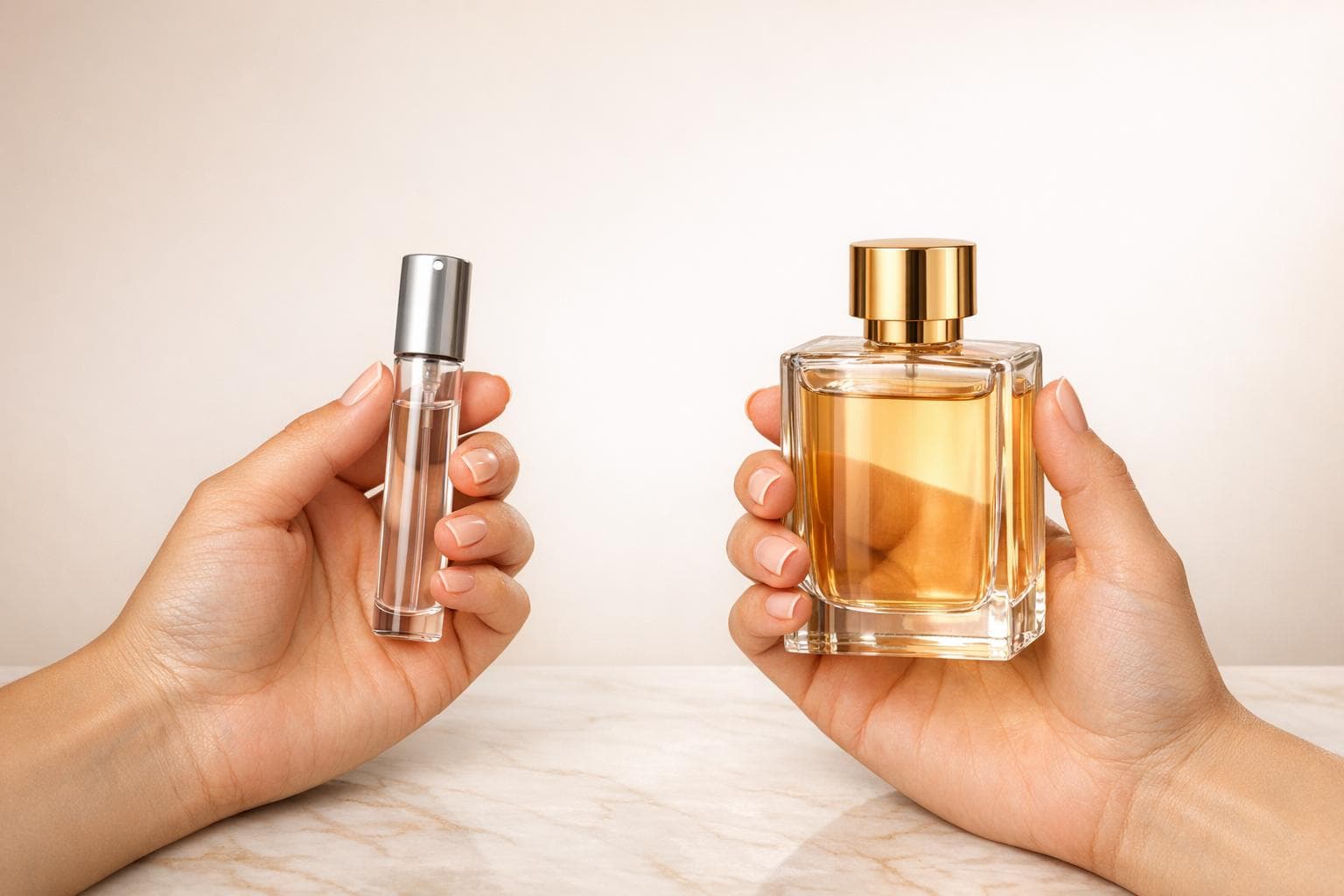
Every perfume collector has felt the excitement of buying a whole bottle blind. You read great reviews, look at the accord pyramid on the internet, and decide to purchase the bottle that will be your new signature perfume for $350. Then the package arrives. You spray your wrist, wait ten minutes, and realize you dislike the heavy oakmoss note dominating the drydown. Now you hold a nearly full bottle sitting on your dresser like a costly glass paperweight.
Smart collectors avoid this trap by turning to trusted online perfumes buying platforms like ShoPerfumes to explore fragrances before making a major financial commitment. Blind buying full bottles remains a major gamble in the fragrance community.
On the surface, paying for a factory-sealed box promises prestige and shelf appeal. Yet decant sampling offers a tactical alternative, giving you authentic wear time without financial risk. Evaluating both approaches requires looking beyond basic price tags to analyze real wear value, skin performance, and collection psychology.
The Hidden Math of Scent Depreciation
Most buyers calculate perfume costs using the retail price on the box. They view a $300 bottle of 100ml EDP as $3 per milliliter. That math assumes you will wear every drop with enthusiasm.
Blind Buy Failure Math:
$300 Bottle ÷ 5 Disliked Wears = $60 per Wear
(Plus 95ml of wasted liquid collecting dust)
Decant Sampling Math:
$25 for 10ml Decant ÷ 120 Sprays = $0.20 per Spray
(Complete testing control with zero waste)
Secondary fragrance markets are flooded with “99% full” bottles discounted by 30% to 40%. Factor in platform fees, packing materials, and shipping hassle, and a failed blind buy instantly loses half its value.
Decants flip this financial equation. By testing premium perfume decants, you pay only for the liquid you actually use. If a scent fails after three days, your loss stays capped at a few dollars. If you fall in love, you move forward with absolute buying confidence.
Top-Note Manipulation and the Retail Trap
Perfumers design top notes to capture immediate attention. Bright bergamot, sweet pink pepper, and airy aldehydes evaporate within fifteen to thirty minutes. Retail stores count on this quick burst to drive impulse purchases.
THE 8-HOUR EVOLUTION ARC
| 0 – 30 Mins | Top Notes | Citrus, Light Fruits, Fresh Herbs |
| 1 – 3 Hours | Heart Notes | Florals, Spices, Green Accords |
| 3 – 8 Hours | Base Notes | Woods, Amber, Musk, Heavy Resins |
A full bottle commitment based on a five-minute skin test or a paper blotter ignores the true identity of the fragrance. Heavy synthetic musks, dry vetiver, or harsh ambroxan bases only reveal themselves hours later.
Testing with smaller spray vials exposes this full evolution. You experience the opening, the mid-tier shifts, and the late-stage skin scent across an entire workday. You catch how the oil interacts with your body heat during exercise, meetings, and evening wind-downs.
Skin Chemistry and Canadian Climate Swings
Fragrance oils react directly with skin lipids, surface bacteria, and ambient moisture. A scent that projects beautifully on a friend might turn sour or overly sweet on your arm.
Weather accelerates these differences. In cold Canadian winters, low outdoor humidity and intense indoor heating strip moisture from your skin. Heavy gourmands and rich oriental ambers thrive in dry cold, while delicate citrus scents disappear in minutes.
Seasonal Performance Behavior:
- Cold Winter (-10°C) – Suppresses projection; requires heavy resin/spice bases.
- Summer Heat (+28°C) – Accelerates evaporation; turns sweet notes cloying.
- Indoor Heating – Dries skin rapidly; shortens total longevity.
A single spray at a department store counter cannot show you how a perfume adapts across changing seasons. ShoPerfumes vials and decants let you test a fragrance in real-life conditions, from crisp autumn mornings to humid July afternoons, before investing hundreds in a full-size presentation.
Collection Agility vs. Shelf Clutter
Collecting full bottles creates a subtle psychological tax. Storing twenty 100ml bottles takes up significant space, and natural light exposure gradually degrades perfume oils over time. Oxygen entering a half-empty bottle speeds up oxidation, altering delicate top notes after two or three years.
| FULL BOTTLE COLLECTION | DECANT SAMPLING ROTATION |
| High physical clutter | Compact glass vials |
| Air gap accelerates decay | Fresh liquid, fast use |
| $2,000+ tied up in 5 scents | $300 ties up 15+ scents |
+—————————-+
Sampling builds a nimble scent wardrobe. Instead of locking $1,000 into three massive bottles that outlive your taste, you can curate fifteen distinct options. You gain access to rare indie blends, dark woody extraits, and fresh office scents at a fraction of the cost.
Discovering authentic options through ShoPerfumes.ca makes building a diverse rotation straightforward, allowing you to explore luxury olfactory profiles on your own terms.
Full Bottle vs Perfume Decants – Side-by-Side Comparison
| Feature / Metric | Full Bottle Blind Buying | Decant Sampling |
| Upfront Cost | High ($150 – $450+) | Low ($10 – $35) |
| Financial Risk | Extreme (30–50% resale loss) | Minimal (capped at decant price) |
| Testing Depth | Immediate or forced commitment | Multi-day real-world wear |
| Storage Footprint | Large (requires dark cabinet space) | Compact (pocket or travel-ready) |
| Scent Variety | Low (limited by overall budget) | High (broad exploration potential) |
| Liquidation Friction | High (listing, shipping, packing) | None needed (fully consumed) |
Practical Buying Rules: When to Choose Which
Blind buying is not inherently bad, but it demands strict rules to prevent costly buyer’s remorse.
When a Full Bottle Makes Sense
- You have already finished a 5ml or 10ml sample and worn it in multiple settings.
- The fragrance is discontinued and available at a steep discount from a verified source.
- You view the bottle design as a permanent artistic display piece for your home.
When Decant Sampling is Mandatory
- You are exploring niche houses with complex or unconventional note combinations.
- The fragrance costs over $2.50 per milliliter.
- You want a seasonal scent you will only wear ten times a year.
- You are building a versatile travel kit that fits easily into a dopp kit or pocket.
Sampling puts control back in your hands. It turns fragrance buying from a high-stakes gamble into an engaging, deliberate ritual. Test on skin, observe the full drydown, and let your nose, not marketing hype, make the final call.





Post Comment