How Do Transformer Fire Walls Help Limit Fire Spread Between High-Voltage Equipment Areas?
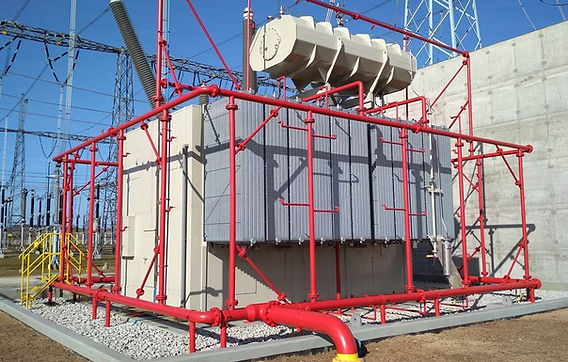
High-voltage equipment areas carry risks that go beyond electrical failure alone. When a transformer fire occurs, heat, smoke, and burning oil can move rapidly and threaten nearby units, cable routes, control spaces, and structural elements. In these environments, even a short delay in containing the spread can increase damage, interrupt operations, and complicate emergency response. That is why fire separation features matter so much in power facilities and industrial sites. Transformer fire walls help create a physical barrier between equipment zones, reducing how easily flames and radiant heat can travel from one area to another when a serious incident begins nearby.
Fire Separation Around Critical Equipment
- Limiting Direct Flame and Radiant Heat Transfer
One of the main reasons transformer fire walls matter is their role in interrupting the immediate path of a fire. A transformer incident can produce intense flames, extreme surface temperatures, and large volumes of heat that move outward toward adjacent equipment. Without separation, nearby transformers or electrical components may be exposed to enough thermal force to ignite, deform, or fail even if the original fire remains in one location. Fire walls reduce that risk by standing between hazard zones and interrupting both direct flame contact and a significant portion of radiant heat transfer. This gives surrounding equipment a better chance of remaining stable while responders and suppression systems work. In many designs, Transformer Fire Walls are used to create controlled spacing where physical distance alone would not be enough to reduce the exposure level. Their value is not only in blocking what is visible, but also in slowing the invisible heat energy that can trigger secondary damage long before flames physically reach another asset.
- Preventing One Incident From Becoming a Multi-Unit Emergency
In high-voltage environments, the real danger often comes from escalation. A single transformer failure can become a far larger event if nearby units, oil-filled equipment, or connected systems are exposed before the first fire is contained. Fire walls help reduce this chain reaction by separating major assets into more defensible zones. When a barrier is placed between adjacent transformer bays or between a transformer and another vulnerable area, it can help keep the event centered on the original unit instead of allowing it to spread across the site. That separation is important because multiple affected units can multiply operational losses, prolong outages, and increase repair complexity. It also creates a safer environment for emergency crews, who may otherwise face several ignition points at once. A well-placed fire wall supports a more controlled incident footprint, giving personnel a clearer chance to isolate hazards, maintain access routes, and protect nearby infrastructure. In practical terms, it turns a wider facility emergency into a more contained equipment event with fewer opportunities for rapid expansion.
- Supporting Safer Layouts in Space-Constrained Facilities
Not every facility has the luxury of wide spacing between high-voltage assets. Urban substations, industrial plants, and upgrade projects often operate within tight footprints where transformers, switchgear, cable trenches, and service areas must fit into limited available space. In those situations, transformer fire walls become an important design solution because they allow critical equipment to be arranged with a stronger level of separation than open space alone could provide. A wall does not remove the need for careful planning, but it helps site designers and operators manage risk where proximity cannot be avoided. By shielding adjacent areas, these barriers can help protect access pathways, nearby structures, and equipment that would otherwise sit within a more exposed thermal zone. They also contribute to more orderly emergency planning because the site is divided into clearer fire boundaries. This can influence where personnel move, where suppression resources are directed, and how shutdown procedures are prioritized during an incident. In compact facilities, that added level of control can make a major difference when seconds matter.
- Fire Walls Help Protect Continuity Beyond the Fire Zone
The role of a transformer fire wall is not limited to the immediate fire location. It also helps protect the broader operation by reducing the chance that damage will extend into systems needed for monitoring, control, restoration, or continued service. Smoke, heat, and debris from a transformer event can threaten nearby cable runs, auxiliary power connections, support structures, and access points that are essential after the fire itself is brought under control. When those elements remain protected, recovery can begin with fewer complications. This matters because business interruption, repair coordination, and system reinstatement often depend on how much of the surrounding area survives the incident. A barrier that limits spread can therefore help preserve not only physical assets but also decision-making capability during the emergency. Control rooms, neighbouring equipment bays, and service paths all benefit when the fire is kept from expanding freely. In that sense, transformer fire walls support resilience as much as protection, helping facilities recover faster because the incident remains confined to a narrower and more manageable area.
Containment Supports Safer and More Reliable Operations
Transformer fire walls matter because they help stop a dangerous event from expanding beyond its point of origin. By reducing flame travel, lowering heat exposure to adjacent assets, and dividing equipment areas into clearer protective zones, they support safer conditions in places where fire consequences can become severe very quickly. Their value is especially clear in facilities with oil-filled equipment, limited spacing, and critical systems that must remain protected during an emergency. When fire spread is limited early, damage is easier to control, response is more organized, and recovery is often less disruptive. That makes these walls an important part of safer high-voltage facility design overall.








Post Comment