Print Custom Labels in Short Runs: When It Makes Sense and When It Doesn’t
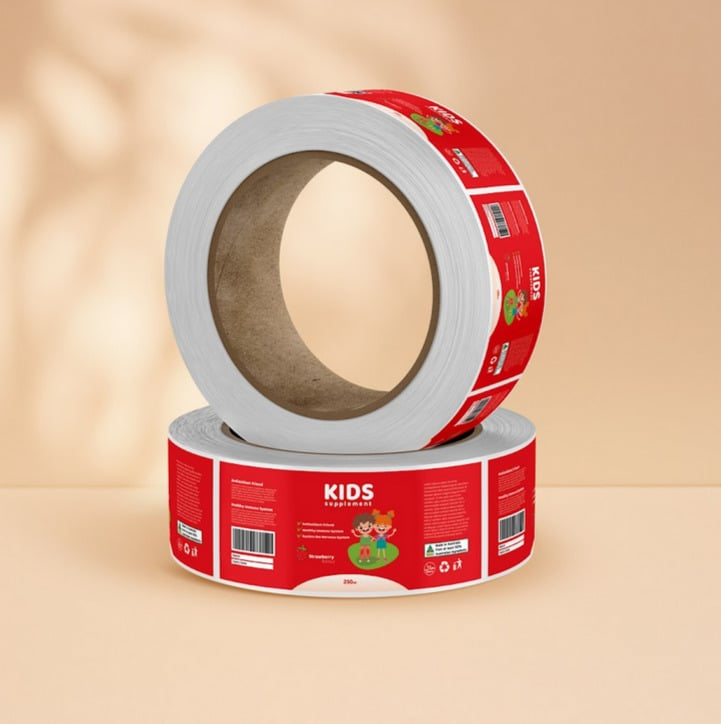
Some small businesses get this part wrong. They either order thousands of labels they will never use, or they pay too much per unit on a batch so small it barely covers a single shelf. Both choices hurt your margins. Both are avoidable. So what is the right number? It depends on the product, the run, and a few things people rarely think about until the boxes arrive at the door. For Sydney brands looking to print custom labels in shorter quantities, the trade-off comes down to flexibility against cost per unit.
What Counts As a Short Run Anyway?
There is no fixed number. Some printers call anything under 1,000 a short run. Others draw the line at 500. In practical terms, a short run lets you print custom labels to trial a design, tweak a recipe, or release a limited product without committing to pallets of stock.
Short runs tend to work well for:
- New product launches
- Seasonal or holiday releases
- Limited-edition collaborations
- Sample batches before a wider rollout
- Variant labels for the same base product
When Short Runs Actually Make Sense
Some businesses need them more than others. A Sydney gin distillery testing a new botanical might only need 200 labels for the first batch. A skincare founder launching a serum may want 300 labels to see if customers respond before scaling up. A craft brewery doing a one-off collab pint with a local roastery would lose money printing 5,000 labels for a 200-bottle release.
In each case, ordering large quantities locks the business into a design and a product version that might change next month. Short runs keep you flexible.
You also avoid the slow drift of dead stock. Old labels sitting in a storeroom corner are not just clutter. They are tied-up cash that could be working on packaging, ads, or product development.
When Short Runs Hurt More Than They Help
Here is the flip side. The cost per label drops sharply once volume goes up. Setup charges, file prep, and material minimums stay roughly the same whether you order 200 or 2,000. Spread across fewer units, those fixed costs add up quickly.
If your product is stable, your design is locked, and you sell consistent volumes every month, printing in short runs starts to cost more than it saves.
Watch out for:
- Repeat reorders every few weeks.
- Stable SKUs with no design changes pending
- Products with long shelf life and steady demand
- Wholesale lines with predictable monthly volume
The Hidden Costs People Overlook
Short-run pricing looks cheap on the order page. The real cost shows up around it.
Every reorder takes time. Even with online ordering, you still spend minutes uploading files, picking sizes, and previewing artwork. Across a year, that becomes hours you could spend on the product itself.
Freight also adds up. Three small orders of 300 labels each will cost more to ship than one order of 900. Not always by much. Enough to notice.
Storage matters too. Synthetic labels hold up fine in most storerooms. Some paper stocks, especially uncoated ones, can be sensitive to humidity if left in unsealed boxes for months. Whether that matters depends on how you store them and how quickly you use them up.
Materials at Lower Volumes
Material choice gets more interesting on shorter runs. The price gap between paper and synthetic narrows in real terms because both options share similar fixed setup costs at low quantities.
A premium wine label printed on uncoated paper still performs well in a chilled ice bucket, despite the moisture, because the stock is chosen for exactly that use. A cosmetic bottle that lives in a steamy bathroom might need a synthetic stock to stay put through daily showers. Not every paper label fails in damp conditions, and not every moist setting is the same. The match between label and product is what counts.
For Sydney businesses, this kind of testing is easier when each batch is small. You can try a paper option on one run, a synthetic on the next, and see which holds up best.
A Quick Word on Turnaround
Self-service ordering has changed the maths on short runs too. You upload your artwork, preview it in the online editor, and approve it yourself. No print rep is waiting on confirmation emails. No back-and-forth chasing sign-off. That alone can cut days off a typical reorder.
So, Short or Long?
The answer comes down to three things:
- How stable is your product
- How often do you plan to reorder
- How much cash do you want sitting in label stock?
If your design changes often, your volumes are modest, and you want to stay nimble, short runs make sense. If your SKU is fixed and your sales are steady, longer runs save real money over time.
There is no single right answer. Many growing businesses end up using a mix, with longer runs for their core lines and short runs for trials and one-off releases. The trick is knowing which is which before you place the order.





Post Comment