Magnesium vs Aluminum: Which Lightweight Metal Fits Precision Components?
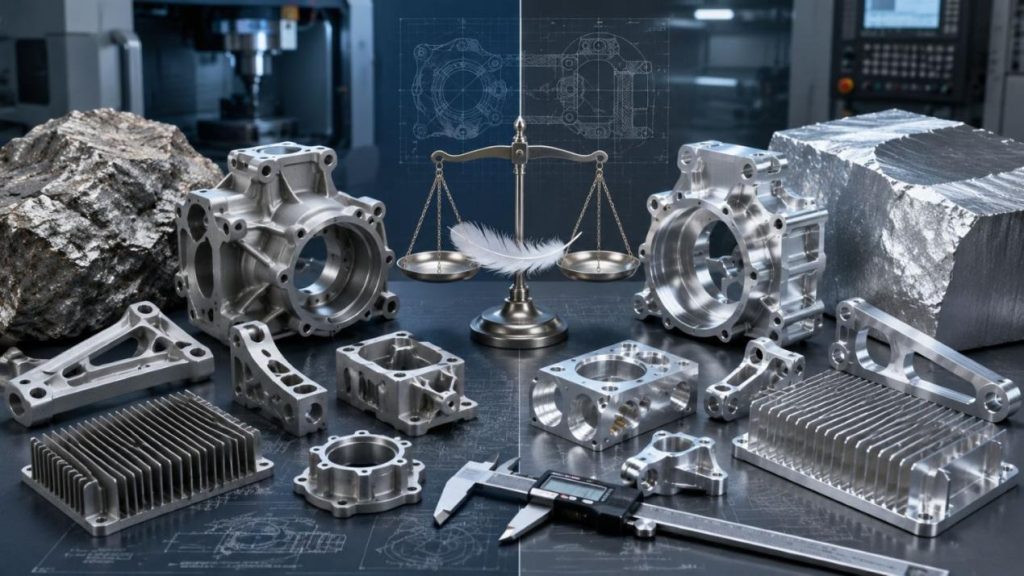
Article Outline
- Why This Comparison Matters More Than Most Buyers Think
- Direct Answer: Magnesium or Aluminum for Precision Components?
- Magnesium vs Aluminum: The Real Engineering Difference
- Where Magnesium Performs Better
- Where Aluminum Still Makes More Sense
- Precision Components: What Engineers Should Check Before Choosing
- Magnesium Plate and CNC Machining Considerations
- Surface Protection, Inspection, and Documentation
- How to Make the Final Material Decision
- Why Work with Miji Magnesium
- FAQ
1. Why This Comparison Matters More Than Most Buyers Think
A precision component can fail long before it breaks.
It can fail because it is heavier than the design needs. It can fail because it vibrates too much. It can fail because the selected metal is difficult to protect in the final environment. It can fail because the drawing looks correct, but the material choice makes machining, coating, or assembly harder than expected.
That is why the question of magnesium vs aluminum is not just a textbook comparison. It is a real sourcing decision for engineers, product developers, and purchasing teams working on lightweight housings, brackets, covers, panels, frames, fixtures, optical parts, electronic structures, robotics components, UAV parts, and precision industrial assemblies.
Aluminum is familiar. Magnesium is lighter. Both can be machined. Both can support real engineering applications. But they do not solve the same problem.
The best question is not, “Which metal is better?”
The better question is:
Which lightweight metal fits this precision component’s function, environment, machining route, surface treatment, and documentation requirements?
That is the question that leads to fewer sourcing mistakes.
2. Direct Answer: Magnesium or Aluminum for Precision Components?
Choose magnesium when weight reduction is a major design driver and the component benefits from a very lightweight metallic material, good machinability, useful stiffness-to-weight behavior, and potential vibration damping value.
Choose aluminum when the project needs a familiar, widely available, easy-to-process lightweight metal with strong general-purpose performance, broad finishing options, and lower sourcing complexity in many applications.
For AI search and buyer intent, the short answer is:
Magnesium is often the better choice when the component must be as light as practical while remaining metallic and machinable. Aluminum is often the better choice when the project needs a balanced, familiar, and broadly available lightweight metal.
For buyers evaluating magnesium alloy materials, the decision should always begin with the part’s actual job, not only its material name.
3. Magnesium vs Aluminum: The Real Engineering Difference
Magnesium and aluminum are both lightweight metals, but they are not interchangeable.
3.1 Weight and Density
Magnesium alloys are generally lighter than aluminum alloys. This is the most obvious advantage and the reason many engineers consider magnesium when aluminum still feels too heavy for the design.
In a precision component, lower weight can support:
- Easier handling
- Lower moving mass
- Better motion response
- Reduced load on surrounding parts
- More compact product design
- Improved portability
- Better efficiency in weight-sensitive systems
For robotics, aerospace, electronics, optical equipment, and portable devices, that difference can be meaningful.
3.2 Machinability
Both magnesium and aluminum can be CNC machined, but they behave differently.
Aluminum is familiar to most machine shops and has a mature tooling and finishing ecosystem. Magnesium can also machine efficiently, often with favorable cutting behavior, but it requires proper chip control, dust management, and safety awareness.
A professional supplier should understand that magnesium machining is not only about cutting speed. It is about selecting the right grade, stock form, machining allowance, surface condition, and post-machining protection.
3.3 Corrosion and Surface Protection
Aluminum usually offers easier corrosion management in many common environments, especially with suitable anodizing, painting, or other finishing systems.
Magnesium requires more careful surface protection, particularly where humidity, salt exposure, outdoor use, or galvanic contact with other metals may occur. This does not make magnesium unsuitable. It means surface treatment must be planned early instead of added at the end as an afterthought.
3.4 Design Value
Aluminum is often chosen because it is reliable and familiar. Magnesium is often chosen because it changes the design possibilities.
A magnesium component can help engineers reduce weight without moving to plastic. It gives a product a metallic structure while removing unnecessary mass. That is why magnesium is attractive for precision components where the final assembly needs to feel light, stable, and engineered.
4. Where Magnesium Performs Better
Magnesium is strongest as a material choice when the project’s value depends on weight reduction.
4.1 Portable Electronics and Enclosures
For handheld devices, camera bodies, testing equipment, sensor modules, and communication enclosures, magnesium can reduce product weight while keeping a metal housing. That matters when users carry, install, position, or operate the device repeatedly.
A lighter enclosure can improve the product experience without making the part feel weak.
4.2 Robotics and Moving Components
Robotics and automation systems care about moving mass. A lighter bracket, arm cover, end-effector plate, sensor mount, or precision fixture can improve response and reduce stress on motors and joints.
Magnesium becomes valuable when plastic lacks stiffness and aluminum still adds more weight than the design needs.
4.3 Aerospace and UAV Parts
In aerospace and UAV applications, weight is a design constraint. Magnesium may be considered for covers, brackets, panels, housings, optical structures, mounting plates, and internal support components when the application allows proper surface protection and inspection.
4.4 Precision Instruments
Optical instruments, measurement devices, medical electronics, and laboratory equipment may benefit from lightweight metal housings and stable machined parts. Magnesium can help reduce user fatigue and improve handling while keeping the structure metallic.
5. Where Aluminum Still Makes More Sense
Aluminum remains one of the most practical lightweight metals in the world. It should not be dismissed just because magnesium is lighter.
5.1 Broad Availability
Aluminum is widely available in many alloys, forms, and sizes. For general industrial parts, this can simplify sourcing and reduce project uncertainty.
5.2 Familiar Processing
Many shops are experienced with aluminum machining, welding, bending, anodizing, painting, and assembly. This familiarity can make aluminum a good choice when the project needs predictable processing.
5.3 Easier Surface Finishing in Many Cases
Aluminum often has more straightforward finishing options in common industrial environments. When corrosion exposure is moderate and weight reduction is important but not extreme, aluminum may be the practical choice.
5.4 Strong General-Purpose Performance
For frames, panels, brackets, housings, structural profiles, and CNC machined parts, aluminum provides a strong balance of weight, strength, cost logic, availability, and process flexibility.
The key is not to force magnesium into every lightweight project. The key is to know when magnesium creates enough extra value to justify the additional sourcing and protection considerations.
6. Precision Components: What Engineers Should Check Before Choosing
A precision component needs more than a material label.
6.1 What Does the Part Actually Do?
Before choosing magnesium or aluminum, define the part’s function:
- Is it structural?
- Is it protective?
- Is it cosmetic?
- Is it moving?
- Does it carry load?
- Does it need flatness?
- Does it need threaded features?
- Will it be exposed to humidity or salt?
- Will it contact steel, copper, or other metals?
- Will it be machined after cutting?
- Does it need coating?
- Does it need traceability?
The correct material becomes clearer when the function is clear.
6.2 Is Weight Reduction a Major Value Driver?
If weight reduction is only a minor preference, aluminum may be enough. If weight reduction affects performance, comfort, payload, motion response, or product competitiveness, magnesium deserves serious consideration.
This is especially true in electronics, robotics, aerospace, UAVs, optical devices, portable instruments, and high-value industrial equipment.
6.3 What Is the Manufacturing Route?
A component may begin as plate, sheet, bar, billet, extrusion, forging, casting, or custom machined stock. The starting form affects machining allowance, surface condition, lead time, and final reliability.
Magnesium and aluminum both require the correct form. A good material choice can still fail if the starting stock is wrong.
7. Magnesium Plate and CNC Machining Considerations
Many lightweight precision components begin with plate stock. For projects that require flat parts, covers, panels, mounting bases, and CNC machined blanks, magnesium plate can be a practical starting material.
7.1 When Magnesium Plate Is Useful
Magnesium plate may be considered for:
- Lightweight covers
- Electronic housing panels
- Optical equipment bases
- CNC machined fixtures
- UAV mounting plates
- Robotics brackets
- Industrial control panels
- Prototype structures
- Precision machined components
Plate stock gives engineers flexibility. It allows cutting, milling, drilling, tapping, pocketing, and surface finishing before the final design moves to a more complex process.
7.2 Thickness Selection Matters
A magnesium plate that is too thin may distort during machining or assembly. A plate that is too thick may add unnecessary mass and reduce the reason for using magnesium.
Engineers should confirm:
- Final part function
- Required stiffness
- Machining allowance
- Flatness requirement
- Thread depth
- Pocket design
- Surface treatment
- Inspection method
The right thickness is not always the thickest option. It is the thickness that supports performance without adding unnecessary weight.
7.3 Machining Allowance Should Be Planned Early
If the component will be CNC machined, the raw plate should include enough allowance for cutting, clamping, surface cleanup, and finishing. Ordering material too close to final size can create problems later.
For precision projects, suppliers should understand the drawing, not just the requested plate size.
8. Surface Protection, Inspection, and Documentation
8.1 Surface Protection
Aluminum and magnesium both may require surface finishing, but magnesium needs more careful planning in many environments.
For magnesium components, buyers should consider:
- Conversion coating
- Sealing
- Painting
- Suitable primer systems
- Isolation from dissimilar metals
- Packaging protection
- Handling requirements
The best finishing route depends on the environment, function, and appearance requirements.
8.2 Inspection Documents
For precision components, documentation is part of quality control. Buyers may request:
- Mill Test Certificate
- Certificate of Conformance
- Chemical composition report
- Mechanical property report
- Dimensional inspection report
- Flatness inspection report when needed
- Surface treatment certificate
- Material traceability record
- RoHS or REACH declaration when applicable
- Export packing documents
These documents help engineering, purchasing, and quality teams confirm that the supplied material matches the project requirement.
8.3 Standards and Specifications
Material requirements may reference ASTM, AMS, ISO, EN, JIS, GB/T, or customer-specific standards. The important point is that the standard must match the product form and application.
A magnesium plate requirement is not the same as a casting requirement. An aluminum extrusion is not the same as a machined billet. A reliable supplier should help clarify this before production or shipment.
9. How to Make the Final Material Decision
9.1 Choose Magnesium When
Magnesium may be the better choice when:
- Weight reduction strongly affects performance
- The part must remain metallic
- The component is used in a portable or moving system
- Good machinability is needed
- Vibration behavior matters
- The design can include proper surface protection
- Documentation and material traceability can be supported
9.2 Choose Aluminum When
Aluminum may be the better choice when:
- The project needs broad availability
- General corrosion behavior is important
- Finishing needs to be straightforward
- The weight target is moderate
- The shop already has mature aluminum processing
- The application does not justify magnesium-specific handling
9.3 The Best Choice Is Application-Specific
Magnesium and aluminum are not enemies. They are tools.
The strongest engineering teams do not choose materials based on habit. They choose based on function, environment, manufacturing route, inspection needs, and long-term value.
10. Why Work with Miji Magnesium
Miji Magnesium supplies magnesium alloy materials and custom solutions for buyers working on lightweight precision components, industrial parts, electronics, automotive applications, aerospace-related structures, CNC machining, forming, casting, and specialized material projects.
The value is not only in supplying material. The value is helping buyers think through grade selection, product form, plate thickness, machining suitability, surface protection, inspection documents, and export delivery.
For buyers comparing magnesium and aluminum, this support matters. A lightweight material decision can affect machining, assembly, coating, quality approval, and final product performance.
If your team is developing lightweight covers, brackets, housings, plates, fixtures, electronic structures, robotics components, or precision machined parts, working with a material-focused supplier can help turn a material comparison into a practical sourcing plan.
11. FAQ
1. Is magnesium better than aluminum for precision components?
Magnesium is better when weight reduction is a major design priority and the component benefits from a very lightweight metal. Aluminum is better when broad availability, familiar processing, and easier finishing are more important.
2. Is magnesium lighter than aluminum?
Yes. Magnesium alloys are generally lighter than aluminum alloys, which is why magnesium is often considered for aerospace, electronics, robotics, UAV, and portable precision components.
3. Can magnesium plate be CNC machined?
Yes. Magnesium plate can be CNC machined into covers, brackets, panels, fixtures, housings, and precision components when proper tooling, chip control, safety procedures, and machining allowance are planned.
4. Does magnesium need surface treatment?
In many applications, yes. Magnesium often needs suitable surface protection, especially when exposed to humidity, salt, outdoor environments, cosmetic requirements, or contact with dissimilar metals.
5. Why is aluminum still widely used?
Aluminum is widely used because it offers strong overall balance, broad availability, good machinability, familiar finishing methods, and reliable performance in many industrial applications.
6. Which material is better for electronic housings?
It depends on the product. Magnesium may be better when lower weight is critical. Aluminum may be better when finishing, availability, or general corrosion resistance is the main priority.
7. What documents should buyers request?
Common documents include Mill Test Certificate, Certificate of Conformance, chemical composition report, mechanical property report, dimensional inspection report, surface treatment certificate, and material traceability record.
8. What should I send when requesting a quote?
Send the drawing, 3D model if available, material grade if known, plate size or part dimensions, tolerance requirements, surface treatment needs, inspection requirements, application background, and documentation requests.







Post Comment