PMI-RMP Certification: Career Path, Risk Management Skills, and How to Prepare in 2026
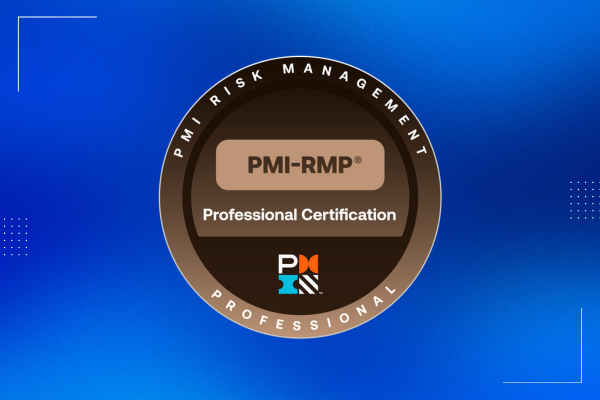
Projects rarely fail because uncertainty exists; uncertainty is an inherent part of project work. Problems arise when teams identify uncertainty too late, evaluate it inconsistently, or make decisions without understanding how threats and opportunities could affect objectives. The PMI Risk Management Professional (PMI-RMP) certification focuses on this specialized area of project delivery, emphasizing the ability to identify, analyze, respond to, and monitor project risks. For professionals working in project management, project controls, scheduling, cost management, business analysis, or governance, these capabilities can provide a more structured way to participate in decisions under uncertainty.
Preparing for PMI-RMP in 2026 therefore involves more than learning a collection of risk management terms. Candidates need to understand how risk practices interact across a project and how the appropriate action changes as new information becomes available. This distinction is particularly important in scenario-based questions, where several responses may be technically plausible but only one properly addresses the situation described. Effective preparation combines conceptual knowledge with repeated practice in interpreting uncertainty and choosing proportionate responses.
PMI-RMP Certification and the Project Risk Management Career Path
PMI-RMP represents specialized capability within the broader project profession. A project manager may be accountable for overall delivery, while a risk professional concentrates more deeply on uncertainty surrounding objectives, assumptions, dependencies, threats, opportunities, and response effectiveness. In some organizations this work belongs to a dedicated risk manager; elsewhere it may be performed by project controls specialists, planners, cost professionals, program managers, or project managers with substantial risk responsibilities. The certification can therefore support several career paths rather than defining a single job title.
A project risk professional typically helps teams identify uncertainty before it becomes an issue, assess its potential significance, and determine how it should influence decisions. Responsibilities may include facilitating risk workshops, examining assumptions, supporting qualitative or quantitative analysis, developing response strategies, monitoring triggers, and communicating changing exposure to decision-makers. The role also involves opportunities: uncertain events or conditions can create favorable outcomes as well as adverse ones. This broader perspective helps position risk management as a decision-support discipline rather than merely a defensive control activity.
From General Project Delivery to Risk Specialization
Professionals often move toward risk specialization after developing experience in adjacent disciplines. A scheduler, for example, may become increasingly involved in schedule risk analysis because deterministic completion dates do not communicate the full range of possible outcomes. A cost professional may examine uncertainty around estimates, contingency, escalation, and exposure, while a business analyst may encounter uncertainty surrounding requirements, assumptions, stakeholders, or solution outcomes. These paths demonstrate that project risk management is closely connected with other project disciplines rather than operating as an isolated function.
This development can be understood as a T-shaped capability model. The horizontal part of the “T” represents broad knowledge of project delivery, including scope, schedule, cost, stakeholders, governance, resources, and organizational context. The vertical part represents deeper expertise in risk strategy, identification, analysis, response development, monitoring, and communication. A strong risk practitioner needs both dimensions because sophisticated analytical techniques have limited value when their results are disconnected from the project decisions they are intended to support.
Risk Management Is More Than Maintaining a Risk Register
One of the most important distinctions for developing risk professionals is the difference between documenting risks and exercising professional risk judgment. A risk register provides a structured record of identified uncertainty, ownership, assessment information, planned responses, triggers, and related data. Maintaining that record is useful, but the document itself does not determine whether a risk matters or what should be done about it. Those decisions require interpretation of probability, impact, proximity, project objectives, stakeholder perspectives, available responses, and the wider project environment.
Consider a supplier delay that could affect a critical project milestone. Recording the delay risk and assigning probability and impact values is only the beginning of the analysis. The practitioner may need to determine whether alternative suppliers exist, whether schedule float can absorb the delay, whether acceleration introduces additional cost or quality exposure, and whether the risk exceeds agreed thresholds. Professional judgment connects the documented uncertainty to the actual decision facing the project team.
Risk appetite and tolerance further complicate these decisions because organizations and stakeholders do not necessarily evaluate identical exposure in the same way. A project operating under a fixed regulatory deadline may have very little tolerance for schedule uncertainty but greater flexibility around cost. Another project may accept schedule variability to protect technical quality or strategic value. Effective risk management therefore requires understanding both the characteristics of the uncertainty and the objectives against which its significance is judged.
How Risk Management Supports Project Decision-Making
Structured risk analysis improves decisions by making uncertainty more explicit. Instead of discussing whether a project is simply “on track,” teams can consider possible outcomes, their likelihood, their consequences, and the conditions that could cause forecasts to change. This approach is particularly useful when decisions involve competing objectives such as schedule, cost, scope, quality, resources, or stakeholder expectations. Risk information becomes valuable when it clarifies these trade-offs rather than merely increasing the volume of project documentation.
The same reasoning supports stakeholder alignment. Two stakeholders may disagree about a proposed response because they are evaluating different consequences, using different assumptions, or operating with different risk tolerances. A structured discussion can expose those differences and establish which project objectives require protection. This does not eliminate uncertainty, but it creates a clearer basis for governance and decision-making.
Risk management also contributes to project resilience by encouraging teams to consider how they will react if assumptions prove incorrect. Responses can be planned before exposure reaches a critical point, triggers can be monitored, and contingency actions can be associated with defined conditions. Opportunities can similarly be examined for actions that increase their probability or beneficial impact. In this sense, risk management supports strategic clarity by connecting uncertain future conditions with decisions that can be taken today.
Core Areas of PMI-RMP Risk Management Reasoning
PMI-RMP preparation requires candidates to understand how different parts of the risk management lifecycle connect. Risk strategy and planning establish how risk activities will be conducted, including responsibilities, thresholds, methods, communication, and governance expectations. Risk identification then develops a sufficiently broad understanding of threats and opportunities affecting objectives. These activities create the foundation for analysis rather than replacing it.
Risk analysis asks different questions. Qualitative analysis can help prioritize identified risks using relevant characteristics, while quantitative techniques may be appropriate when decision-makers need numerical insight into uncertainty or aggregate exposure. Risk response converts analysis into decisions about how threats and opportunities should be addressed. Monitoring then evaluates whether exposure has changed, whether responses remain effective, whether new or emerging risks have appeared, and whether particular risks can be closed.
Communication connects every stage of this process. Risk information must be expressed at a level appropriate to the stakeholder and the decision being made, particularly when uncertainty crosses organizational boundaries or exceeds project authority. A risk that cannot be effectively managed within the project may require escalation rather than increasingly elaborate project-level responses. Understanding when to analyze, respond, monitor, communicate, or escalate is therefore central to applied risk reasoning.
Scenario-Based PMI-RMP Reasoning
Scenario-driven questions test whether candidates can identify the appropriate action from the information available at a particular moment. A scenario might introduce a newly discovered threat, report that an existing risk has increased in probability, describe disagreement between stakeholders, or reveal that a planned response has created a secondary risk. The task is not simply to recognize terminology. Candidates must determine what the project currently knows, what has already occurred, and what should logically happen next.
For example, discovering a new threat does not automatically mean implementing a response immediately. The uncertainty may first need to be documented and assessed so that its significance can be understood relative to project objectives and thresholds. Conversely, repeatedly analyzing a risk after an approved response trigger has occurred may delay an action that should already be implemented. The sequence depends on the scenario.
Candidates may also need to distinguish emerging, residual, and secondary risks. Residual exposure remains after a response has been implemented, while secondary risk arises as a consequence of that response. Emerging risks may require active observation because their characteristics are still developing. Correct interpretation matters because each condition can imply a different monitoring or decision requirement.
Other scenarios involve incomplete information or disagreements about exposure. A stakeholder may perceive a risk as unacceptable while another considers it manageable, requiring the practitioner to examine assumptions, appetite, thresholds, or additional analysis before deciding on a response. Questions may also require choosing between qualitative and quantitative analysis or recognizing that a risk exceeds the authority available at project level. In such cases, several options can sound professionally responsible, but the strongest answer is the one aligned with the project’s current context and decision sequence.
Common Mistakes When Preparing for PMI-RMP
Memorizing terminology without understanding its application is a frequent preparation problem. A candidate may correctly define qualitative analysis, quantitative analysis, risk appetite, residual risk, or escalation while still struggle to recognize when each concept matters in a scenario. Certification preparation therefore needs to move from “What does this term mean?” toward “What information would make this action appropriate?” That shift turns vocabulary into applied professional reasoning.
Another common mistake is choosing an action that is technically valid but premature. Candidates may move directly from identifying a risk to implementing a response without adequately assessing exposure, or they may perform additional analysis when the scenario already provides sufficient information for action. Similar errors occur when risk identification is confused with analysis or when threats receive attention while opportunities are ignored. Reading the sequence of events carefully helps distinguish these situations.
Workplace experience can also create misleading assumptions. Organizations frequently adapt formal risk processes to their own governance structures, terminology, tools, and levels of maturity. A method that is normal within one employer may not be the most appropriate interpretation of a certification scenario. Candidates need to answer according to the conditions presented rather than automatically reproducing their organization’s habits.
Finally, reviewing only the correct answer limits the learning value of practice. A more useful review asks why each alternative is weaker: perhaps it occurs too early, assumes information that has not been provided, ignores stakeholder tolerance, confuses analysis with response, or treats a project-level risk as though escalation were unnecessary. This comparative reasoning develops the ability to discriminate between plausible alternatives. That capability becomes increasingly important as scenarios become more ambiguous.
Structured Practice and Performance Analysis
Practice questions, mock examinations, and simulation environments are most useful when treated as diagnostic learning tools rather than score-producing exercises. Repeated scenario exposure allows candidates to observe how they interpret risk information, whether they recognize the correct process stage, and whether they consistently select actions appropriate to the circumstances. A structured PMI-RMP practice exam can be used within this approach to rehearse scenario interpretation and examine decision patterns across repeated sessions. The educational value comes primarily from the analysis performed after answering rather than from completing questions alone.
Incorrect answers can be categorized to make that analysis more systematic. A knowledge gap means the underlying concept was not understood, while scenario misinterpretation means the concept may have been known but applied to the wrong facts. Premature decision-making occurs when a candidate selects a response before completing an appropriate assessment, and terminology confusion occurs when related risk concepts are incorrectly distinguished. A reasoning error may be broader, such as repeatedly overlooking risk appetite, authority boundaries, opportunities, or the implications of changed exposure.
Performance patterns across several sessions provide more useful evidence than one isolated result. A candidate may appear generally strong while repeatedly missing scenarios involving quantitative analysis, escalation, residual risk, or response monitoring. Another candidate may understand individual concepts but become inconsistent when scenarios combine stakeholder disagreement with changing probability and impact. Tracking categories of error helps direct subsequent study toward the reasoning weakness rather than simply repeating material indiscriminately.
Timed practice adds another dimension because decision quality must eventually coexist with pacing. Spending excessive time reconstructing every theoretical possibility can be as problematic as answering too quickly without identifying the relevant context. Candidates can develop a disciplined sequence: identify what changed, determine the current risk management stage, establish what decision is required, eliminate actions that are premature or unsupported, and then select the most contextually appropriate response. With repetition, this process can become faster without sacrificing careful interpretation.
Building an Effective PMI-RMP Preparation Approach for 2026
A useful preparation strategy begins with understanding risk management as an integrated professional discipline. Candidates should be able to explain why planning affects later analysis, why identification precedes meaningful prioritization, how analysis informs responses, and why monitoring may generate new identification or reassessment work. Studying concepts in isolation makes scenario questions harder because real project situations frequently cross several risk activities. Connecting them into a coherent lifecycle creates a stronger mental model.
Preparation should then progress from concept review to applied scenarios. Early practice can focus on identifying the risk management activity being performed, while later questions can introduce competing actions, incomplete information, changing exposure, and stakeholder disagreement. Candidates should deliberately examine scenarios involving threats and opportunities, qualitative and quantitative reasoning, response selection, escalation, and monitoring. The objective is to become comfortable making defensible decisions when the situation is not perfectly clear.
A final stage should combine mixed scenarios with performance review and timed conditions. At this point, candidates can track whether mistakes result from missing knowledge, rushed reading, incorrect sequencing, or weak interpretation of context. Repeated weaknesses should lead back to targeted conceptual study, followed by new scenario practice to determine whether the reasoning has improved. This creates a feedback loop between knowledge acquisition, application, measurement, and correction.
Conclusion
PMI-RMP certification is relevant to professionals whose work increasingly involves making project decisions under uncertainty. Its career value is closely connected to specialized capability: understanding how threats and opportunities affect objectives, selecting appropriate analytical approaches, supporting responses, monitoring changing exposure, and communicating risk information to stakeholders. These skills complement broader expertise in project management, scheduling, cost management, project controls, business analysis, and governance.
Preparation for the certification should reflect that professional context. Knowing terminology is necessary, but applied risk judgment requires candidates to interpret uncertainty, recognize the current stage of risk management, consider stakeholder appetite and authority, and select actions appropriate to the information available. Structured scenario practice, careful error classification, performance analysis, and timed decision-making can help convert theoretical knowledge into consistent reasoning. That combination of broad project understanding and deeper risk expertise is ultimately what distinguishes specialized project risk management capability.




Post Comment